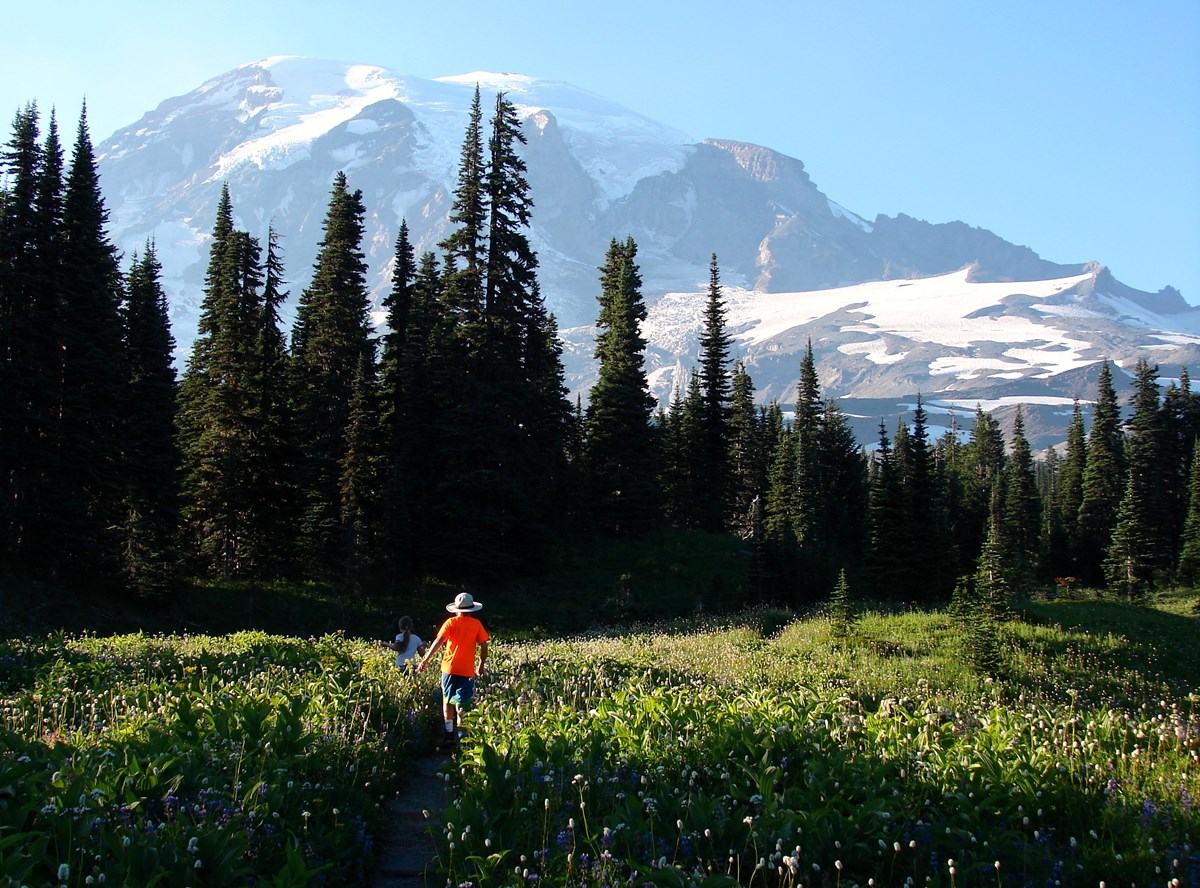
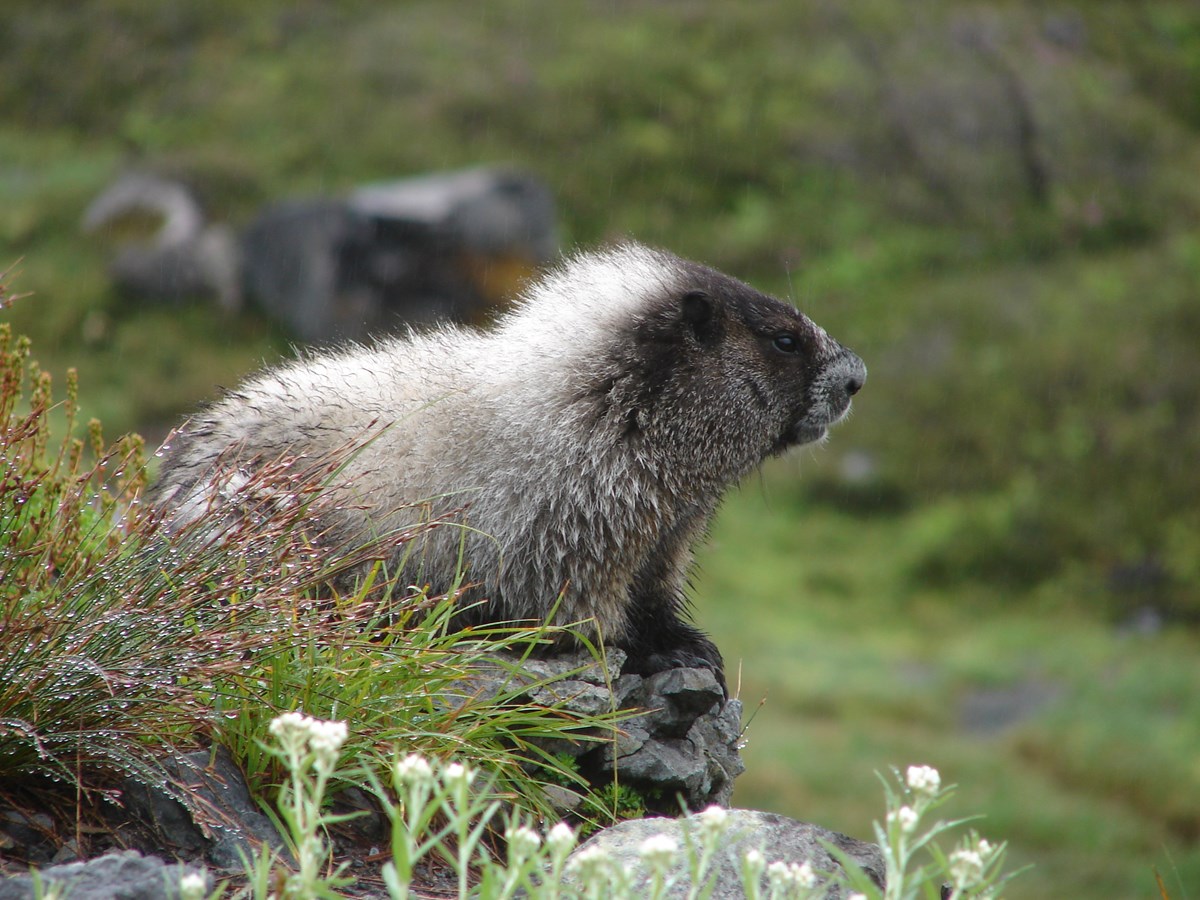
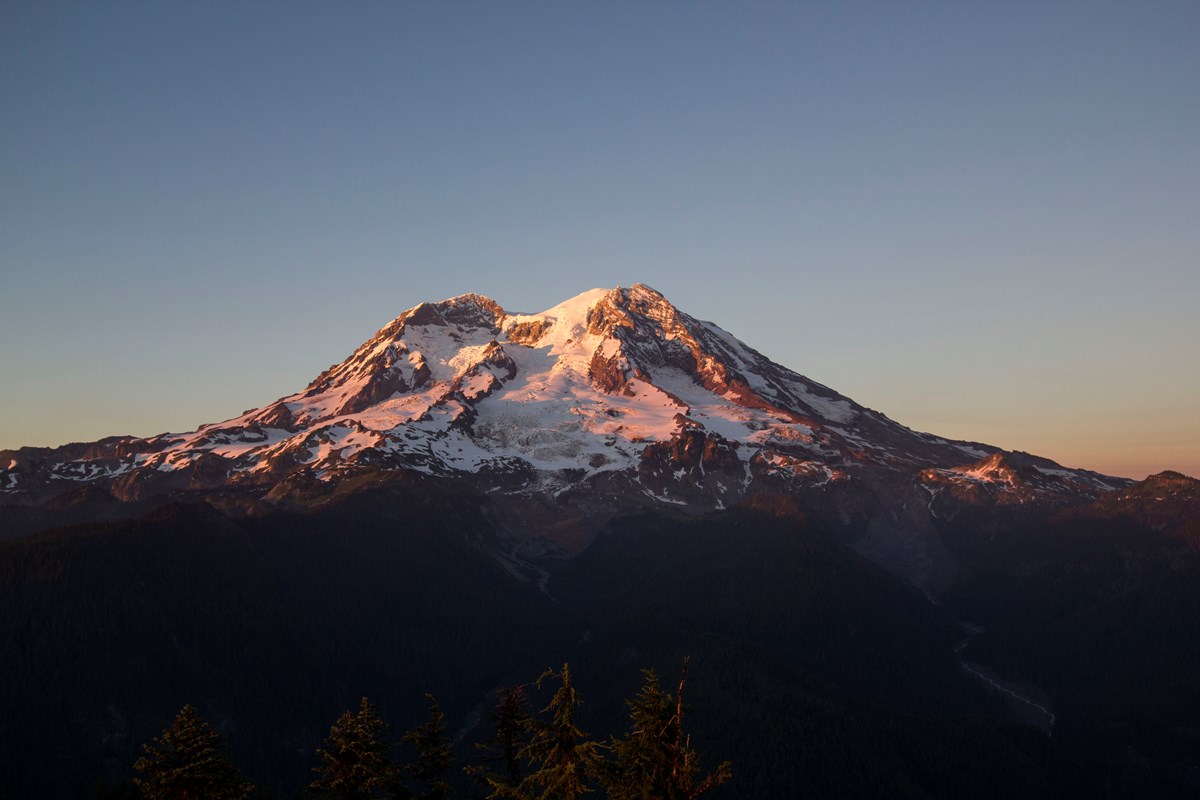
Even though it is busy, July through September offer the broadest normal access to Paradise, Sunrise and mountain walks. August is our pick because the normal seasonal trip remains practical and average visits are 5% less than the peak in July. August is still a busy month. Snow can remain on trails and smoke can affect any summer trip; road access is not a trail-condition guarantee.
Check property dates and booking rules; a normal season does not mean a vacancy.
Compare Mount Rainier by month.
Compare monthly recreation visits, station weather and the normal seasonal choice for Paradise and Sunrise viewpoints and meadow walks with the normal summer road network.
Deep winter. Only the Nisqually Entrance reaches Longmire and Paradise, the Longmire gate closes nightly, and every vehicle must carry chains.Read the January guide →
January crowds
26,038 average January visits in 2021–2025.
Monthly recreation visits
47 annual records · 1979–2025
Scroll the chart to see all years →
Hover, focus or tap a bar to see its year and value.
NPS recreation visits are visits, not unique visitors or a measure of how busy an individual trail feels. Counts can reflect closures, disruptions and changes in counting methods.
The Longmire station sits inside the park at about 2,762 ft, near Longmire and the National Park Inn. These normals describe that lower district. Paradise and Sunrise are much higher and can be colder and snowier. Use a forecast for your planned stops; these monthly values cannot establish road openings or trail snow conditions.
January weather through the years at Longmire Rainier NPS, WA.
Average daily high and low (°F)
27 complete high-temperature records · 16 complete low-temperature records
■ High■ Low
Scroll the chart to see all years →
Hover, focus or tap a bar to see its year and value.
Monthly precipitation (inches)
16 complete rain records
Scroll the chart to see all years →
Hover, focus or tap a bar to see its year and value.
Longmire Rainier NPS, WA station observations, not a park-wide average or forecast. Complete quality-screened calendar months only, separately by metric. Daily high/low means and total precipitation; incomplete months stay null. No interpolation or substitution. Completed years only; separate from 1991-2020 normals.
All NPS-listed frontcountry campgrounds and the listed car-access lodges in the stated park scope. Normal operating seasons only; Open is not a claim about vacancies or current conditions. These are normal seasonal schedules, not room or campsite availability.
Developed campground
1Cougar Rock
Closed
Outside the normal seasonal window. Check exact operator dates.
2Ohanapecosh
Closed
Outside the normal seasonal window. Check exact operator dates.
3White River
Closed
Outside the normal seasonal window. Check exact operator dates.
Wilderness camping, guided stays and specialist backcountry accommodations follow separate access, permit and operating rules. They are outside this developed-stay comparison. Mowich Lake walk-in tent sites have a separate wilderness-permit scope and are outside the three auto-campground comparison.
The year's quietest month. Same winter routine: Nisqually Entrance only, a nightly gate at Longmire, chains in every vehicle. National Park Inn stays open.Read the February guide →
February crowds
16,368 average February visits in 2021–2025.
Monthly recreation visits
47 annual records · 1979–2025
Scroll the chart to see all years →
Hover, focus or tap a bar to see its year and value.
NPS recreation visits are visits, not unique visitors or a measure of how busy an individual trail feels. Counts can reflect closures, disruptions and changes in counting methods.
The Longmire station sits inside the park at about 2,762 ft, near Longmire and the National Park Inn. These normals describe that lower district. Paradise and Sunrise are much higher and can be colder and snowier. Use a forecast for your planned stops; these monthly values cannot establish road openings or trail snow conditions.
February weather through the years at Longmire Rainier NPS, WA.
Average daily high and low (°F)
30 complete high-temperature records · 24 complete low-temperature records
■ High■ Low
Scroll the chart to see all years →
Hover, focus or tap a bar to see its year and value.
Monthly precipitation (inches)
23 complete rain records
Scroll the chart to see all years →
Hover, focus or tap a bar to see its year and value.
Longmire Rainier NPS, WA station observations, not a park-wide average or forecast. Complete quality-screened calendar months only, separately by metric. Daily high/low means and total precipitation; incomplete months stay null. No interpolation or substitution. Completed years only; separate from 1991-2020 normals.
All NPS-listed frontcountry campgrounds and the listed car-access lodges in the stated park scope. Normal operating seasons only; Open is not a claim about vacancies or current conditions. These are normal seasonal schedules, not room or campsite availability.
Developed campground
1Cougar Rock
Closed
Outside the normal seasonal window. Check exact operator dates.
2Ohanapecosh
Closed
Outside the normal seasonal window. Check exact operator dates.
3White River
Closed
Outside the normal seasonal window. Check exact operator dates.
Wilderness camping, guided stays and specialist backcountry accommodations follow separate access, permit and operating rules. They are outside this developed-stay comparison. Mowich Lake walk-in tent sites have a separate wilderness-permit scope and are outside the three auto-campground comparison.
Still winter at Paradise. Ranger snowshoe walks usually run on weekends through March. The nightly gate and the chain rule still apply.Read the March guide →
March crowds
23,760 average March visits in 2021–2025.
Monthly recreation visits
47 annual records · 1979–2025
Scroll the chart to see all years →
Hover, focus or tap a bar to see its year and value.
NPS recreation visits are visits, not unique visitors or a measure of how busy an individual trail feels. Counts can reflect closures, disruptions and changes in counting methods.
The Longmire station sits inside the park at about 2,762 ft, near Longmire and the National Park Inn. These normals describe that lower district. Paradise and Sunrise are much higher and can be colder and snowier. Use a forecast for your planned stops; these monthly values cannot establish road openings or trail snow conditions.
March weather through the years at Longmire Rainier NPS, WA.
Average daily high and low (°F)
27 complete high-temperature records · 17 complete low-temperature records
■ High■ Low
Scroll the chart to see all years →
Hover, focus or tap a bar to see its year and value.
Monthly precipitation (inches)
19 complete rain records
Scroll the chart to see all years →
Hover, focus or tap a bar to see its year and value.
Longmire Rainier NPS, WA station observations, not a park-wide average or forecast. Complete quality-screened calendar months only, separately by metric. Daily high/low means and total precipitation; incomplete months stay null. No interpolation or substitution. Completed years only; separate from 1991-2020 normals.
All NPS-listed frontcountry campgrounds and the listed car-access lodges in the stated park scope. Normal operating seasons only; Open is not a claim about vacancies or current conditions. These are normal seasonal schedules, not room or campsite availability.
Developed campground
1Cougar Rock
Closed
Outside the normal seasonal window. Check exact operator dates.
2Ohanapecosh
Closed
Outside the normal seasonal window. Check exact operator dates.
3White River
Closed
Outside the normal seasonal window. Check exact operator dates.
Wilderness camping, guided stays and specialist backcountry accommodations follow separate access, permit and operating rules. They are outside this developed-stay comparison. Mowich Lake walk-in tent sites have a separate wilderness-permit scope and are outside the three auto-campground comparison.
Snow still covers Paradise, and every vehicle must carry chains until May 1. The regular nightly gate closures at Longmire end in spring.Read the April guide →
April crowds
31,480 average April visits in 2021–2025.
Monthly recreation visits
47 annual records · 1979–2025
Scroll the chart to see all years →
Hover, focus or tap a bar to see its year and value.
NPS recreation visits are visits, not unique visitors or a measure of how busy an individual trail feels. Counts can reflect closures, disruptions and changes in counting methods.
The Longmire station sits inside the park at about 2,762 ft, near Longmire and the National Park Inn. These normals describe that lower district. Paradise and Sunrise are much higher and can be colder and snowier. Use a forecast for your planned stops; these monthly values cannot establish road openings or trail snow conditions.
April weather through the years at Longmire Rainier NPS, WA.
Average daily high and low (°F)
29 complete high-temperature records · 19 complete low-temperature records
■ High■ Low
Scroll the chart to see all years →
Hover, focus or tap a bar to see its year and value.
Monthly precipitation (inches)
19 complete rain records
Scroll the chart to see all years →
Hover, focus or tap a bar to see its year and value.
Longmire Rainier NPS, WA station observations, not a park-wide average or forecast. Complete quality-screened calendar months only, separately by metric. Daily high/low means and total precipitation; incomplete months stay null. No interpolation or substitution. Completed years only; separate from 1991-2020 normals.
All NPS-listed frontcountry campgrounds and the listed car-access lodges in the stated park scope. Normal operating seasons only; Open is not a claim about vacancies or current conditions. These are normal seasonal schedules, not room or campsite availability.
Developed campground
1Cougar Rock
Closed
Outside the normal seasonal window. Check exact operator dates.
2Ohanapecosh
Closed
Outside the normal seasonal window. Check exact operator dates.
3White River
Closed
Outside the normal seasonal window. Check exact operator dates.
Wilderness camping, guided stays and specialist backcountry accommodations follow separate access, permit and operating rules. They are outside this developed-stay comparison. Mowich Lake walk-in tent sites have a separate wilderness-permit scope and are outside the three auto-campground comparison.
The meadows are still under snow while forest flowers start lower down. Paradise Inn usually opens in mid-May, and SR 123 to Ohanapecosh in late May.Read the May guide →
May crowds
85,473 average May visits in 2021–2025.
Monthly recreation visits
47 annual records · 1979–2025
Scroll the chart to see all years →
Hover, focus or tap a bar to see its year and value.
NPS recreation visits are visits, not unique visitors or a measure of how busy an individual trail feels. Counts can reflect closures, disruptions and changes in counting methods.
The Longmire station sits inside the park at about 2,762 ft, near Longmire and the National Park Inn. These normals describe that lower district. Paradise and Sunrise are much higher and can be colder and snowier. Use a forecast for your planned stops; these monthly values cannot establish road openings or trail snow conditions.
May weather through the years at Longmire Rainier NPS, WA.
Average daily high and low (°F)
27 complete high-temperature records · 16 complete low-temperature records
■ High■ Low
Scroll the chart to see all years →
Hover, focus or tap a bar to see its year and value.
Monthly precipitation (inches)
15 complete rain records
Scroll the chart to see all years →
Hover, focus or tap a bar to see its year and value.
Longmire Rainier NPS, WA station observations, not a park-wide average or forecast. Complete quality-screened calendar months only, separately by metric. Daily high/low means and total precipitation; incomplete months stay null. No interpolation or substitution. Completed years only; separate from 1991-2020 normals.
All NPS-listed frontcountry campgrounds and the listed car-access lodges in the stated park scope. Normal operating seasons only; Open is not a claim about vacancies or current conditions. These are normal seasonal schedules, not room or campsite availability.
Developed campground
1Cougar Rock
Part month
Normally late May to early October; snow can change the dates.
2Ohanapecosh
Part month
Normally late May to early October; snow can change the dates.
3White River
Closed
Outside the normal seasonal window. Check exact operator dates.
Wilderness camping, guided stays and specialist backcountry accommodations follow separate access, permit and operating rules. They are outside this developed-stay comparison. Mowich Lake walk-in tent sites have a separate wilderness-permit scope and are outside the three auto-campground comparison.
Visits jump to about half of July. Meadows melt out with early lilies, and snow can linger on Paradise trails. No timed entry in 2026.Read the June guide →
June crowds
224,875 average June visits in 2021–2025.
Monthly recreation visits
47 annual records · 1979–2025
Scroll the chart to see all years →
Hover, focus or tap a bar to see its year and value.
NPS recreation visits are visits, not unique visitors or a measure of how busy an individual trail feels. Counts can reflect closures, disruptions and changes in counting methods.
The Longmire station sits inside the park at about 2,762 ft, near Longmire and the National Park Inn. These normals describe that lower district. Paradise and Sunrise are much higher and can be colder and snowier. Use a forecast for your planned stops; these monthly values cannot establish road openings or trail snow conditions.
June weather through the years at Longmire Rainier NPS, WA.
Average daily high and low (°F)
39 complete high-temperature records · 30 complete low-temperature records
■ High■ Low
Scroll the chart to see all years →
Hover, focus or tap a bar to see its year and value.
Monthly precipitation (inches)
36 complete rain records
Scroll the chart to see all years →
Hover, focus or tap a bar to see its year and value.
Longmire Rainier NPS, WA station observations, not a park-wide average or forecast. Complete quality-screened calendar months only, separately by metric. Daily high/low means and total precipitation; incomplete months stay null. No interpolation or substitution. Completed years only; separate from 1991-2020 normals.
All NPS-listed frontcountry campgrounds and the listed car-access lodges in the stated park scope. Normal operating seasons only; Open is not a claim about vacancies or current conditions. These are normal seasonal schedules, not room or campsite availability.
Developed campground
1Cougar Rock
Open
Normally late May to early October; snow can change the dates.
2Ohanapecosh
Open
Normally late May to early October; snow can change the dates.
3White River
Part month
Normally late June through September; snow can change the dates.
Wilderness camping, guided stays and specialist backcountry accommodations follow separate access, permit and operating rules. They are outside this developed-stay comparison. Mowich Lake walk-in tent sites have a separate wilderness-permit scope and are outside the three auto-campground comparison.
The busiest and driest month. Many meadow flowers bloom by mid-July, and the road to Sunrise is usually open by July 1.Read the July guide →
July crowds
420,918 average July visits in 2021–2025.
Monthly recreation visits
47 annual records · 1979–2025
Scroll the chart to see all years →
Hover, focus or tap a bar to see its year and value.
NPS recreation visits are visits, not unique visitors or a measure of how busy an individual trail feels. Counts can reflect closures, disruptions and changes in counting methods.
The Longmire station sits inside the park at about 2,762 ft, near Longmire and the National Park Inn. These normals describe that lower district. Paradise and Sunrise are much higher and can be colder and snowier. Use a forecast for your planned stops; these monthly values cannot establish road openings or trail snow conditions.
July weather through the years at Longmire Rainier NPS, WA.
Average daily high and low (°F)
28 complete high-temperature records · 23 complete low-temperature records
■ High■ Low
Scroll the chart to see all years →
Hover, focus or tap a bar to see its year and value.
Monthly precipitation (inches)
33 complete rain records
Scroll the chart to see all years →
Hover, focus or tap a bar to see its year and value.
Longmire Rainier NPS, WA station observations, not a park-wide average or forecast. Complete quality-screened calendar months only, separately by metric. Daily high/low means and total precipitation; incomplete months stay null. No interpolation or substitution. Completed years only; separate from 1991-2020 normals.
All NPS-listed frontcountry campgrounds and the listed car-access lodges in the stated park scope. Normal operating seasons only; Open is not a claim about vacancies or current conditions. These are normal seasonal schedules, not room or campsite availability.
Developed campground
1Cougar Rock
Open
Normally late May to early October; snow can change the dates.
2Ohanapecosh
Open
Normally late May to early October; snow can change the dates.
3White River
Open
Normally late June through September; snow can change the dates.
Wilderness camping, guided stays and specialist backcountry accommodations follow separate access, permit and operating rules. They are outside this developed-stay comparison. Mowich Lake walk-in tent sites have a separate wilderness-permit scope and are outside the three auto-campground comparison.
Close to July's crowds. The meadows are usually at peak bloom early in the month. Late summer is fire season, so check current conditions.Read the August guide →
August crowds
398,276 average August visits in 2021–2025.
Monthly recreation visits
47 annual records · 1979–2025
Scroll the chart to see all years →
Hover, focus or tap a bar to see its year and value.
NPS recreation visits are visits, not unique visitors or a measure of how busy an individual trail feels. Counts can reflect closures, disruptions and changes in counting methods.
The Longmire station sits inside the park at about 2,762 ft, near Longmire and the National Park Inn. These normals describe that lower district. Paradise and Sunrise are much higher and can be colder and snowier. Use a forecast for your planned stops; these monthly values cannot establish road openings or trail snow conditions.
August weather through the years at Longmire Rainier NPS, WA.
Average daily high and low (°F)
32 complete high-temperature records · 26 complete low-temperature records
■ High■ Low
Scroll the chart to see all years →
Hover, focus or tap a bar to see its year and value.
Monthly precipitation (inches)
28 complete rain records
Scroll the chart to see all years →
Hover, focus or tap a bar to see its year and value.
Longmire Rainier NPS, WA station observations, not a park-wide average or forecast. Complete quality-screened calendar months only, separately by metric. Daily high/low means and total precipitation; incomplete months stay null. No interpolation or substitution. Completed years only; separate from 1991-2020 normals.
All NPS-listed frontcountry campgrounds and the listed car-access lodges in the stated park scope. Normal operating seasons only; Open is not a claim about vacancies or current conditions. These are normal seasonal schedules, not room or campsite availability.
Developed campground
1Cougar Rock
Open
Normally late May to early October; snow can change the dates.
2Ohanapecosh
Open
Normally late May to early October; snow can change the dates.
3White River
Open
Normally late June through September; snow can change the dates.
Wilderness camping, guided stays and specialist backcountry accommodations follow separate access, permit and operating rules. They are outside this developed-stay comparison. Mowich Lake walk-in tent sites have a separate wilderness-permit scope and are outside the three auto-campground comparison.
Visits fall to about half of July, and meadow plants turn red and gold. Sunrise Road starts closing nightly in late September.Read the September guide →
September crowds
234,962 average September visits in 2021–2025.
Monthly recreation visits
47 annual records · 1979–2025
Scroll the chart to see all years →
Hover, focus or tap a bar to see its year and value.
NPS recreation visits are visits, not unique visitors or a measure of how busy an individual trail feels. Counts can reflect closures, disruptions and changes in counting methods.
The Longmire station sits inside the park at about 2,762 ft, near Longmire and the National Park Inn. These normals describe that lower district. Paradise and Sunrise are much higher and can be colder and snowier. Use a forecast for your planned stops; these monthly values cannot establish road openings or trail snow conditions.
September weather through the years at Longmire Rainier NPS, WA.
Average daily high and low (°F)
38 complete high-temperature records · 28 complete low-temperature records
■ High■ Low
Scroll the chart to see all years →
Hover, focus or tap a bar to see its year and value.
Monthly precipitation (inches)
32 complete rain records
Scroll the chart to see all years →
Hover, focus or tap a bar to see its year and value.
Longmire Rainier NPS, WA station observations, not a park-wide average or forecast. Complete quality-screened calendar months only, separately by metric. Daily high/low means and total precipitation; incomplete months stay null. No interpolation or substitution. Completed years only; separate from 1991-2020 normals.
All NPS-listed frontcountry campgrounds and the listed car-access lodges in the stated park scope. Normal operating seasons only; Open is not a claim about vacancies or current conditions. These are normal seasonal schedules, not room or campsite availability.
Developed campground
1Cougar Rock
Open
Normally late May to early October; snow can change the dates.
2Ohanapecosh
Open
Normally late May to early October; snow can change the dates.
3White River
Part month
Normally late June through September; snow can change the dates.
Wilderness camping, guided stays and specialist backcountry accommodations follow separate access, permit and operating rules. They are outside this developed-stay comparison. Mowich Lake walk-in tent sites have a separate wilderness-permit scope and are outside the three auto-campground comparison.
Storms return. Paradise Inn generally closes in early October, and the road to Sunrise and White River closes for winter by mid-October or earlier.Read the October guide →
October crowds
134,477 average October visits in 2021–2025.
Monthly recreation visits
47 annual records · 1979–2025
Scroll the chart to see all years →
Hover, focus or tap a bar to see its year and value.
NPS recreation visits are visits, not unique visitors or a measure of how busy an individual trail feels. Counts can reflect closures, disruptions and changes in counting methods.
The Longmire station sits inside the park at about 2,762 ft, near Longmire and the National Park Inn. These normals describe that lower district. Paradise and Sunrise are much higher and can be colder and snowier. Use a forecast for your planned stops; these monthly values cannot establish road openings or trail snow conditions.
October weather through the years at Longmire Rainier NPS, WA.
Average daily high and low (°F)
20 complete high-temperature records · 13 complete low-temperature records
■ High■ Low
Scroll the chart to see all years →
Hover, focus or tap a bar to see its year and value.
Monthly precipitation (inches)
15 complete rain records
Scroll the chart to see all years →
Hover, focus or tap a bar to see its year and value.
Longmire Rainier NPS, WA station observations, not a park-wide average or forecast. Complete quality-screened calendar months only, separately by metric. Daily high/low means and total precipitation; incomplete months stay null. No interpolation or substitution. Completed years only; separate from 1991-2020 normals.
All NPS-listed frontcountry campgrounds and the listed car-access lodges in the stated park scope. Normal operating seasons only; Open is not a claim about vacancies or current conditions. These are normal seasonal schedules, not room or campsite availability.
Developed campground
1Cougar Rock
Part month
Normally late May to early October; snow can change the dates.
2Ohanapecosh
Part month
Normally late May to early October; snow can change the dates.
3White River
Closed
Outside the normal seasonal window. Check exact operator dates.
Wilderness camping, guided stays and specialist backcountry accommodations follow separate access, permit and operating rules. They are outside this developed-stay comparison. Mowich Lake walk-in tent sites have a separate wilderness-permit scope and are outside the three auto-campground comparison.
Winter rules start: chains in every vehicle from November 1 and a nightly gate at Longmire. Every other park road is closed for the season.Read the November guide →
November crowds
28,388 average November visits in 2021–2025.
Monthly recreation visits
47 annual records · 1979–2025
Scroll the chart to see all years →
Hover, focus or tap a bar to see its year and value.
NPS recreation visits are visits, not unique visitors or a measure of how busy an individual trail feels. Counts can reflect closures, disruptions and changes in counting methods.
The Longmire station sits inside the park at about 2,762 ft, near Longmire and the National Park Inn. These normals describe that lower district. Paradise and Sunrise are much higher and can be colder and snowier. Use a forecast for your planned stops; these monthly values cannot establish road openings or trail snow conditions.
November weather through the years at Longmire Rainier NPS, WA.
Average daily high and low (°F)
24 complete high-temperature records · 15 complete low-temperature records
■ High■ Low
Scroll the chart to see all years →
Hover, focus or tap a bar to see its year and value.
Monthly precipitation (inches)
11 complete rain records
Scroll the chart to see all years →
Hover, focus or tap a bar to see its year and value.
Longmire Rainier NPS, WA station observations, not a park-wide average or forecast. Complete quality-screened calendar months only, separately by metric. Daily high/low means and total precipitation; incomplete months stay null. No interpolation or substitution. Completed years only; separate from 1991-2020 normals.
All NPS-listed frontcountry campgrounds and the listed car-access lodges in the stated park scope. Normal operating seasons only; Open is not a claim about vacancies or current conditions. These are normal seasonal schedules, not room or campsite availability.
Developed campground
1Cougar Rock
Closed
Outside the normal seasonal window. Check exact operator dates.
2Ohanapecosh
Closed
Outside the normal seasonal window. Check exact operator dates.
3White River
Closed
Outside the normal seasonal window. Check exact operator dates.
Wilderness camping, guided stays and specialist backcountry accommodations follow separate access, permit and operating rules. They are outside this developed-stay comparison. Mowich Lake walk-in tent sites have a separate wilderness-permit scope and are outside the three auto-campground comparison.
Deep winter and short days. Ranger snowshoe walks at Paradise typically start in late December. Nisqually Entrance only, with chains in every vehicle.Read the December guide →
December crowds
19,405 average December visits in 2021–2025.
Monthly recreation visits
47 annual records · 1979–2025
Scroll the chart to see all years →
Hover, focus or tap a bar to see its year and value.
NPS recreation visits are visits, not unique visitors or a measure of how busy an individual trail feels. Counts can reflect closures, disruptions and changes in counting methods.
The Longmire station sits inside the park at about 2,762 ft, near Longmire and the National Park Inn. These normals describe that lower district. Paradise and Sunrise are much higher and can be colder and snowier. Use a forecast for your planned stops; these monthly values cannot establish road openings or trail snow conditions.
December weather through the years at Longmire Rainier NPS, WA.
Average daily high and low (°F)
22 complete high-temperature records · 18 complete low-temperature records
■ High■ Low
Scroll the chart to see all years →
Hover, focus or tap a bar to see its year and value.
Monthly precipitation (inches)
16 complete rain records
Scroll the chart to see all years →
Hover, focus or tap a bar to see its year and value.
Longmire Rainier NPS, WA station observations, not a park-wide average or forecast. Complete quality-screened calendar months only, separately by metric. Daily high/low means and total precipitation; incomplete months stay null. No interpolation or substitution. Completed years only; separate from 1991-2020 normals.
All NPS-listed frontcountry campgrounds and the listed car-access lodges in the stated park scope. Normal operating seasons only; Open is not a claim about vacancies or current conditions. These are normal seasonal schedules, not room or campsite availability.
Developed campground
1Cougar Rock
Closed
Outside the normal seasonal window. Check exact operator dates.
2Ohanapecosh
Closed
Outside the normal seasonal window. Check exact operator dates.
3White River
Closed
Outside the normal seasonal window. Check exact operator dates.
Wilderness camping, guided stays and specialist backcountry accommodations follow separate access, permit and operating rules. They are outside this developed-stay comparison. Mowich Lake walk-in tent sites have a separate wilderness-permit scope and are outside the three auto-campground comparison.
Rain, snow, latest-year counts, and the weather station
The Longmire station sits inside the park at about 2,762 ft, near Longmire and the National Park Inn. These normals describe that lower district. Paradise and Sunrise are much higher and can be colder and snowier. Use a forecast for your planned stops; these monthly values cannot establish road openings or trail snow conditions.
Month
Visits in 2025
Rain
Snow
Jan
28,052
11.45″
32.7″
Feb
12,733
8.60″
19.2″
Mar
23,593
7.55″
25.4″
Apr
41,504
5.93″
9.7″
May
99,974
4.75″
2.1″
Jun
251,066
3.70″
0.1″
Jul
428,242
1.22″
0.0″
Aug
430,922
1.49″
0.0″
Sep
168,751
3.50″
0.0″
Oct
98,921
9.00″
0.9″
Nov
30,232
12.96″
18.6″
Dec
21,352
12.42″
34.3″
How these scores are computed (and why there is no combined "best month")
Crowds
Higher scores mean fewer visits compared with this park's busiest month. We use 2021–2025 monthly averages from NPS.
July is the peak, so it scores 0. A score of 50 means half as many visits as the peak month. These are recreation visits, not unique visitors or a measure of trail crowding.
Weather
Higher scores favor comfortable daytime temperatures, less rain and average lows above freezing. Inputs are 1991–2020 NOAA normals at Longmire Rainier NPS, WA, not a forecast.
Daytime highs of 60–78°F earn the full comfort score. Rain above 1.5 inches per month lowers it. Scores are rounded and kept between 0 and 100.
Roads and lodging
These are normal operating patterns, not a score. Entrance hours and lodging seasons can be described, but they do not establish a percentage of the park that is accessible or how many rooms are available.
Access covers Nisqually-Paradise, Stevens Canyon, White River-Sunrise and the normal Mowich Lake approach. Normal seasons do not establish today’s road conditions.
All NPS-listed frontcountry campgrounds and the listed car-access lodges in the stated park scope. Normal operating seasons only; Open is not a claim about vacancies or current conditions.
Northeast approach toward White River and Sunrise; those roads have a winter closure season. These are outside-park areas, not a live property list or an availability claim.
August is our pick for Paradise and Sunrise viewpoints and meadow walks with the normal summer road network. August is still a busy month. Snow can remain on trails and smoke can affect any summer trip; road access is not a trail-condition guarantee.
Can you visit Mount Rainier in winter?
A winter trip needs a separate plan. The Nisqually approach is the normal winter vehicle route. Paradise access depends on weather and the gate schedule. Use the official road and operating calendar for your dates.
Compare other parks
Compare seasonal patterns and trip options using the same NPS visit data.
Olympic
Washington National Park sibling on a 2-park WA loop; same Pacific Northwest weather pattern, but three landscapes (coast / rainforest / Hurricane Ridge) instead of a single dominant volcano.
An independent guide using official data. Not affiliated with or endorsed by the National Park Service.
Crowds
2021–2025 monthly averages. NPS recreation visits, compared with the park’s own busiest month. Visits are not unique visitors or a count of people on a trail.
Weather
1991-2020 climate normals. NOAA’s Longmire Rainier NPS, WA station. These describe typical weather at the station, not every part of the park or a forecast.
Roads & lodging
Normal seasonal schedules. NPS guidance and official operator information. Confirm access, hours and availability before you travel.