Per-month · January

Mount Rainier in January.

January is a solitude-and-winter-recreation audience.

By Nicholas Major · Last updated

January at Mount Rainier is firmly an off-season month, with a five-year mean near 26,000 recreation visits, about 6% of July's peak. The Stevens Canyon and Sunrise roads are closed for the season; only the Nisqually-Longmire-Paradise corridor stays open on a day-use-only schedule, with the gate at Longmire closing overnight and reopening daily by ~9 a.m. weather permitting. Tire chains are required for all vehicles per NPS regardless of vehicle type. NOAA normals at the Longmire NPS station (~2,762 ft) put the daytime high near 37°F with overnight lows near 26°F and a January snowfall normal of 32.7 inches. Paradise at ~5,400 ft absorbs roughly twice that. The Carbon River and Mowich Lake corridors are no-vehicle-access while the WSDOT SR165 / Fairfax Bridge is closed. For visitors trading short daylight and frozen mornings for solitude in the snow-buried meadows, January is the cleanest low-crowd window of the year.

Crowd snapshot.

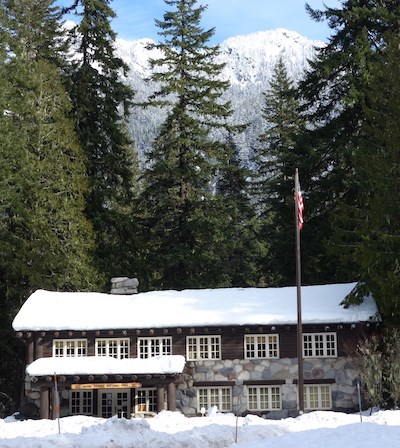
January runs about 26,000 recreation visits in the five-year mean, roughly 6% of July's peak and among the quietest months on the calendar. The visitor mix is mostly day-trippers from the Seattle-Tacoma corridor and a steady core of National Park Inn lodging guests at Longmire. Snowshoe walks at Paradise on Saturdays draw the largest single-day weekend bump; midweek the Paradise corridor is genuinely quiet. The Henry M. Jackson Visitor Center at Paradise runs winter cadence. The New Year's Day weekend is the only meaningful holiday-traffic spike; the rest of the month is firmly off-season.

FieldValue
January recreation visits (5-yr mean)26,038
Share of July's peak6%
Crowd bandlowest
Park's busiest month (5-yr mean)July
Park's quietest month (5-yr mean)February

Weather snapshot.

The Longmire NPS station records a January high near 37.2°F and a low near 25.9°F at the cooperative observer elevation of about 2,762 ft. The monthly snowfall normal of 32.7 inches at Longmire is in the heaviest band of the year; Paradise at ~5,400 ft absorbs roughly twice that and is one of the snowiest places on Earth where snowfall is measured regularly per NPS. The monthly precipitation normal of 11.45 inches is one of the year's wettest. Mornings on the corridor are routinely below freezing; the Paradise parking circle holds many feet of compacted snow.

FieldValue
Average high (°F)37.2
Average low (°F)25.9
Precipitation (inches)11.45
Snowfall (inches)32.7
Weather bandharsh-cold
StationLongmire Rainier NPS, WA at 2,762 ft

Access snapshot.

Stevens Canyon Road and Sunrise Road are closed for the season. Confirm closures on the NPS Mount Rainier conditions page. Only the Nisqually-Longmire-Paradise corridor stays open, on a day-use-only schedule with the gate at Longmire closing overnight and reopening daily by ~9 a.m. weather permitting. Chains are required for every vehicle per the NPS Mount Rainier winter recreation page. The NW corner, Carbon River and Mowich Lake. Has no wheeled access while the SR165 / Fairfax Bridge stays closed per WSDOT. Paradise Inn is closed for the season; National Park Inn at Longmire stays open year-round per the NPS Mount Rainier lodging page.

FieldValue
January access score (0-100)45
Year-round routeNisqually entrance to Longmire (open year-round; upper Paradise Road closes nightly + weekly weather in winter; Sunrise/Stevens Canyon/Mowich Lake seasonal)
Verify current road and permit statusOfficial NPS Mount Rainier conditions page

Seasonal events.

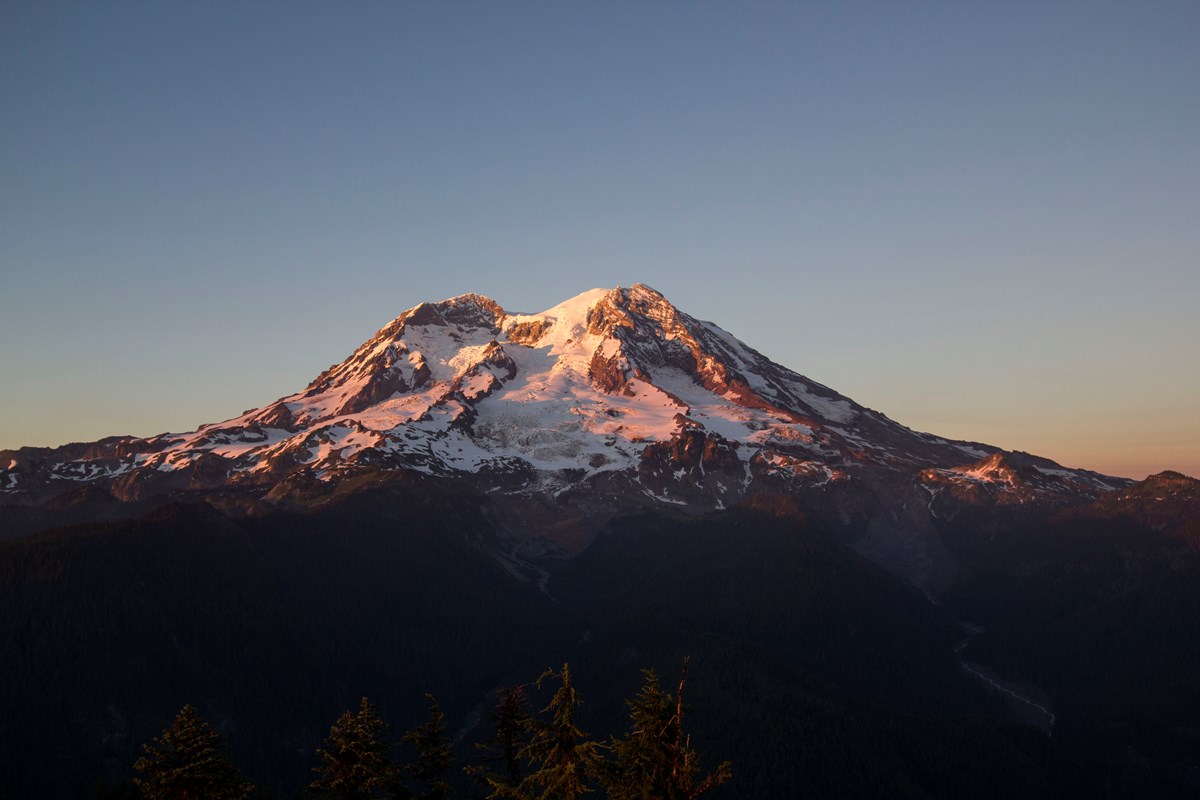
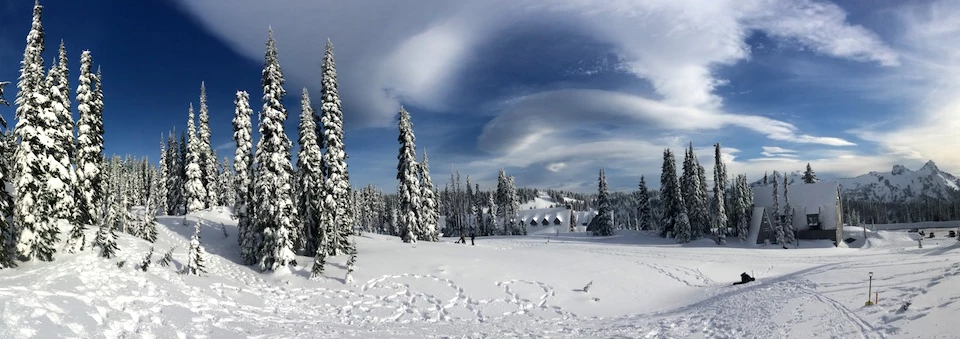
January is winter-recreation prime at the Paradise corridor. Snowshoe walks, cross-country skiing on the meadow loops, and sledding in the designated Paradise sledding area draw the season's steady weekend crowd. The Henry M. Jackson Visitor Center hosts ranger-led snowshoe walks on weekends when staffing and weather permit. Elk and deer are visible in the lower forests at Longmire and along the Nisqually approach; black bears are denned. Hoary marmots at Paradise are deep in hibernation through the month. Bald eagles and ravens are the conspicuous winter birds along the river corridors. The mountain itself, when clouds clear, photographs at its most dramatic against the snow.

Audience verdict.

January is a solitude-and-winter-recreation audience. It rewards visitors anchored at the National Park Inn or at Ashford who want quiet snow-buried meadows at Paradise, snowshoe and cross-country ski days on the corridor, and the chance to see the mountain in its iconic snow scene. It is not a family-with-young-kids month for high-country hiking: short daylight, chains required, day-use-only Paradise schedule, and deep snow above the corridor. Sunrise Road and Stevens Canyon are closed entirely. Climbers preparing for the spring season can begin early-season training trips. RV travelers should plan to base at a gateway RV park; in-park campgrounds are closed.

Methodology

Monthly recreation visits come from the official NPS Visitor Use Statistics Data Package, 2025 on NPS IRMA Stats; the statistic shown is Recreation Visits, the 5-year mean across 1979-2025. Climate normals come from NOAA NCEI's 1991-2020 U.S. Climate Normals at Longmire Rainier NPS, WA (station USC00454764, 2,762 ft elevation). The access score weights the Nisqually-Longmire-Paradise corridor's day-use status, Stevens Canyon and Sunrise Road seasonal openings, and Carbon River/Mowich Lake vehicle access for typical wheeled-vehicle openings that month. Year-variable specifics, Stevens Canyon and Sunrise Road open/close cadence, Paradise Inn and National Park Inn operating windows, the Paradise + Sunrise timed-entry reservation window, SR-165 / Fairfax Bridge status: drift year to year and are hedged in the editorial above; confirm current dates on the official NPS Mount Rainier page before booking. Independent site, not affiliated with the National Park Service.

Independence

Independent site. Not affiliated with or endorsed by the National Park Service. Data comes from the official NPS Visitor Use Statistics Data Package, 2025; editorial analysis is ours. The NPS Arrowhead and other NPS marks are not used.

Last updated · 2026-05-28