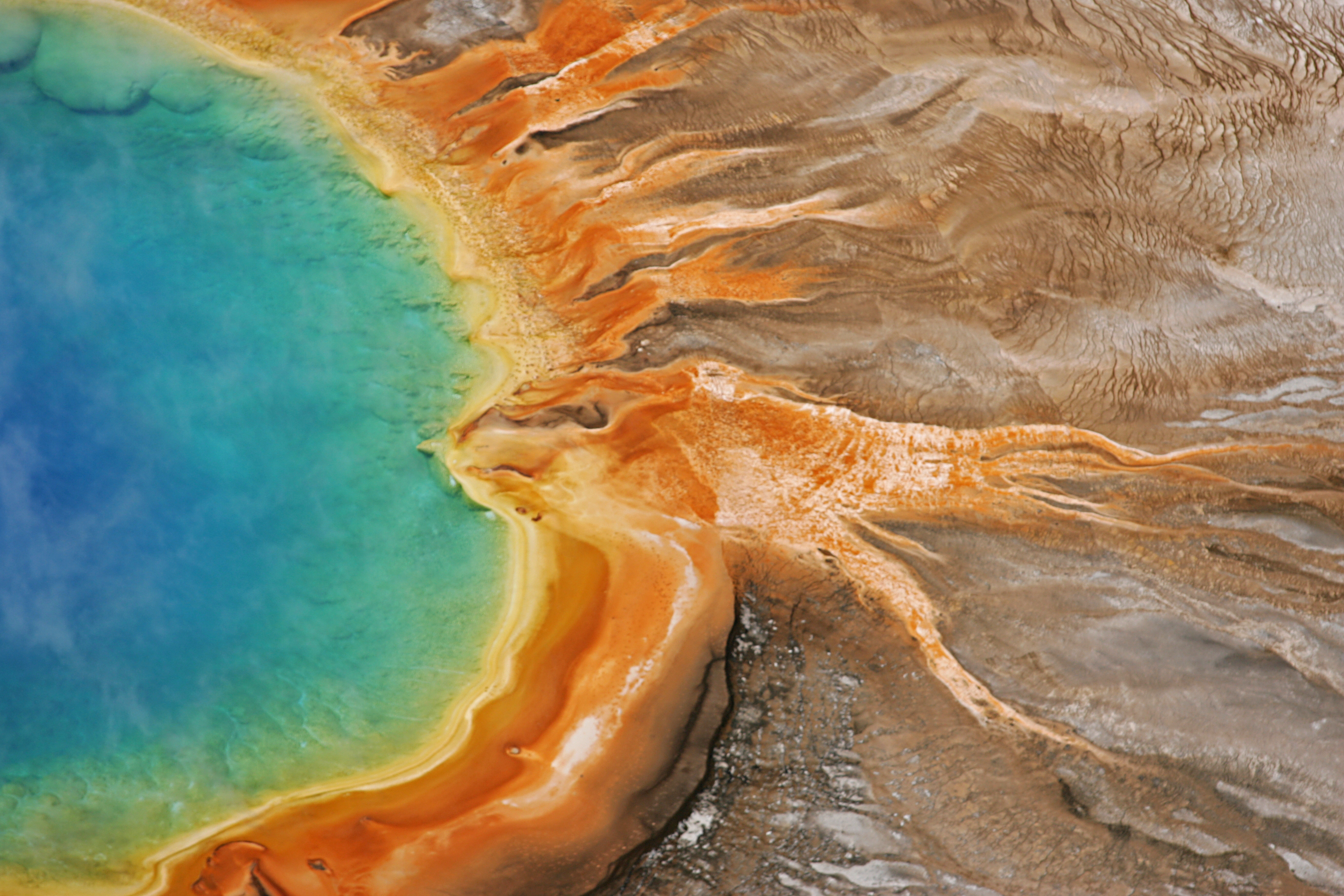
Brilliant blues and greens of a hot spring ringed by oranges, yellows, reds, and browns.
YELL · National Park
WY · MT · ID
Last updated
May 15, 2026

When to visit Yellowstone.

Yellowstone's three priorities — crowd, weather, access — point at different months. The best overall trade-off is the week after Labor Day (the first Monday of September; Sep 7 in 2026) when families head home but every entrance stays open. School-locked families should target the last 10 days of August — see below.

Annual visits4.43M
BusiestJuly
QuietestNovember
Years on file47
Photo · NPS/Jim Peaco · NPS source
Visiting Yellowstone.

Pick your month.

Three independent signals per month — crowd, weather, and access. Tap any row to read the full Yellowstone guide for that month. We deliberately do not combine these into a single "best month" number; different priorities point at different months.

Sourced · NPS + NOAA
Each score is 0–100
Green = good for visitor on that axis. Yellow = mixed. Orange/red = avoid for that reason. The word inside each chip is the answer; the line beneath is the data behind it.
Month Crowd Weather Access What that means
January
Empty
5% of peak · 42K visits
Harsh
31°F / 12°F (0°C / -11°C) · 11.5″ snow
Limited
Composite access score · 35/100
Interior closed to wheeled vehicles. Mammoth–Lamar–Cooke City corridor open. Snowcoach access only beyond.Read January →
February
Empty
5% of peak · 45K visits
Harsh
34°F / 12°F (1°C / -11°C) · 11.5″ snow
Limited
Composite access score · 35/100
Coldest readings of the year. Lamar wildlife watching is the reason to be here.Read February →
March
Empty
4% of peak · 33K visits
Harsh
42°F / 19°F (5°C / -7°C) · 10.9″ snow
Limited
Composite access score · 35/100
Plowing begins on interior roads. Snowcoach interior tours start winding down — confirm 2027 dates before booking.Read March →
April
Empty
8% of peak · 73K visits
Rough
50°F / 26°F (10°C / -3°C) · 7.8″ snow
Mostly open
Composite access score · 60/100
Spring road openings begin (mid-month). Bears emerge. Trails muddy, geyser basins quiet.Read April →
May
Moderate
55% of peak · 508K visits
Ideal
60°F / 35°F (15°C / 1°C) · 1.7″ snow
Full
Composite access score · 90/100
Most interior roads open by Memorial Day. Waterfalls run full. Crowds still light early.Read May →
June
Packed
90% of peak · 831K visits
Ideal
70°F / 42°F (21°C / 6°C) · 1.86″ precip
Full
Composite access score · 100/100
Operations effectively full. Lodging tight. Cold mornings into the 30s remain normal.Read June →
July
Packed
100% of peak · 923K visits
Ideal
81°F / 48°F (27°C / 9°C) · 1.27″ precip
Full
Composite access score · 100/100
Peak month. Plan trailheads for sunrise. Afternoon thunderstorms common.Read July →
August
Packed
89% of peak · 820K visits
Ideal
80°F / 47°F (27°C / 8°C) · 1.05″ precip
Full
Composite access score · 100/100
Bison rut. Crowds still elevated. School-restart week is the first crowd drop.Read August →
September
Packed
86% of peak · 796K visits
Ideal
69°F / 39°F (20°C / 4°C) · 0.6″ snow
Full
Composite access score · 100/100
Best tradeoff month. Wildlife active, weather workable, lodging easier after Labor Day.Read September →
October
Quiet
33% of peak · 302K visits
Mixed
54°F / 29°F (12°C / -2°C) · 4.7″ snow
Full
Composite access score · 85/100
Bull elk in rut at Mammoth. First snows in the high country. Lodges start closing mid-month.Read October →
November
Empty
3% of peak · 24K visits
Harsh
39°F / 19°F (4°C / -7°C) · 9.9″ snow
Limited
Composite access score · 30/100
Interior roads close to wheels (early month). Quietest period of the year.Read November →
December
Empty
4% of peak · 34K visits
Harsh
30°F / 12°F (-1°C / -11°C) · 12.6″ snow
Partial
Composite access score · 40/100
Winter operations begin (mid-month). Snowcoach and snowmobile season opens to interior.Read December →
How these scores are computed (and why there's no combined "best month")

Crowd score

Formula: 100 − (this month's visits ÷ park's peak month visits) × 100. Each park scored against its own peak, not against other parks.

Source: NPS Visitor Use Statistics Data Package 2025, Recreation Visits (TRV), 5-year monthly mean (2021-2025). Reproduce these numbers on the NPS IRMA Stats portal.

Reading it: July at Yellowstone reads 0 (peak). November reads 97 (nearly empty). A 50 means about half the park's peak crowd.

Weather score

Formula: weatherScore = round(max(0, min(100, dayComfort − precipPenalty − snowPenalty − freezePenalty))). The piecewise day-comfort function is continuous at every boundary.

  • Day comfort: tmax < 50°F → max(10, (tmax − 20) × 2) (cold tail); 50–60°F → 60 + (tmax − 50) × 4 (ramp to 100); 60–78°F → 100 (plateau); 78–85°F → 100 − (tmax − 78) × 5 (ramp to 65); > 85°F → max(30, 65 − (tmax − 85) × 5) (hot tail).
  • Precip penalty: max(0, prcpIn − 1.5) × 8 — kicks in above 1.5 in / month.
  • Snow penalty: snowIn × 2.5.
  • Night-freeze penalty: max(0, 32 − tmin) × 1.5 when tmin < 32°F.

Source: NOAA NCEI U.S. Climate Normals 1991-2020, station Yellowstone Park — Mammoth, WY (USC00489905, 6,194 ft).

Caveat: Mammoth is Yellowstone HQ at 6,194 ft. The northern-range districts (Lamar Valley, Tower) read close to these numbers. Old Faithful (7,365 ft) and Norris (7,484 ft) typically run 5-8°F colder; Yellowstone Lake (7,733 ft) and high passes colder still. Lake Yellowstone has its own NOAA station (USC00485345) at 7,892 ft if you need higher-elevation numbers.

Access score

Formula: For each named park road, count it open if its typical operating window covers that month. Score = round((sum of weights of open roads / sum of all weights) x 100). Where a park has a partial winter access mode, the profile documents that assumption in its access notes.

Route weights at Yellowstone:

  • Interior roads (wheeled vehicles): Open mid-Apr → early Nov
  • North Entrance (Gardiner, MT): Open year-round
  • East Entrance / Sylvan Pass (Cody, WY): Closed Nov → May
  • Beartooth Pass (US-212, Cooke City to Red Lodge): Open ~late May → mid-Oct
  • Lodging: Seasonal · summer May–Oct, winter mid-Dec–mid-Mar
  • Timed entry: Not in effect

Editorial methodology — the route weights themselves are author-curated, sourced from data/processed/operations/road_windows.csv and the park's own access caveats below the score table.

Caveat: The score reflects wheeled-vehicle road access only. Backcountry, hiking, lodging, shuttle, and other service availability are not directly included unless the park profile states otherwise.

Why no combined score?

A combined "best month" number forces a weighting — how much do you care about crowds vs. weather vs. access? Those weights are personal. A photographer optimizing for golden light weights differently than a parent locked to school break weights differently than a winter visitor with a 4WD. We show the inputs and let you decide. Use the per-month grid above to navigate to a deeper page.

Annual visits · 5-yr avg4.43M4,762,988 in 2025
Busiest monthJuly923K avg visits
Quietest monthNovember39× thinner than July
Best tradeoffSeptemberCrowds drop, ops still full
For your Yellowstone trip.

Pick your priority.

Crowd-free trails, full operations, or value-and-solitude. Each card points at a different month — pick the one that fits what you're actually after.

Source · NPS Recreation Visits
5-year monthly mean
If you want

Crowd-free trails

Mid-September → early October

Visits drop noticeably the week schools restart — observationally, not yet chart-backed at weekly resolution. Bull-elk rut at Mammoth keeps wildlife active through mid-October (NPS lists the rut window as early September to mid-October). Lodges begin closing mid-October — book before then.

Read the September deep-dive →
If you want

Full operations

Mid-June → August

All five entrances open. Interior roads, geyser basins, fishing rivers, and most lodges run at full schedule. Expect peak crowds and afternoon thunderstorms; plan trailheads at sunrise.

Read the July deep-dive →
If you want

Value & solitude

Late October → mid-April

Interior roads close to wheeled vehicles in early November. The Mammoth–Lamar–Cooke City corridor stays plowed year-round and is the easiest winter wildlife window. Beyond that, snowcoach or snowmobile only.

Read the winter guide →
For families with kids · June / July / August

Locked to school break?

If you're traveling in summer, target the last 10 days of August (roughly Aug 22-31 in 2026).

For families locked to school breaks, July is peak crowd. June trades crowds for snow on high passes and unreliable road openings. August averages near peak — but the last two weeks pull below early-month and below July because U.S. schools restart and families leave (Labor Day, the first Monday of September, is a national holiday that anchors the family pull-out). Full operations remain. Smoke risk fades. The hardest part is the lodging window: in-park lodges open reservations 13 months ahead (rolling, on the 5th of each month through Yellowstone National Park Lodges) and the late-August inventory goes fastest.

1

August

Full operations, bison rut (peaks late July to early August, NPS bison ecology), school-restart drop in last 10 days, dry trails, all passes open.
Wildfire/smoke risk in dry years, hot afternoons in the canyons, parking gridlock through mid-month.
2

July

Wildflowers, every road open, longest daylight, all lodges and visitor services running.
Absolute peak crowd of the year. NPS warns parking at Old Faithful, Norris, and Midway fills by mid-morning in summer. Afternoon thunderstorms common.
3

June

Waterfalls run hardest, wildlife with cubs/calves active, fewer crowds than July-August.
Interior roads still opening early-month; Beartooth and Dunraven sometimes delayed. Cool mornings (low 40s°F at Mammoth; upper-elevation areas like Old Faithful and Norris can still see overnight freezes). Mosquitoes intense at lower elevations.
Getting there — airports and ground transport

Best long-haul gateway: Bozeman Yellowstone International (BZN) — most flights and rental-car capacity, ~90 minutes to the North Entrance at Gardiner. Other options: Jackson Hole (JAC) for the South Entrance (~60 minutes), Cody Yellowstone Regional (COD/YRA) for the East Entrance (~60 minutes, summer only), and Salt Lake City International (SLC, ~5-6 hours by car) as a budget alternative. From the U.K. and Europe most travelers connect via Denver, Minneapolis, or Salt Lake. Rental car is effectively required — there is no in-park bus or rail; outside-the-park hotel shuttles are limited and seasonal. Speed limits in Yellowstone are mostly 35-45 mph; plan 2-3 hours of driving per day inside the park.

Junior Ranger program

Visitors of all ages can earn a Junior Ranger badge at any visitor center; the program offers age-tiered booklets (Geyser, Grizzly Bear, Bison) so younger and older kids work different activities. Booklet is around $5 — confirm the current price on arrival. Takes 2-4 hours of park activities to complete; it's the single highest-ROI kid activity in the park.

Lodging lead time

In-park lodges (Old Faithful Inn, Lake Hotel, Grant Village, Canyon, Roosevelt, Mammoth) open booking 13 months in advance through Yellowstone National Park Lodges: reservations drop on the 5th of each month for the same month 13 months later (so August 2026 inventory opened July 5, 2025; September 2026 opened August 5, 2025). July and August inventory typically goes within weeks of opening. Inside 6 months? Best family fallbacks: West Yellowstone, MT for west-side itineraries (closest to Old Faithful and Madison); Gardiner, MT for north-side and Lamar Valley wildlife days; Cody, WY if you're flying into Yellowstone Regional Airport (YRA); Cooke City, MT only for hardcore Lamar/Beartooth photographers. Avoid Bozeman or Jackson as primary bases — both add 60-90 minutes of driving each way.

Wildfire smoke risk

Mid-July through mid-September can carry regional wildfire smoke even when Yellowstone itself isn't burning. Check AirNow.gov and the NPS Yellowstone air-quality page for current conditions. August in non-fire years stays clear; in active fire years smoke can shut viewpoints for days.

Bears, elk, and bison with kids

Bison have injured more visitors in Yellowstone than any other animal (NPS safety) — almost always people who got too close for a photo. NPS rule: 25 yards from elk and bison, 100 yards from bears and wolves. Buy bear spray on arrival (no need to fly with it); NPS-affiliated rental kiosks operate at Canyon Village and Old Faithful, and outfitters in West Yellowstone also rent.

Altitude and hydration with kids

Most of Yellowstone sits between 6,000 and 8,500 ft. Kids feel altitude faster than adults — push water (target ~half their body weight in ounces per day), watch for crankiness, fatigue, or loss of appetite as early symptoms, and ease them into hikes the first day. Skip strenuous trail-running. Lower-elevation Gardiner and Mammoth (5,300-6,200 ft) are easier first nights than Old Faithful or Lake (7,300-7,700 ft).

Timed entry / reservations

Yellowstone has not used timed-entry permits. No reservation needed to drive in. The 7-day vehicle pass is $35 at the entrance, per vehicle, not per person (verify current rates on the NPS Yellowstone fees page). The $80 America the Beautiful annual pass covers entry to all U.S. national parks, and a Senior Pass ($20 lifetime for U.S. citizens 62+) covers the same. Park hotels and campgrounds are the bottleneck — not entry.

Best kid attractions

Easy boardwalks for short attention spans: Old Faithful + Upper Geyser Basin, Mammoth Hot Springs Lower Terrace, Midway Geyser Basin (Grand Prismatic), and the Mud Volcano area. The Lamar Valley drive at dawn is the highest-quality wildlife experience and requires no hiking.

For photographers · flexible calendar

The light, the window.

Yellowstone's best light is dawn in Lamar and late September across the park.

Yellowstone rewards photographers who anchor a trip to wildlife light (Lamar Valley dawn, Mammoth elk-rut backlight in October), not to convenience. The Grand Prismatic overlook reads best 11 a.m. - 2 p.m. when steam thins; Old Faithful predictions are posted on the NPS geyser activity page and the NPS Yellowstone app, so you can plan a longer shutter sequence around the predicted window. September brings the first dustings of high-country snow and aspen color in the Lamar and along the Beartooth — the trade is a shorter day-length window than midsummer.

Sunrise & sunset at the cardinal dates

DateSunriseSunset
March 21 (vernal equinox)7:24 AM7:37 PM
June 21 (summer solstice)6:36 AM9:13 PM
September 21 (autumnal equinox)7:09 AM7:22 PM
December 21 (winter solstice)7:58 AM4:44 PM
Times at Mammoth Hot Springs, WY (44.98°N, 110.70°W). Source: U.S. Naval Observatory Rise/Set/Transit/Twilight Data. Mountain Time (MDT March-November; MST December-February).
Lamar Valley dawn wildlife
Year-round; bears Apr-Oct, wolves easiest in winter snowpack

Pull out at Slough Creek, Hitching Post, or Lamar Canyon and be set up 15 minutes before official sunrise. NPS lists wolf-watching tips on the NPS Yellowstone wolves page.

Grand Prismatic Spring color
Late morning through early afternoon (11 a.m. - 2 p.m.)

Steam thins as air warms, revealing the rim color. The Fairy Falls overlook on the Midway Geyser Basin trail gives the iconic top-down composition.

Mammoth elk rut
Early September - mid-October

Bull elk in the rut around the Mammoth Hot Springs lodging and parade ground. NPS rule: 25 yards minimum (NPS Yellowstone wildlife safety).

Bison rut at Hayden / Lamar
Late July - early August

Open meadow light, big sound. NPS rule: 25 yards minimum (NPS bison ecology).

First high-country aspens
Mid-to-late September

Best on the Beartooth approach (US-212 east of Cooke City) and along the Lamar — earlier than the Tetons or central Rockies because of elevation and frost dates.

Air quality & smoke check: NPS Yellowstone air quality

Yellowstone crowds, by month.

Average recreation visits at Yellowstone National Park, calendar order. Each bar is normalised to the park's peak month — taller bar, busier month. Tap a row to read the park-month page.

Statistic · TRV
Window · 5 years
Month Crowd vs peak month Avg visits (5-yr) % of peak Band What's actually happening
JanuaryJan
42,153↓ 40,363 latest 5/ 100 Lowest Interior closed to wheeled vehicles. Mammoth–Lamar–Cooke City corridor open. Snowcoach access only beyond.
FebruaryFeb
44,668↓ 44,133 latest 5/ 100 Lowest Coldest readings of the year. Lamar wildlife watching is the reason to be here.
MarchMar
33,479↓ 33,284 latest 4/ 100 Lowest Plowing begins on interior roads. Snowcoach interior tours start winding down — confirm 2027 dates before booking.
AprilApr
73,470↑ 78,529 latest 8/ 100 Lowest Spring road openings begin (mid-month). Bears emerge. Trails muddy, geyser basins quiet.
MayMay
508,111↑ 566,363 latest 55/ 100 Moderate Most interior roads open by Memorial Day. Waterfalls run full. Crowds still light early.
JuneJun
830,987↑ 928,250 latest 90/ 100 Peak Operations effectively full. Lodging tight. Cold mornings into the 30s remain normal.
JulyJul
922,896↑ 975,109 latest 100/ 100 Peak Peak month. Plan trailheads for sunrise. Afternoon thunderstorms common.
AugustAug
820,128↑ 881,936 latest 89/ 100 Peak Bison rut. Crowds still elevated. School-restart week is the first crowd drop.
SeptemberSep
796,027↑ 839,579 latest 86/ 100 Peak Best tradeoff month. Wildlife active, weather workable, lodging easier after Labor Day.
OctoberOct
302,468↑ 313,959 latest 33/ 100 Moderate Bull elk in rut at Mammoth. First snows in the high country. Lodges start closing mid-month.
NovemberNov
23,807↑ 26,961 latest 3/ 100 Lowest Interior roads close to wheels (early month). Quietest period of the year.
DecemberDec
33,648↑ 34,522 latest 4/ 100 Lowest Winter operations begin (mid-month). Snowcoach and snowmobile season opens to interior.
September caveat

Yellowstone's September monthly mean (~86% of July's peak) includes the busy Labor Day weekend. Operationally and observationally, the school-restart effect pulls visits substantially through mid-September. We don't yet publish weekly NPS counts on this page — when we do, the September curve will show the drop explicitly. Treat the headline 'best week' recommendation as observational, not yet chart-backed at weekly resolution.

Yellowstone weather, by month.

NOAA climate normals 1991-2020 for the station closest to park headquarters. Use it as a planning floor, not a forecast — and read the elevation caveat below.

NOAA NCEI · 1991-2020
Station · Yellowstone Park — Mammoth, WY
Month Temperature range (°F) High Low Precip (in) Snow (in) Verdict
January
31°°F high 12°°F low 0.91inches 11.5inches Harsh cold
February
34°°F high 12°°F low 0.79inches 11.5inches Harsh cold
March
42°°F high 19°°F low 1.09inches 10.9inches Cold
April
50°°F high 26°°F low 1.40inches 7.8inches Cold
May
60°°F high 35°°F low 1.82inches 1.7inches Shoulder
June
70°°F high 42°°F low 1.86inches 0.3inches Warm
July
81°°F high 48°°F low 1.27inches 0.0inches Hot
August
80°°F high 47°°F low 1.05inches 0.0inches Warm
September
69°°F high 39°°F low 1.21inches 0.6inches Warm
October
54°°F high 29°°F low 1.34inches 4.7inches Cold
November
39°°F high 19°°F low 1.15inches 9.9inches Cold
December
30°°F high 12°°F low 0.91inches 12.6inches Harsh cold
Source: NOAA NCEI U.S. Climate Normals 1991-2020 · station Yellowstone Park — Mammoth, WY (USC00489905, 6,194 ft).
Elevation caveat: Mammoth is Yellowstone HQ at 6,194 ft. The northern-range districts (Lamar Valley, Tower) read close to these numbers. Old Faithful (7,365 ft) and Norris (7,484 ft) typically run 5-8°F colder; Yellowstone Lake (7,733 ft) and high passes colder still. Lake Yellowstone has its own NOAA station (USC00485345) at 7,892 ft if you need higher-elevation numbers.
Verified · NOAA NCEI direct

Year over year.

Annual recreation visits at Yellowstone National Park, 2015–2025. Hover any bar to compare; the chart is the same record the agency itself publishes.

Source · NPS IRMA Stats
Statistic · Recreation Visits
4.10M
4.26M
4.12M
4.12M
4.02M
3.81M
4.86M
3.29M
4.50M
4.74M
4.76M
2015
2016
2017
2018
2019
2020Reduced ops · pandemic
2021All-time record
2022June flood · north loop closed
2023
2024
2025Second-highest on record
Latest annual4,762,988
5-year mean4,431,841
11-year record high4,860,242 in 2021

Access & operations.

Roads, lodges, entrances. The seasonal pattern that turns a good plan on paper into a workable one in the field. Verify with NPS before you travel — these change.

Independent summary
Last updated · May 15, 2026
Open mid-Apr → early Nov

Interior roads (wheeled vehicles)

Spring opening begins mid-April and finishes by Memorial Day. Closure to wheels begins early November.

Open year-round

North Entrance (Gardiner, MT)

The only entrance open to wheeled vehicles year-round. Routes north to Mammoth and east to Lamar Valley and Cooke City stay plowed.

Closed Nov → May

East Entrance / Sylvan Pass (Cody, WY)

Highway 14/16/20 closes for winter to wheels. Reopens for snowcoach/snowmobile mid-December.

Open ~late May → mid-Oct

Beartooth Pass (US-212, Cooke City to Red Lodge)

Scenic northeast access. Closes for winter at first major storm; reopens late May or early June.

Seasonal · summer May–Oct, winter mid-Dec–mid-Mar

Lodging

Most in-park lodges run late May to early October. Mammoth Hotel and Old Faithful Snow Lodge run a separate winter season approximately mid-December through early-to-mid March; exact closing dates are published each summer and shift with snowpack. For a March trip, confirm via Yellowstone National Park Lodges before booking flights, or plan to base in Gardiner or Cooke City instead.

Not in effect

Timed entry

Yellowstone has not used a timed-entry permit. Parking at Old Faithful, Norris, and Midway Geyser Basin fills by mid-morning in summer.

For families with kids · year-round

Junior Ranger.

Yellowstone's Junior Ranger program lets kids work through the wooden-badge booklet, get sworn in at a visitor center, and pick up a side-program if they want a deeper science angle. The standard Junior Ranger booklet is free, funded through Yellowstone Forever. The optional Young Scientist booklet (ages 5+ at Old Faithful and Canyon) is a separate purchase, currently $5 (confirm at the desk).

Yellowstone Junior Ranger — age-tiered booklets at any visitor center.
Age tiers
  • All ages (4+) — Booklet activities scale with adult help; younger kids draw, older kids write. Park asks that participants be at least 4.
  • Pre-readers — Parents read prompts aloud and help with the trail/boardwalk activities.
  • Older kids and teens — Young Scientist booklet at Old Faithful and Canyon visitor centers (separate $5 purchase) adds a deeper science investigation; ages 14+ receive a key chain instead of the patch.
CostStandard Junior Ranger booklet is free (funded by Yellowstone Forever). Optional Young Scientist booklet is $5 at Old Faithful and Canyon visitor centers — confirm current price on arrival.
Where to get itAny Yellowstone visitor center (Albright at Mammoth, Old Faithful, Canyon, Madison, Fishing Bridge, Grant Village, West Yellowstone).
Time to complete2-4 hours of in-park activities; can be done across multiple days.
Badge ceremonyReturn the completed booklet to any visitor center for the swearing-in and badge.
Visiting Yellowstone.

Older travelers, RVs, and mobility.

Yellowstone is one of the more accessible large parks — many of the highest-value sights are short, flat boardwalks rather than long hikes. The constraints to plan around are RV length on a few key routes, lodging-style versus campground choice, and stair-free options for slower walking days.

Audience-segmented
Senior & mobility-aware

Retirees, RV travelers, and visitors with mobility considerations.

Senior Pass + America the Beautiful Pass

The America the Beautiful Senior Pass is $20 for a lifetime pass (U.S. citizens / permanent residents 62+) and covers entry to every national park including Yellowstone. The annual Senior Pass is $20/year. If both partners are 62+ only one pass is needed per vehicle. The standard America the Beautiful Annual Pass ($80) covers everyone else for one year and is the most-recommended option if you'll visit 2+ parks in a year.

RV access — length limits, dump stations, hookups

Fishing Bridge RV Park is the only full-hookup site in the park (40-ft length limit; reservations required through Yellowstone National Park Lodges). NPS-operated campgrounds (Mammoth, Indian Creek, Norris, Tower Fall, Slough Creek, Pebble Creek, Lewis Lake) take RVs up to 30-35 ft depending on the site — no hookups. Dump stations at Madison, Canyon, Grant Village, and Fishing Bridge. Avoid Beartooth Pass with anything towed or over 30 ft — tight switchbacks at 10,947 ft.

Boardwalks without stairs (mobility-easy)

Old Faithful and the Upper Geyser Basin boardwalk is paved and largely flat (parts wheelchair-accessible). Mammoth Hot Springs Lower Terrace is flat and accessible; the Upper Terrace has stairs and is steeper. Midway Geyser Basin (Grand Prismatic boardwalk) is flat. West Thumb Geyser Basin is flat and short. Mud Volcano area is partly accessible (some steep sections). The Lamar Valley drive offers world-class wildlife viewing with no hiking required.

Lodging-first option (skip the campground)

If you prefer hotels: Mammoth Hot Springs Hotel (open seasonally + winter), Old Faithful Inn (May–Oct), Lake Yellowstone Hotel (May–Oct), Canyon Lodge, Grant Village. All bookable through Yellowstone National Park Lodges on the 13-month rolling window. Mammoth Hotel is the only one open year-round and is the lowest-elevation in-park lodge (6,200 ft) — easiest on lungs.

Distances and pacing

Yellowstone covers 2.2 million acres — bigger than Rhode Island. Sunrise in Lamar Valley from Gardiner takes ~45 minutes of driving; Old Faithful from Mammoth is ~2 hours. Plan no more than two major regions per day. Bench frequency is good on the main boardwalks but limited on park roads — pack a folding seat for sunrise wildlife stakeouts.

For RV travelers · length matters

RV & big-rig.

Fishing Bridge is the only full-hookup option; the interior loop is RV-friendly to ~40 ft.

Yellowstone is one of the more RV-workable mainstream parks — but only at sites that fit your length. Fishing Bridge RV Park is the only full-hookup site inside the park (hard-sided RVs only, no tents) and books out months ahead through Yellowstone National Park Lodges. The non-hookup NPS campgrounds vary widely by site: the four reservable campgrounds (Madison 60 ft, Bridge Bay 60 ft, Grant Village 50 ft, Canyon 40 ft) accept larger rigs, while the smaller first-come/first-served campgrounds (Mammoth, Indian Creek, Norris, Tower Fall, Slough Creek, Pebble Creek, Lewis Lake) mostly cap around 25–35 ft. Confirm each campground's per-site limits at the NPS campgrounds page before booking.

RV length limits by road

Where your rig fits (and doesn't)

  • Grand Loop Road (interior)Max 75 ft — The main figure-8 is open to full-size RVs; the limit is the campground you can fit in, not the road. Plan for slow-vehicle pullouts at Dunraven, Sylvan, and Craig passes.
  • Beartooth Highway (US-212 east of Cooke City)Advisory — Tight switchbacks at 10,947 ft. A Cooke City-end sign advises against rigs over 40 ft; community consensus is to avoid towing or any rig over ~30 ft. Closes for winter; reopens late May or early June.
  • Dunraven Pass (Tower-Canyon)Advisory — Steep grades and narrow shoulders. Advisory for rigs over ~30 ft; verify current status on the NPS Yellowstone road status page.
  • Northeast Entrance Road (Lamar Valley)Max 75 ft — Plowed year-round, wide enough for most rigs. Beartooth (continuing east) is the constraint, not Lamar itself.
In-park hookups

Full hookups inside the park

Fishing Bridge RV Park only — full hookups (water, sewer, 50-amp electric), hard-sided RVs only, no tents or tent-trailers. Per the NPS campgrounds page the maximum site length is 95 ft (post-renovation). Long lead time required.

Dump stations

Where to dump tanks

Inside the park: Madison, Canyon, Grant Village, and Fishing Bridge campgrounds (may close in freezing weather; verify on the NPS campgrounds page). Outside the park: many gateway-town RV parks offer dump service to non-guests for a fee — call ahead.

Outside-the-park

Nearby RV parks

Leave the rig parked

Reaching signature sights without the RV

Park the rig at your campground and use a smaller vehicle (toad or rental) for day drives — the interior loop is 142 miles, so single-rig sightseeing days run long with a big rig. From West Yellowstone, Karst Stage and other operators run summer guided tours into the park. There is no in-park shuttle system; if you've parked at Fishing Bridge or Bridge Bay, plan day-drives by toad.

Visiting in winter · November → April

Driving in winter?

In winter, the only road you can drive is Gardiner → Mammoth → Lamar → Cooke City.

From early November through late April, the only road in Yellowstone open to wheeled vehicles is US-89 from Gardiner, Montana through the North Entrance to Mammoth, then east on the Northeast Entrance Road through Lamar Valley to Cooke City. It's roughly 56 miles end-to-end, plowed throughout winter. This is enough to see bison, wolves, bighorn sheep, and the northern range.

Access mode

What moves in winter

Everything else — Old Faithful, the Grand Canyon of the Yellowstone, Norris, Lake — is accessible in winter only by snowcoach (a motorized tracked-vehicle bus designed for snow-covered roads) or guided snowmobile tour. Tours run from West Yellowstone, Mammoth, and Flagg Ranch (south). Pricing varies significantly by operator and tour length, so check current rates with operators before booking — they change each season.

Season / status check

Confirm before the drive

The interior snowcoach/snowmobile season is approximately mid-December through mid-March. Exact opening and closing dates shift each year with snowpack and are published by NPS in late summer. A March 2027 trip is on the EDGE of the season — confirm with the official NPS Yellowstone page before booking; in low-snow years interior tours have ended in late February.

Your vehicle

Road-ready plan

The Gardiner-Mammoth-Cooke City corridor is plowed and patrolled but stays icy in shaded sections. AWD or 4WD with proper snow tires is strongly recommended. Studless winter tires meet Montana chain laws on US-212. The Beartooth Highway is CLOSED in winter — Cooke City is a dead-end from October through May.

Lodging

Where the trip anchors

Two in-park lodges operate in winter: Mammoth Hotel and Old Faithful Snow Lodge (snowcoach access only) — both bookable via Yellowstone National Park Lodges. The winter season typically runs mid-December to mid-March; late-March trips usually need to base in Gardiner or Cooke City instead.

Where to base

Gateway towns

Best March bases: Gardiner, MT (right at the North Entrance, walking distance to Mammoth services) or Cooke City, MT (small mountain town at the east end of the plowed corridor; you'll be driving back and forth into the Lamar). West Yellowstone is also open but you can't drive into the park from there in winter.

How this page
is built.

Independent, reader-supported.
Not affiliated with or endorsed
by the National Park Service.

Crowd numbers on this page are the Recreation Visits column from the NPS Visitor Use Statistics Data Package, 2025. Monthly figures are five-year arithmetic means (2021-2025) against each park's own peak month. We do not compare parks against each other for the crowd score — only against themselves.

Weather numbers are NOAA NCEI U.S. Climate Normals 1991-2020, drawn from the Yellowstone Park — Mammoth, WY station (USC00489905). The station sits at 6,194 ft; the elevation caveat above the weather table explains where this misreads the higher districts.

Access notes are an independent summary of NPS operating posture. We do not republish NPS pages; we link them. Conditions change — confirm road status, reservation requirements, and lodging windows on https://www.nps.gov/yell/index.htm before travel.

Crowd sourceNPS Visitor Use Statistics Data Package
Crowd range1979-2025
Weather sourceNOAA NCEI Normals
Weather period1991-2020
Last-mile check
The Almanac Mailing

The next Yellowstone
window, in your inbox.

One email a month. The park to point at, the week to book, the trail that's about to fill up. No sponsorships, no affiliate pushes. Unsubscribe in a click.

One email per month. We file your address with care.