Per-month · March

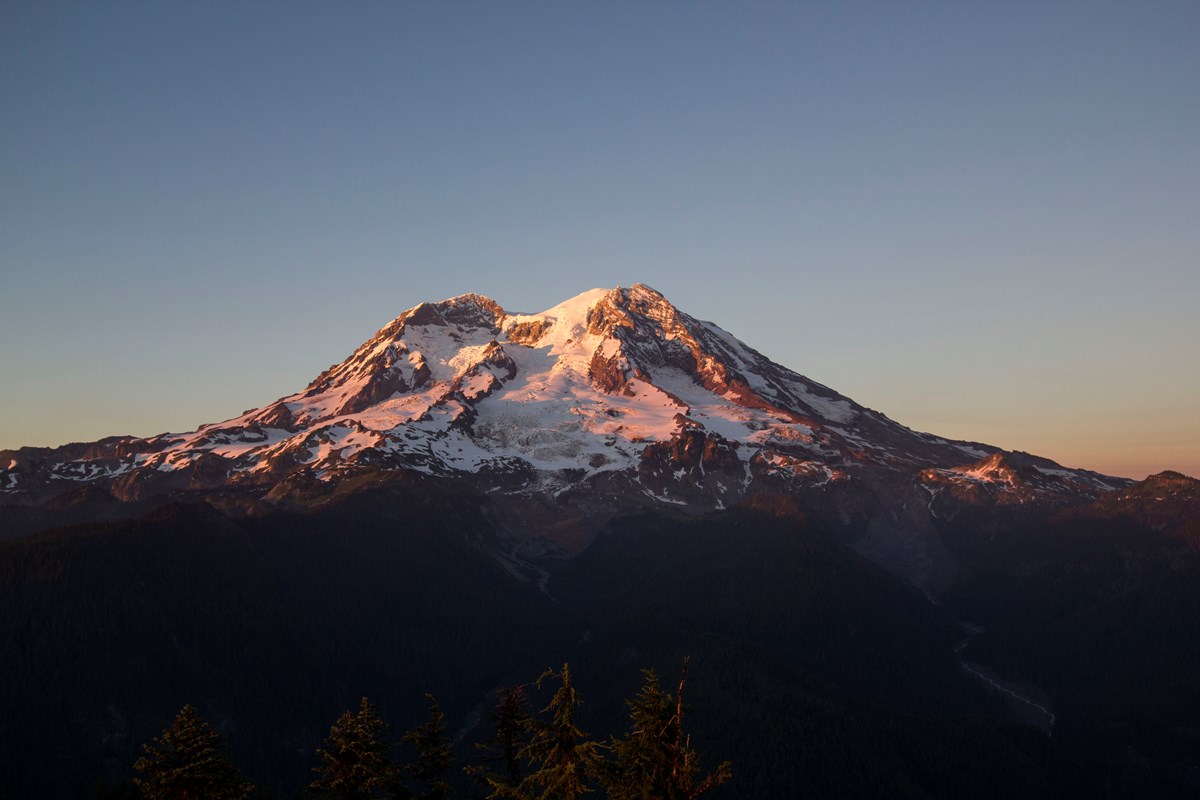
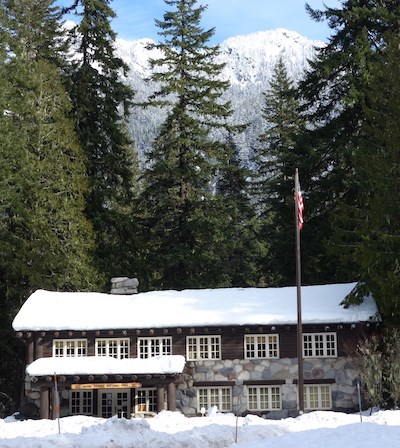
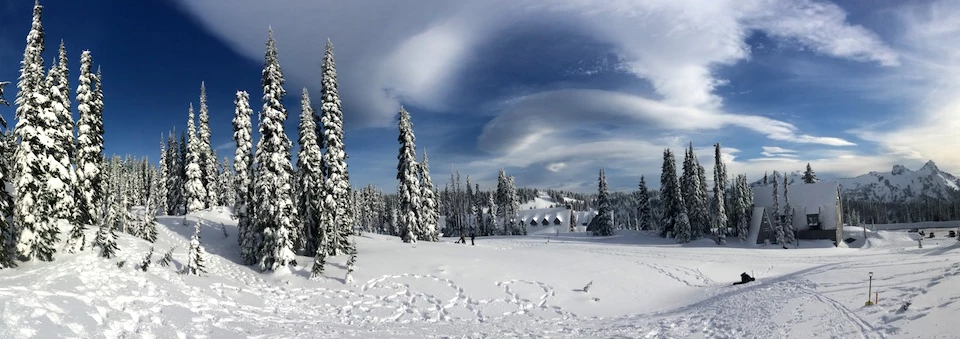
Mount Rainier in March.

March suits visitors who want winter-recreation conditions with slightly longer daylight: cross-country skiers and snowshoers on the Paradise corridor, photographers chasing the still-snowed-in mountain, and day-trippers from the Seattle-Tacoma corridor who can build a weekend around it.

By Nicholas Major · Last updated

March is a transition-style month at Mount Rainier but still firmly winter at the alpine corridor. The five-year mean is about 24,000 recreation visits; only roughly 6% of July's peak, and the visitor mix begins shifting from pure winter-recreation traffic to early-spring day-trippers from the Puget Sound corridor. The east-side roads remain shut; only the south-side Paradise corridor stays open on its day-use-only schedule, with chains required for every vehicle per NPS. The Longmire 1991-2020 cooperative record puts the March high near 45°F with overnight lows near 28°F and a snowfall normal of 25.4 inches. Paradise at the alpine elevation absorbs roughly twice that. Spring break traffic from Western Washington school districts pushes a small midweek bump. For visitors who want winter conditions at Paradise with slightly longer light, March is the strongest pre-spring window; but it remains a winter operation in every practical sense.

Crowd snapshot.

March averages roughly 24,000 recreation visits across the 2021-2025 record, roughly 6% of July's peak. The visitor mix begins shifting from pure winter-recreation traffic to early-spring day-trippers from the Puget Sound corridor. Spring break traffic from Western Washington school districts concentrates into the middle two weeks with weekend pulses at the Paradise sledding area and the snowshoe routes. National Park Inn at Longmire sees slightly steadier weekend bookings than January-February. The Paradise corridor remains the only road open inside the park.

FieldValue
March recreation visits (5-yr mean)23,760
Share of July's peak6%
Crowd bandlowest
Park's busiest month (5-yr mean)July
Park's quietest month (5-yr mean)February

Weather snapshot.

The Longmire NPS station records a March high near 44.6°F and a low near 27.7°F. The monthly snowfall normal of 25.4 inches at Longmire is one of the year's three heaviest months; the high country at Paradise absorbs materially more, and the deepest snowpack at Paradise often lands at the start of April rather than mid-March. The monthly precipitation normal of 7.55 inches remains in the wet half of the year. Daytime sun is strong on clear days, and south-facing pullouts melt out between storms, but shaded sections of road and the alpine meadows stay deeply snowbound.

FieldValue
Average high (°F)44.6
Average low (°F)27.7
Precipitation (inches)7.55
Snowfall (inches)25.4
Weather bandcold
StationLongmire Rainier NPS, WA at 2,762 ft

Access snapshot.

Stevens Canyon and Sunrise sit closed through March. Verify on the NPS Mount Rainier conditions page. South-side access is still the Nisqually-Longmire-Paradise corridor on the winter day-use-only window, with mandatory chains for every visitor vehicle per the NPS Mount Rainier winter recreation page; the Longmire gate continues to close overnight and reopen by ~9 a.m. weather permitting. The NW corner stays unreachable by car while the SR165 / Fairfax Bridge is out per WSDOT. Paradise Inn is still closed; National Park Inn at Longmire keeps its year-round window per the NPS Mount Rainier lodging page.

FieldValue
March access score (0-100)45
Year-round routeNisqually entrance to Longmire (open year-round; upper Paradise Road closes nightly + weekly weather in winter; Sunrise/Stevens Canyon/Mowich Lake seasonal)
Verify current road and permit statusOfficial NPS Mount Rainier conditions page

Seasonal events.

March remains winter-recreation prime at the Paradise corridor with snowpack typically near or at its peak. Snowshoe walks on the marked routes, cross-country skiing on the meadow loops, and sledding in the designated Paradise area continue at full season cadence. Ranger-led snowshoe walks at Paradise run weekends through the month. Migratory songbird activity begins building in the last 10 days at the lower-elevation Nisqually corridor as the first early-spring arrivals appear. Black bears remain denned through most of the month; the earliest emergence in mild years can land in the last week. Elk and deer in the lower forests near Longmire begin shifting their daily patterns as snow line at low elevations begins to retreat.

Audience verdict.

March suits visitors who want winter-recreation conditions with slightly longer daylight: cross-country skiers and snowshoers on the Paradise corridor, photographers chasing the still-snowed-in mountain, and day-trippers from the Seattle-Tacoma corridor who can build a weekend around it. It is not the month for any high-country hiking. Sunrise Road and Stevens Canyon are closed, alpine trails are deeply buried, and avalanche danger above the road on the south-side routes remains real. Families with Western Washington spring break calendars can use the Paradise sledding area and ranger snowshoe walks as an entry-level winter mix. Climbers preparing for the spring summit season ramp into early-season training.

Methodology

Monthly recreation visits come from the official NPS Visitor Use Statistics Data Package, 2025 on NPS IRMA Stats; the statistic shown is Recreation Visits, the 5-year mean across 1979-2025. Climate normals come from NOAA NCEI's 1991-2020 U.S. Climate Normals at Longmire Rainier NPS, WA (station USC00454764, 2,762 ft elevation). The access score weights the Nisqually-Longmire-Paradise corridor's day-use status, Stevens Canyon and Sunrise Road seasonal openings, and Carbon River/Mowich Lake vehicle access for typical wheeled-vehicle openings that month. Year-variable specifics, Stevens Canyon and Sunrise Road open/close cadence, Paradise Inn and National Park Inn operating windows, the Paradise + Sunrise timed-entry reservation window, SR-165 / Fairfax Bridge status: drift year to year and are hedged in the editorial above; confirm current dates on the official NPS Mount Rainier page before booking. Independent site, not affiliated with the National Park Service.

Independence

Independent site. Not affiliated with or endorsed by the National Park Service. Data comes from the official NPS Visitor Use Statistics Data Package, 2025; editorial analysis is ours. The NPS Arrowhead and other NPS marks are not used.

Last updated · 2026-05-28