Best time to visit Indiana Dunes
May through October
September is our pick because days are still warm for walking and average visits are 47% less than the peak in July. Lake conditions need a separate check before swimming.
For a first visit to Indiana Dunes National Park in Indiana, start at West Beach and climb the Dune Succession Trail for views of Lake Michigan. Then add a marsh or bog trail and a quieter central beach. The national park is separate from Indiana Dunes State Park, and each has its own entry.

Check beach, trail and road alerts, rip current warnings and the forecast before you go.
The national park has an entrance fee. Its annual pass is not accepted at Indiana Dunes State Park.
Each beach and trailhead has its own address and parking. Confirm the one you plan to use.
Open a monthly guide, then compare the park-wide visit pattern and the inland Valparaiso climate normals below.
May through October
September is our pick because days are still warm for walking and average visits are 47% less than the peak in July. Lake conditions need a separate check before swimming.
Indiana Dunes stretches along 15 miles of Lake Michigan shore in Indiana. Beaches, dunes, wetlands and woods sit side by side, with towns and the separate state park in between.
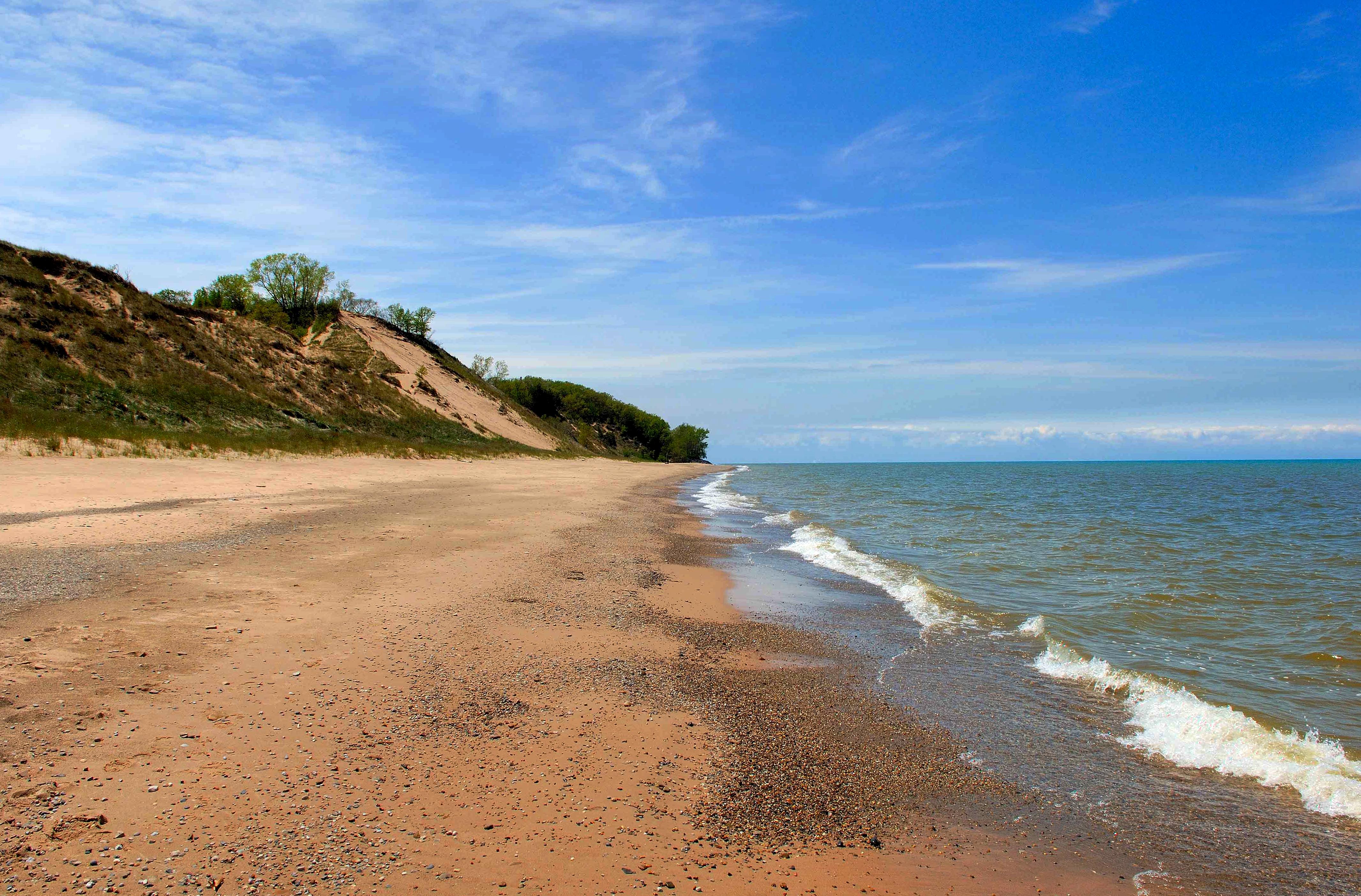
West Beach shows off some of the park's largest dunes. The Dune Succession Trail climbs a dune for views over Lake Michigan to the Chicago skyline.
On the map: A marks the Paul H. Douglas Center at the west access, not West Beach itself. West Beach can be busy in peak summer.
A beach and riverwalk with three parking lots and an accessible pavilion with restrooms and water.
On the map: this beach has no lettered point. Check the official page for any trail sections that are closed.
The Indiana Dunes Visitor Center is on State Road 49. Nearby are Kemil, Dunbar, Lake View and Central Avenue beaches, the Great Marsh and Cowles Bog.
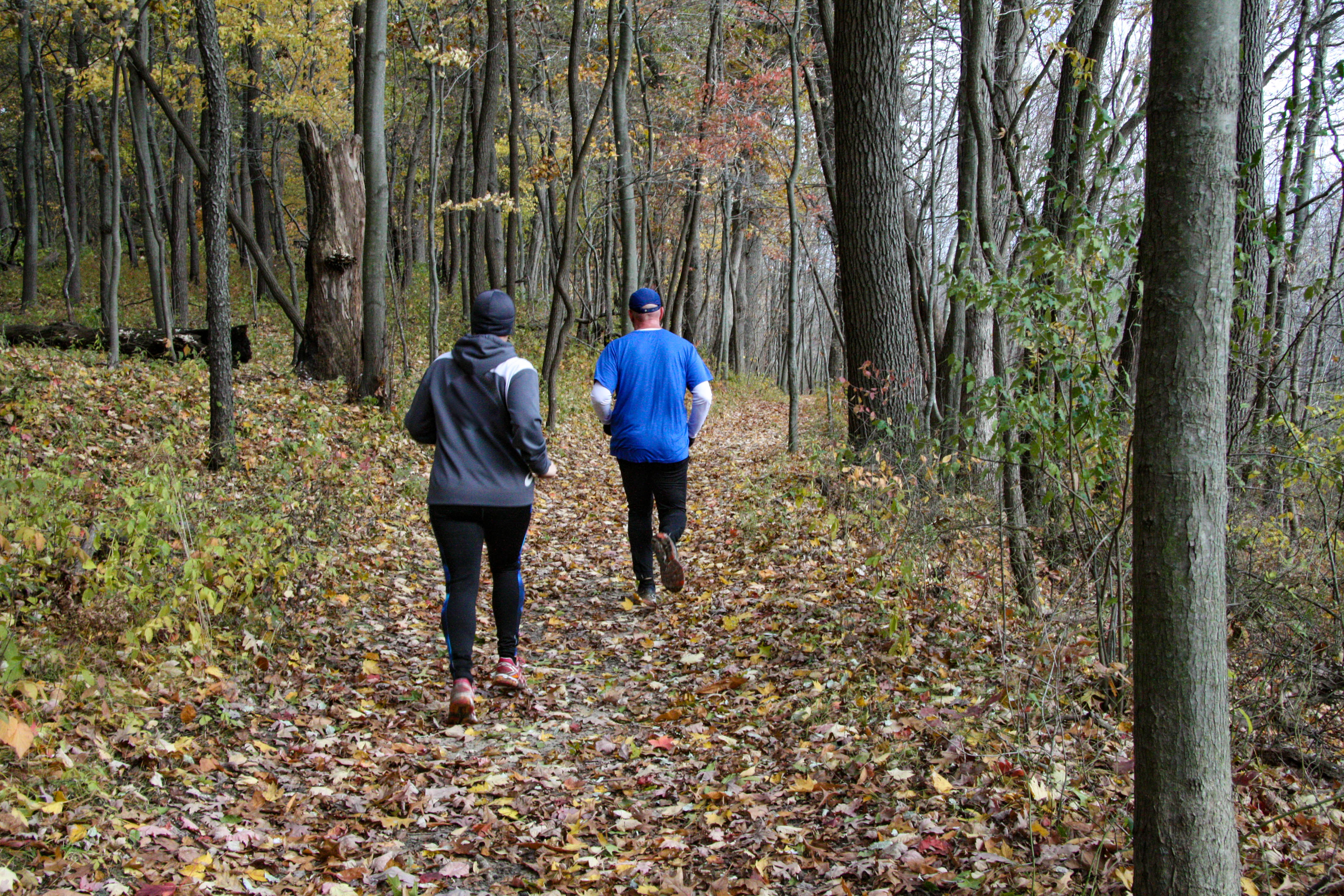
On the map: B marks the visitor center area, not a beach. The photo shows autumn on the Cowles Bog trail.
Mount Baldy is a dune at the east end of the park, with a beach and its own parking lot.
On the map: C marks the east access at Mount Baldy. The summit trail is open for scheduled tours only.
These are five-year monthly averages of park-wide NPS recreation visits. They compare seasonal demand, not unique visitors or full beach lots on a given day.
NPS recorded 2,629,497 recreation visits in 2025; the five-year annual mean is 2,822,398. In the monthly averages, July is busiest and January is quietest.
Compare typical daily highs, lows and total monthly precipitation. These NOAA normals come from an inland station south of the park, not the beach, and are not a forecast for your trip.
These normals come from Valparaiso Water Works at about 800 feet, an inland station south of the park. Lake breezes, waves and lake-effect snow can make the shore different. Air temperatures do not tell you about swimming conditions.
Summer is beach season. Spring and fall bring migrating birds, and winter brings ice along the shore.
The park is an important feeding and resting area for migrating birds. The Great Marsh Trail is a nice birding walk.
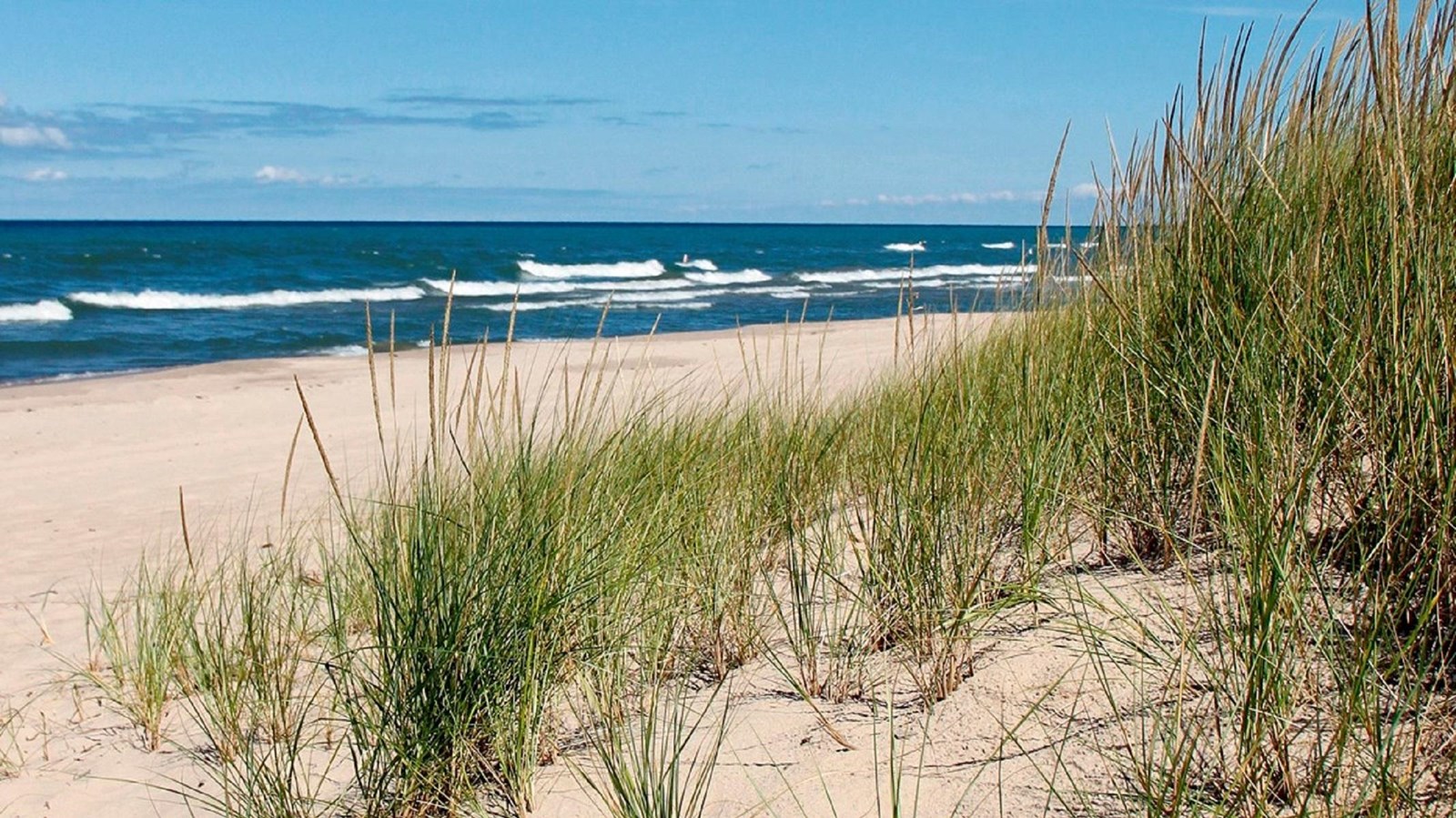
Beach season. West Beach can become busy in peak summer, and Dunewood Campground is open.
Beaches line the shore from West Beach in the west to Mount Baldy Beach in the east.
Rip currents are the most significant drowning threat in Lake Michigan. Obey posted warnings, and swim parallel to shore if caught.
Southbound birds follow the shoreline and are funneled into the dunes during fall migration. Dunewood Campground stays open into the fall.
Lake Michigan funnels southbound birds along the shoreline into the dunes. Great Marsh is a good place to watch them.
Bring binoculars and keep to the trails. Migration timing varies with the weather.
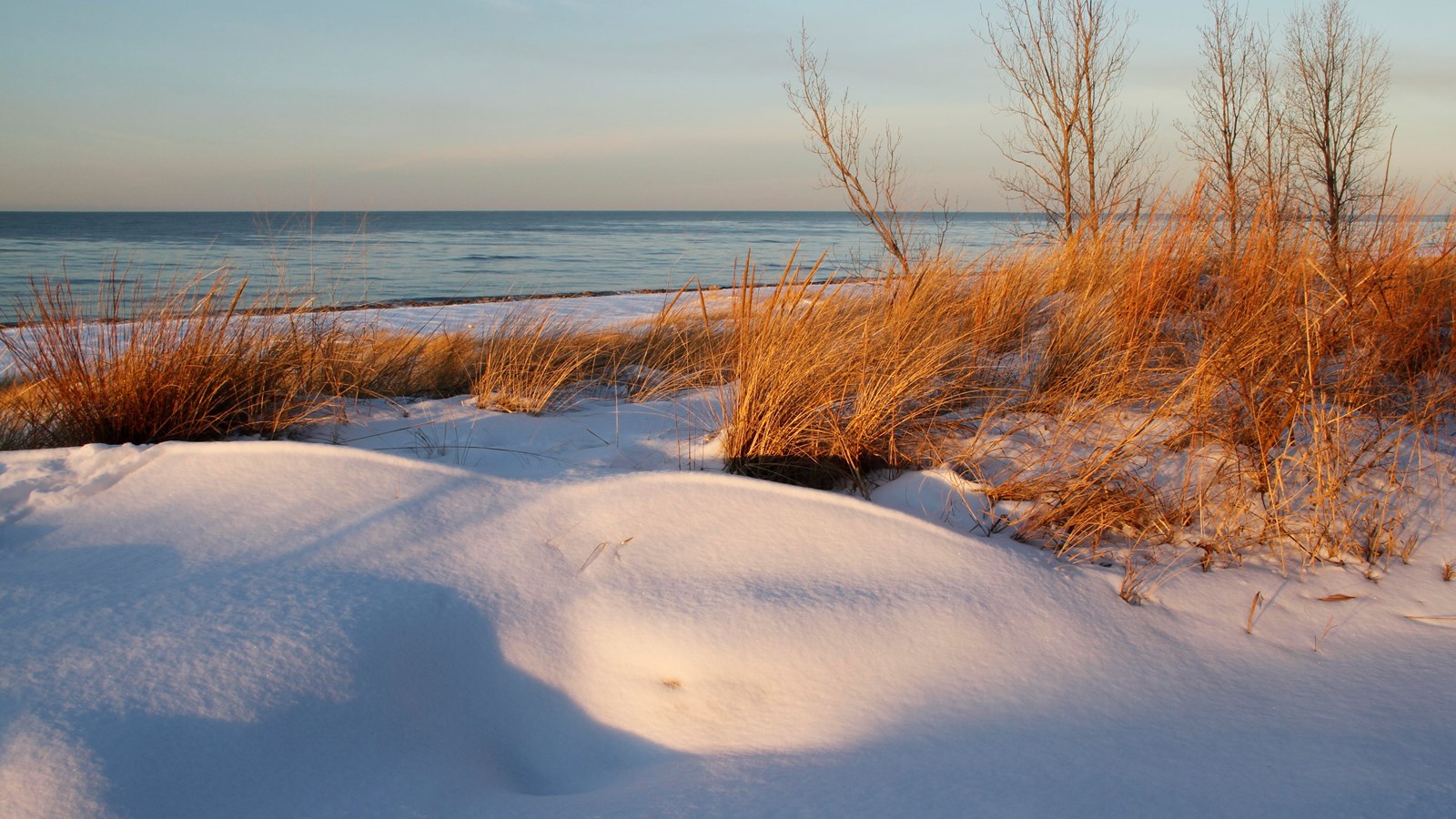
Snow may cover the dunes and ice may line the beach. Winter is quieter, and most trails stay open for winter hiking.
When conditions are right, ice formations line the shore of Lake Michigan.
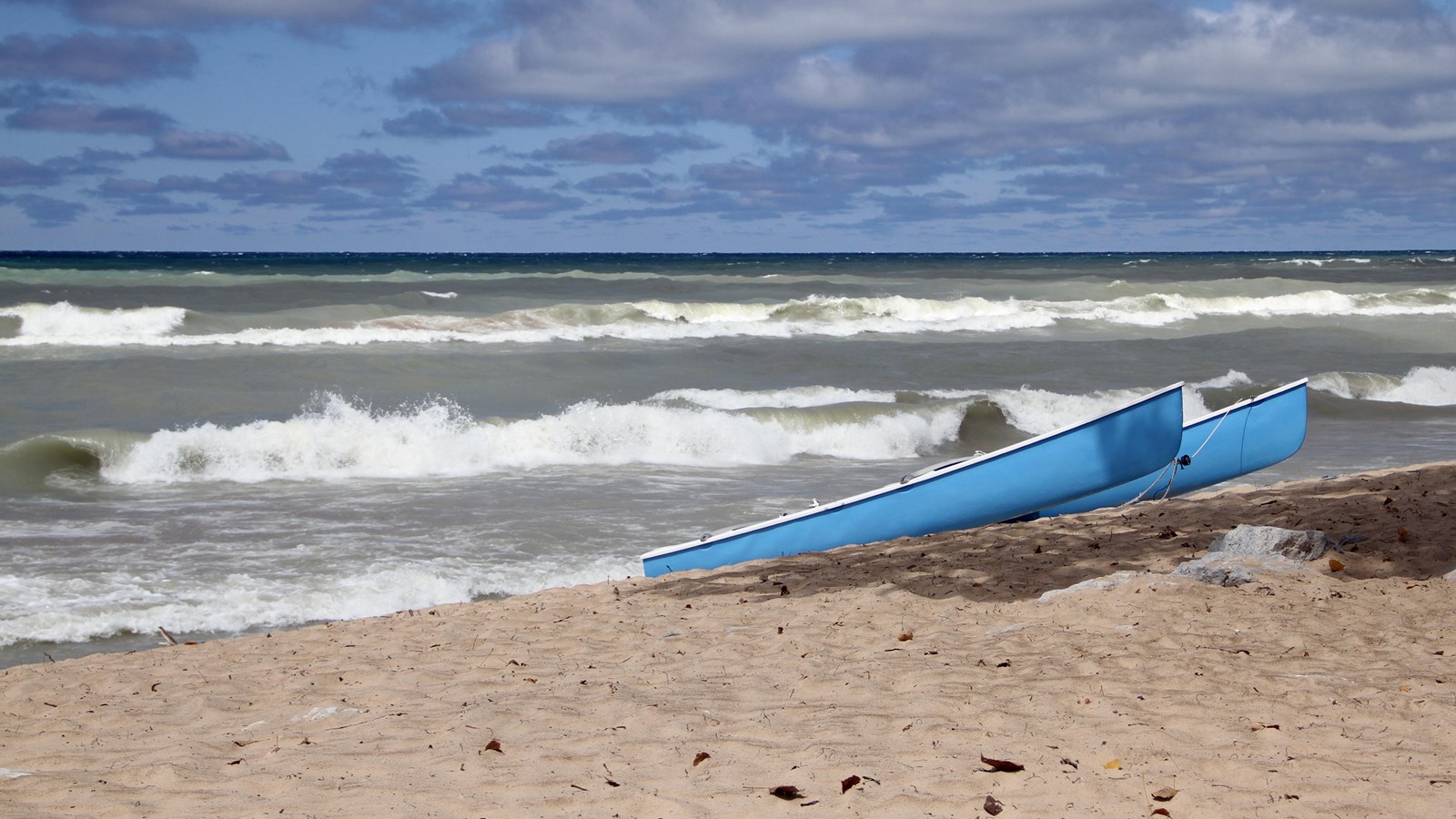
Never climb onto shelf ice. The photo shows Kemil Beach under snow.
Start with the big dunes at West Beach, then add the central lakeshore.
Count time in the park, not nights booked. The park is a 15-mile strip, so pick one end for each day.
Big dunes, a lake view and a beach.
Busy summer days: NPS says West Beach can become busy in peak summer, so arrive early.
Big dunes, a lake view and a beach.
Busy summer days: NPS says West Beach can become busy in peak summer, so arrive early.
A wetland walk, then a quieter beach.
Without a car: The visitor center is a 1.33-mile walk or ride from the Dune Park station on the South Shore Line.
Most visitors drive, using a separate address for each beach and trailhead. The South Shore Line train stops at four stations near park sites, with a walk to finish.
| Area | By car | Without a car |
|---|---|---|
| Drive to the West Beach parking lot. NPS says it can be busy in peak summer. | The NPS public-transportation page does not list a rail connection to West Beach, so check onward travel. Miller station is 2 miles from the Paul H. Douglas Center. | |
| Use one of its three parking lots. A park pass is needed to park there. | The NPS public-transportation page does not list a rail connection to Portage Lakefront. Check onward travel before relying on the train. | |
| The visitor center is on State Road 49, north of Interstate 94 and the Indiana Toll Road. | From Dune Park station, walk or ride 1.33 miles to the visitor center. Lake View Beach is a mile from Beverly Shores station. | |
| Use the Mount Baldy parking lot. | The NPS public-transportation page does not list a rail connection to Mount Baldy. Check onward travel before relying on the train. |
Camping is the main way to stay inside the park. Otherwise, choose a town near the end of the park you'll spend most time in.
Inside or outside?
Dunewood Campground and the Central Avenue walk-in sites must be reserved ahead. The park also lists one historic cabin, the Cypress Log Cabin, run by a business.
The park spans three counties and fifteen cities along the lake, so there are many places to stay and eat nearby.
| Where you'll spend most days | Stay in the park | Stay outside, on the same road |
|---|---|---|
Central lakeshoreGood for a first visit, the visitor center and the central beaches. Normal season: Camping spring to fall | Dunewood Campground in Beverly Shores, and the Central Avenue walk-in sites. | Porter, home of the Indiana Dunes Visitor Center on State Road 49. |
West endGood for West Beach, Portage and the biggest dunes. Normal season: Towns all year | No campground in this part of the park. | Gary, where a city bus passes the Paul H. Douglas Center. |
Seasons are the normal pattern, not this year's openings. Confirm dates and sites before you book.
Answers to the first decisions, with the official sources for details.
On the southern shore of Lake Michigan in Indiana. It covers 15 miles of coast and over 50 miles of trails. NPS Indiana Dunes home NPS eating and sleeping
No. They are separate parks with separate entrances. The national park's annual pass is not accepted at the state park. NPS West Beach NPS public transportation
Yes. You need a pass to enter the national park and its beaches. Check the official fees page for options. NPS swimming and beaches NPS fees and passes
Yes. The South Shore Line stops at four stations near park sites, with a walk to finish. Select weekend trains allow bikes. NPS public transportation
Use caution. Rip currents are the most significant drowning threat in Lake Michigan, and the bottom is uneven with deep drop-offs. Obey posted warnings. NPS swimming and beaches
The summit trail is open for scheduled tours only. The beach below is reached from the Mount Baldy parking lot. NPS park maps NPS eating and sleeping
An independent guide using official data. Not affiliated with or endorsed by the National Park Service.