Per-month · January

Indiana Dunes in January.

January serves a solitude-and-winter-recreation audience.

By Nicholas Major · Last updated

Indiana Dunes runs deep off-season through January, posting a five-year mean near 76,000 recreation visits — roughly 15% of July's peak. Every park road remains drivable; the flat Great Lakes geography here has no mountain pass to force a seasonal closure. The Valparaiso cooperative station (~800 ft) sets a January high near 32°F against overnight lows near 18°F, with monthly snowfall of 14.6 inches — the heaviest reading of the year. Immediate lakeshore lake-effect bands frequently exceed that inland figure when northerly winds drive cold air across open Lake Michigan water. Bald eagles foraging through winter work Trail Creek and the ice-edge open-water leads. Dunewood Campground sits closed for the season; the year-round amenity bases are Chesterton, Porter, Michigan City, and Valparaiso. Visitors trading short daylight and cold lake winds for solitude — snowshoeing the Cowles Bog Trail, quiet off-season beach walks — find January among the strongest low-crowd windows on the calendar.

Crowd snapshot.

January is the second-quietest month at Indiana Dunes by five-year mean, near 76,000 recreation visits and about 15% of July's peak. The visitor mix is mostly day-trippers from Chicago, northwest Indiana, and South Shore commuter-rail riders making short beach walks. Beach parking lots have abundant space; the Indiana Dunes Visitor Center desk runs winter cadence. New Year's Day weekend produces a small early-month bump as Chicago-area residents take advantage of holiday-week breaks. Weekday traffic on the park's interior corridors is minimal.

FieldValue
January recreation visits (5-yr mean)75,633
Share of July's peak15%
Crowd bandlow
Park's busiest month (5-yr mean)July
Park's quietest month (5-yr mean)January

Weather snapshot.

The Valparaiso NOAA station records a January high near 32.1°F and a low near 17.6°F. Monthly snowfall normal of 14.6 inches at the inland cooperative station is the year's heaviest — and lakeshore lake-effect bands frequently dump more on the immediate dunes. Wind off open Lake Michigan in northerly flow is the underrated hazard: wind-chill at the beach edge can run 15-20°F below the air temperature. Lake Michigan surface temperature drops into the mid-30s°F by month-end and ice begins to form along the shoreline during sustained cold snaps.

FieldValue
Average high (°F)32.1
Average low (°F)17.6
Precipitation (inches)2.38
Snowfall (inches)14.6
Weather bandharsh-cold
StationValparaiso Water Works, IN at 800 ft

Access snapshot.

All park roads stay open in January — Indiana Dunes has no seasonal road closures by the park's Great Lakes low-elevation geography. The West Beach access road is open year-round; fee staffing is reduced or off in winter. Confirm current conditions on the NPS Indiana Dunes conditions page. Mount Baldy's Beach Trail remains unrestricted year-round; the Summit Trail is closed except during ranger-led programs (winter ranger-led hikes are less frequent — verify on the NPS Mount Baldy page and the NPS Indiana Dunes calendar). Dunewood Campground is closed for the season — see the NPS campgrounds page for current operating window.

FieldValue
January access score (0-100)55
Year-round routeAll park roads open year-round — no seasonal closures by Great Lakes low-elevation geography (Mount Baldy summit trail is ranger-led only; Dunewood Campground operates seasonally)
Verify current conditions and Mount Baldy program scheduleOfficial NPS Indiana Dunes conditions page

Seasonal events.

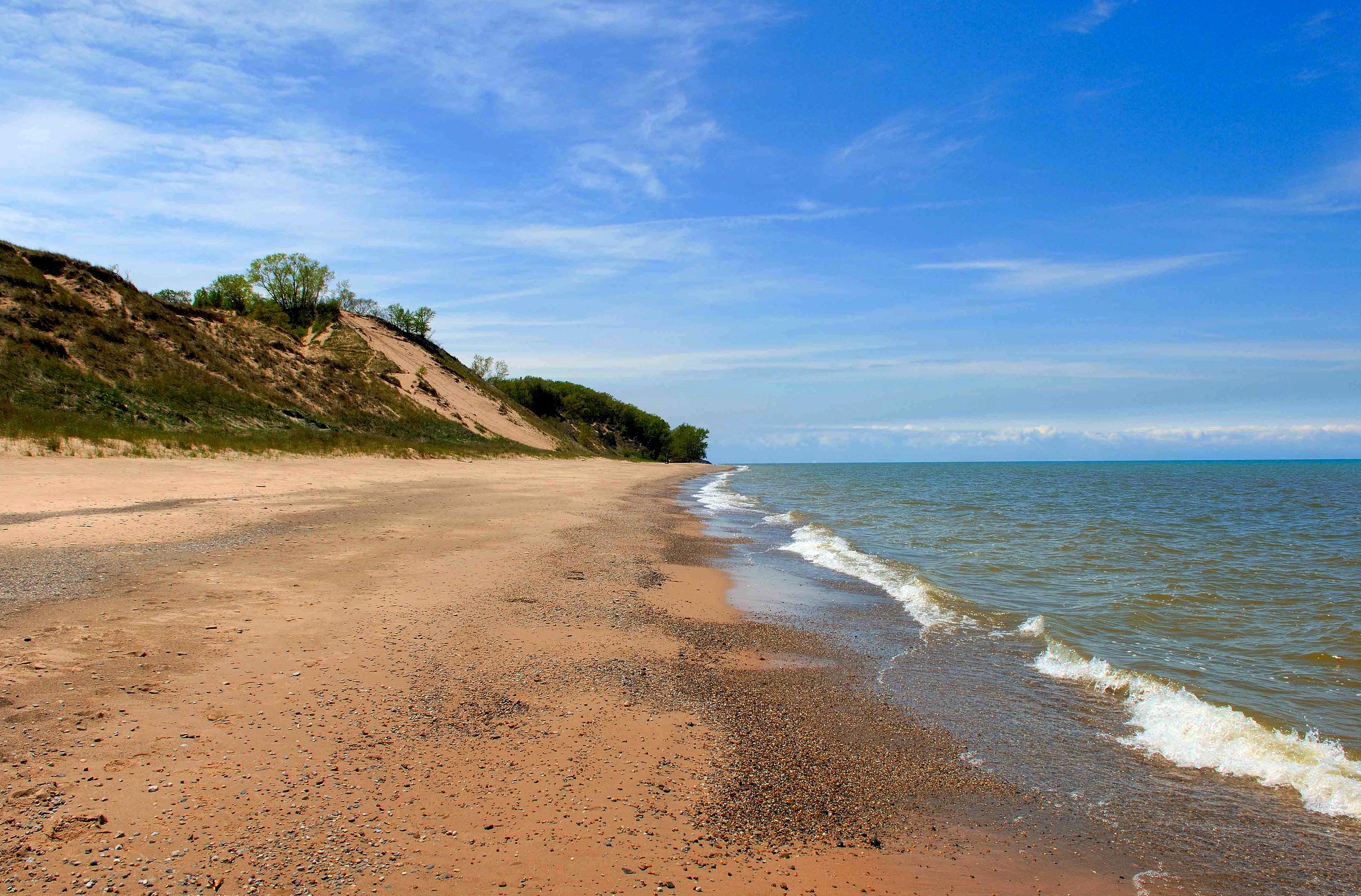
January is winter-prime for bald-eagle observation at Indiana Dunes. Wintering eagles forage along Trail Creek, the Little Calumet River, and the Lake Michigan ice edges where open water remains (Tier-2 Audubon Great Lakes winter eagle observation). Year-round residents — cardinals, blue jays, chickadees, downy woodpeckers, white-breasted nuthatches — hold territory through the oak savannas and the Bailly-Chellberg area. Lake Michigan ice formations along the south shore develop into dramatic ice shelves during sustained cold snaps; photographers anchor on cold-snap mornings. Cross-country skiing and snowshoeing are workable on the Cowles Bog Trail and at the Bailly-Chellberg area when snowpack permits. Beach walks along Mount Baldy beach and Central Avenue Beach produce the cleanest dune-pattern photography of the year as wind sculpts fresh snow over the sand.

Audience verdict.

January serves a solitude-and-winter-recreation audience. It rewards visitors anchored at Chesterton, Porter, Michigan City, or Valparaiso who want quiet beaches, eagle-watching along Trail Creek, snowshoeing or cross-country skiing on the Cowles Bog Trail, and low-sun dune-pattern photography along the lakeshore. It is not a families-with-young-kids beach month — beach water is dangerously cold for unprepared visitors, and short daylight cuts into kid itineraries. Mount Baldy summit ranger-led programs run on a reduced winter cadence — verify the calendar before counting on one. RV travelers should hold for spring; Dunewood Campground is closed and outside-the-park RV options drop to a winter cadence.

Methodology

Monthly recreation visits come from the official NPS Visitor Use Statistics Data Package, 2025 on NPS IRMA Stats; the statistic shown is Recreation Visits, the 5-year mean across 1979-2025. Climate normals come from NOAA NCEI's 1991-2020 U.S. Climate Normals at Valparaiso Water Works, IN (station USC00128999, 800 ft elevation). Lake Michigan moderates daytime summer temperatures at the immediate lakeshore (typically 5-10°F cooler than Valparaiso on lake-breeze afternoons) and amplifies winter lake-effect snow on northerly wind days. The access score weights named park roads by route importance for typical wheeled-vehicle openings that month; Indiana Dunes has no seasonal road closures, so the score reflects facility-and-beach-access cadence rather than road status. Year-variable specifics — Mount Baldy summit ranger-led program schedule, Dunewood Campground season window, West Beach fee staffing — drift year to year and are hedged in the editorial above; confirm current dates on the official NPS Indiana Dunes page before booking. Independent site, not affiliated with the National Park Service.

Independence

Independent site. Not affiliated with or endorsed by the National Park Service. Data comes from the official NPS Visitor Use Statistics Data Package, 2025; editorial analysis is ours. The NPS Arrowhead and other NPS marks are not used.

Last updated · 2026-05-28