Grand Canyon National Park

For a first visit to Grand Canyon National Park in Arizona, start with the South Rim’s viewpoints and rim walks. Add Desert View along the eastern approach if it fits your route. Treat the North Rim as a separate destination with its own seasonal access, and treat any hike below the rim as a different commitment from sightseeing.

National Sites Guide

Share this page

Cite this page

Copy a citation

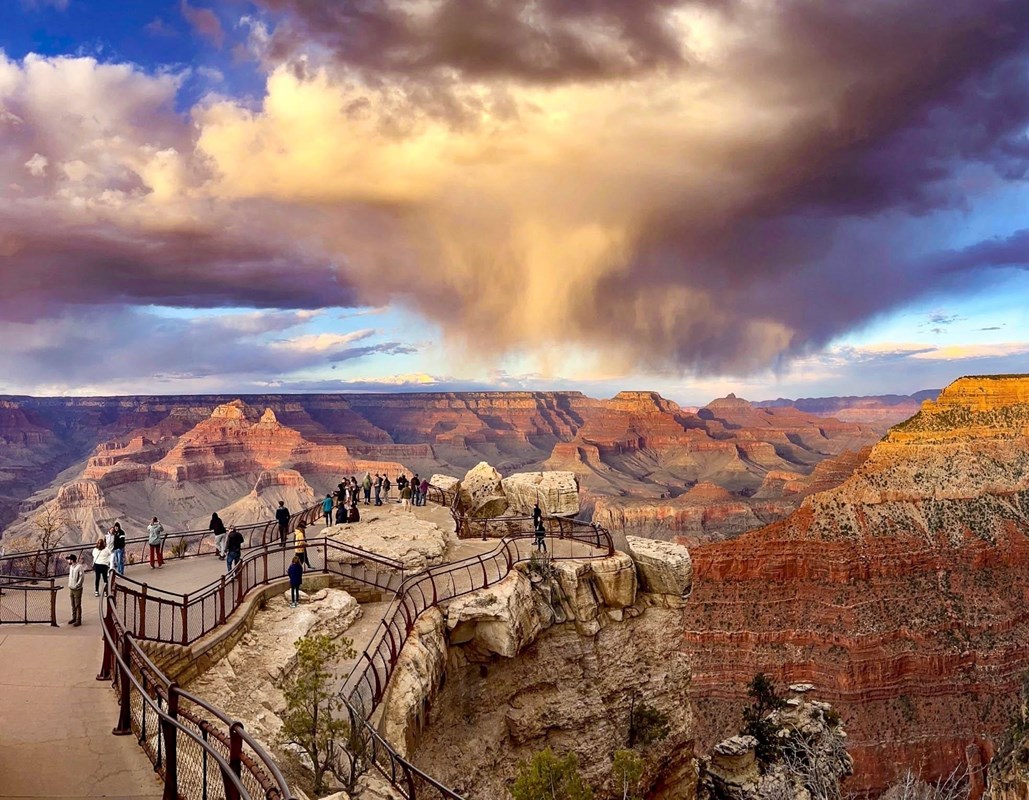
At Sunset, swirling rain clouds above a vast canyon filled with colorful peaks and cliff walls.
Mather PointNPS/M. Quinn
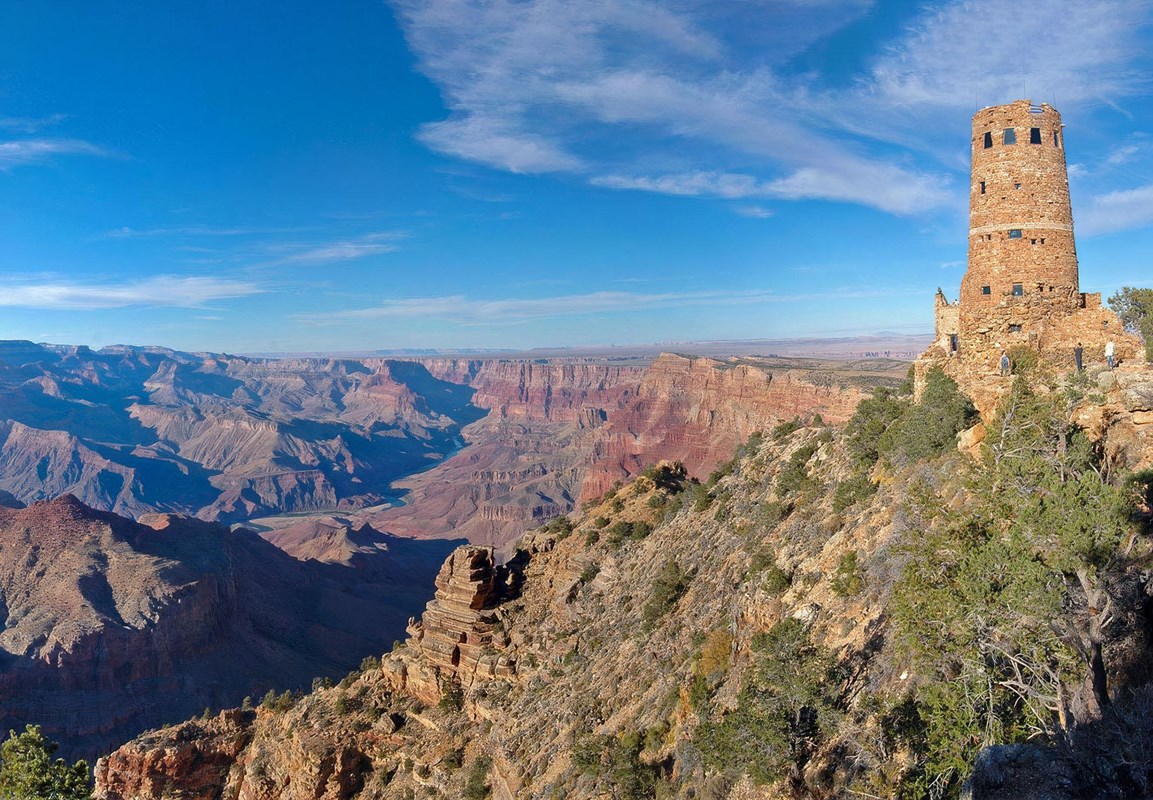
A cylindrical, stone tower, 70 feet (21 m) is on the edge of a vast, mile-deep canyon
Desert View WatchtowerNPS/M. Quinn
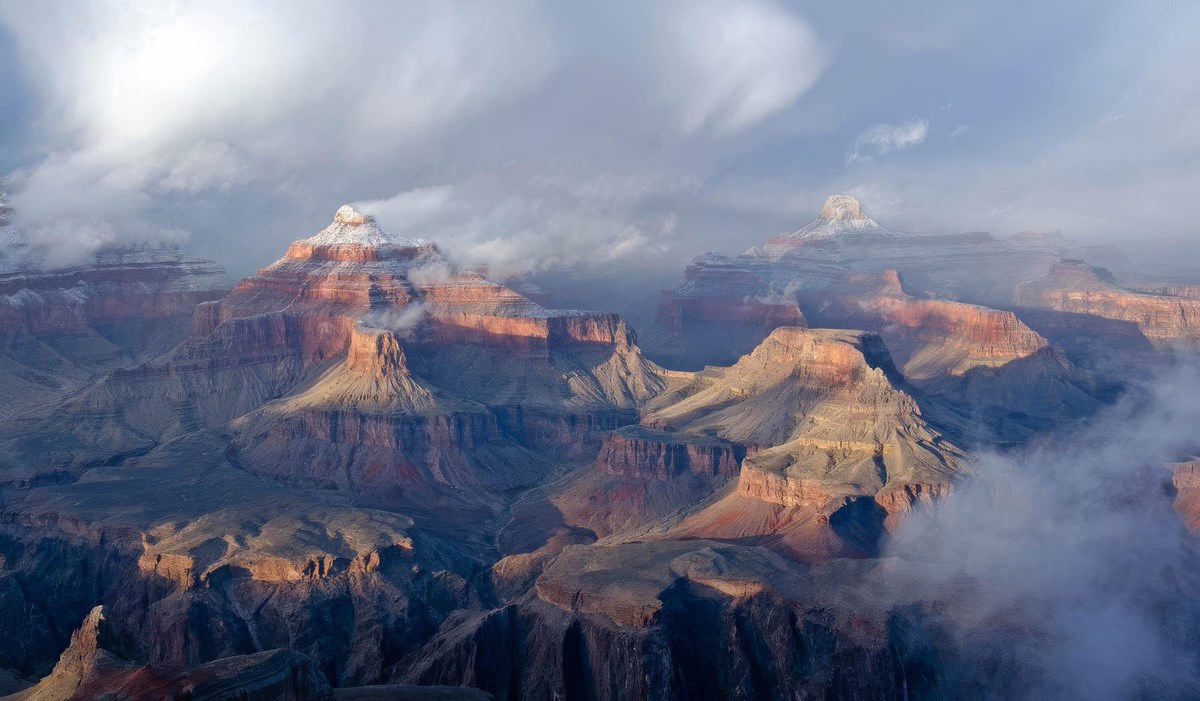
winter clouds and fog passing around a snow covered promentary within a vast mile deep canyon
Winter on the South RimNPS/M. Quinn

Conditions

NPS alerts last checked

Alert list last changed

Check before you go

Grand Canyon month by month

Open a monthly guide, then compare park-wide recreation visits and climate normals from the South Rim station.

At Sunset, swirling rain clouds above a vast canyon filled with colorful peaks and cliff walls.
Dramatic sunset from Mather PointNPS/M. Quinn

Best time to visit Grand Canyon

March through May and September through November

October is our pick because the normal seasonal trip remains practical and average visits are 17% less than the peak in July. October nights are cold, and North Rim services wind down. The inner canyon is warmer than the South Rim station.

Get to know Grand Canyon’s main areas

Choose your rim before choosing a base. South Rim Village and Desert View connect along the South Rim; the North Rim has a separate approach. Map markers identify entrances rather than every viewpoint.

Grand Canyon approaches Reviewed approach locations. Markers locate approaches, not every trailhead or a guarantee of a through-route. North Rim EntranceC East Entrance at Desert ViewB South EntranceASouth EntranceNorth Rim EntranceN
  • A South Entrance
  • B East Entrance at Desert View
  • C North Rim Entrance
  • Park boundary
At Sunset, swirling rain clouds above a vast canyon filled with colorful peaks and cliff walls.
Dramatic sunset from Mather PointNPS/M. Quinn

South Rim Village and rim viewpoints

Use the visitor-center and village area for a first look at the canyon, then combine viewpoints with a stretch of the Rim Trail. Local shuttle routes help connect parts of the South Rim.

The photograph shows Mather Point. A rim viewpoint and a below-rim hike are different outings; do not judge a hiking route by the weather at the rim.

A cylindrical, stone tower, 70 feet (21 m) is on the edge of a vast, mile-deep canyon
A National Historic Landmark, Desert View Watchtower was constructed in 1932. The view offers an expansive glimpse of the Colorado River.NPS/M. Quinn

Desert View

Use the eastern South Rim for Desert View Watchtower and canyon views. It can form part of an arrival or departure through the East Entrance.

The map marks the East Entrance, not each roadside stop. The photograph identifies the Watchtower, not an assurance of building access.

Grand Canyon crowds by month

Five-year monthly averages of NPS recreation visits compare seasonal demand. They do not measure unique people, trail congestion or parking availability.

LowestLowModerateHighPeakAverage month: 389,138

Grand Canyon weather by month

Compare typical daily highs, lows and total monthly precipitation at the representative station. These climate normals are not a forecast.

Cooler Hotter
Jan
High44°F7°C
Low19°F-7°C
Precip · in1.76
Feb
High46°F8°C
Low21°F-6°C
Precip · in1.23
Mar
High54°F12°C
Low25°F-4°C
Precip · in1.85
Apr
High61°F16°C
Low29°F-2°C
Precip · in0.64
May
High70°F21°C
Low36°F2°C
Precip · in0.40
Jun
High82°F28°C
Low43°F6°C
Precip · in0.22
Jul
High85°F29°C
Low50°F10°C
Precip · in2.33
Aug
High82°F28°C
Low50°F10°C
Precip · in2.19
Sep
High76°F24°C
Low44°F7°C
Precip · in1.50
Oct
High65°F18°C
Low33°F1°C
Precip · in1.23
Nov
High53°F12°C
Low25°F-4°C
Precip · in0.77
Dec
High43°F6°C
Low18°F-8°C
Precip · in1.25

These normals describe the South Rim station, not the hotter inner canyon or the higher North Rim. Use a route-specific forecast before hiking below the rim. Snowfall is not shown in this summary.

What’s at its best and when

Rim weather, inner-canyon heat and seasonal road access are different planning questions.

Spring

Plan for variable rim weather. Snow and ice can still affect walking, and NPS notes that the farther into the canyon you go, the hotter it gets.

Summer

A rim visit does not establish safe conditions below it. NPS warns against hiking from the rim to the river and back in one day, especially from May to September.

Below the rim is a different climate

Check the NPS forecast and hiking guidance for the actual route. A comfortable viewpoint stop does not make an inner-canyon hike safe in summer heat.

Keep a rim sightseeing plan separate from a strenuous hiking plan. NPS strongly discourages hiking the inner-canyon routes it names during the heat of the day, 10 a.m. to 4 p.m.

Fall

Compare the forecast and the remaining seasonal access windows before choosing a rim. Build an alternative if your plan depends on the North Rim road.

Winter

winter clouds and fog passing around a snow covered promentary within a vast mile deep canyon
A winter landscape as seen from Hermit Road on the South Rim of the parkNPS/M. Quinn

Keep snow and ice in the South Rim plan. North Rim vehicle access has a separate winter season; a snowy rim photograph is not a forecast.

Winter changes the rim walk

Snow and ice can change the footing at viewpoints and on trails. Keep walking choices flexible.

The photograph shows winter scenery from Hermit Road on the South Rim, not the North Rim.

Example Grand Canyon Itineraries

Start with the South Rim. Use extra days for another area or a deliberately chosen walk, rather than rushing between rims.

How many full days do you have?

Count full days in the park, not nights away. These are example outlines; choose outings that fit your group.

With 1 full day

  1. At Sunset, swirling rain clouds above a vast canyon filled with colorful peaks and cliff walls.
    Dramatic sunset from Mather PointNPS/M. Quinn
    Day 1

    Get your bearings on the South Rim

    A viewpoint and a manageable rim walk.

    • Start near the visitor center and choose a first viewpoint such as Mather Point.
    • Choose a Rim Trail segment and use the appropriate local shuttle route where it serves your plan.

    When weather limits walking Shorten the walk and choose viewpoints that suit the actual conditions.

With 2 full days

  1. At Sunset, swirling rain clouds above a vast canyon filled with colorful peaks and cliff walls.
    Dramatic sunset from Mather PointNPS/M. Quinn
    Day 1

    Get your bearings on the South Rim

    A viewpoint and a manageable rim walk.

    • Start near the visitor center and choose a first viewpoint such as Mather Point.
    • Choose a Rim Trail segment and use the appropriate local shuttle route where it serves your plan.

    When weather limits walking Shorten the walk and choose viewpoints that suit the actual conditions.

  2. A cylindrical, stone tower, 70 feet (21 m) is on the edge of a vast, mile-deep canyon
    A National Historic Landmark, Desert View Watchtower was constructed in 1932. The view offers an expansive glimpse of the Colorado River.NPS/M. Quinn
    Day 2

    Explore the eastern South Rim

    Make Desert View a separate outing or part of your onward route.

    • Follow the eastern approach toward Desert View and select a few viewpoints.
    • Leave time for the Watchtower area rather than turning every overlook into a required stop.

    If the Desert View approach is unavailable: Return to suitable South Rim Village viewpoints instead of assuming a through-route.

With 3 full days

  1. At Sunset, swirling rain clouds above a vast canyon filled with colorful peaks and cliff walls.
    Dramatic sunset from Mather PointNPS/M. Quinn
    Day 1

    Get your bearings on the South Rim

    A viewpoint and a manageable rim walk.

    • Start near the visitor center and choose a first viewpoint such as Mather Point.
    • Choose a Rim Trail segment and use the appropriate local shuttle route where it serves your plan.

    When weather limits walking Shorten the walk and choose viewpoints that suit the actual conditions.

  2. A cylindrical, stone tower, 70 feet (21 m) is on the edge of a vast, mile-deep canyon
    A National Historic Landmark, Desert View Watchtower was constructed in 1932. The view offers an expansive glimpse of the Colorado River.NPS/M. Quinn
    Day 2

    Explore the eastern South Rim

    Make Desert View a separate outing or part of your onward route.

    • Follow the eastern approach toward Desert View and select a few viewpoints.
    • Leave time for the Watchtower area rather than turning every overlook into a required stop.

    If the Desert View approach is unavailable: Return to suitable South Rim Village viewpoints instead of assuming a through-route.

  3. Day 3

    Choose a longer walking day

    Pick the route for your ability, not a required finish.

    • Use NPS guidance to choose another rim walk or assess a specific below-rim route.
    • Plan water, weather and turnaround decisions before setting out.

    Keep the rims separate A North Rim visit needs its own access check and travel plan, rather than a quick detour from this outline.

Getting there and around

Choose the rim and entrance first. South Rim shuttle routes are local transport, not a connection to every part of the park.

AreaBy carWithout a car
Choose the South Entrance and an appropriate parking area for your first stop. Check the local road and shuttle arrangements.Use the South Rim shuttle routes for stops they serve. Arrange your journey to the park separately.
Desert View uses the East Entrance and Desert View Drive along the South Rim.The South Rim park shuttle routes NPS lists do not include Desert View. Arrange other transport for this part of the rim.
Use the separate North Rim approach and verify its seasonal access before leaving your base.Arrange transport specifically for the North Rim. South Rim local shuttle routes do not make this the same outing.

Choose where to stay

A South Rim base fits this first-visit outline. Choose a different rim only with a separate access and overnight plan.

Inside or outside?

In the park

Compare the NPS lodging and campground lists for the rim you choose. A room and a campsite are different bookings.

Outside the park

Use a gateway base on the road toward your chosen entrance. Confirm the approach before booking.

Where you'll spend most daysStay in the parkStay outside, on the same road

South Rim

Village viewpoints, rim walks and Desert View.

Normal season: Stays all year

The South Rim has lodging and developed camping. Check the specific property or campground for dates and reservations.

Tusayan is outside the South Entrance. Compare that approach with other gateway bases before booking.

Seasons are the normal pattern, not this year’s openings or booking availability.

Planning your Grand Canyon visit

Answers to the first decisions, with the official sources for details.

Which rim should I choose for a first visit?

This outline starts with the South Rim, combining viewpoints, rim walking and Desert View. The North Rim is a separate destination with its own approach and seasonal access. NPS places to go NPS directions NPS seasons and operating hours

Does South Rim weather describe a hike into the canyon?

No. NPS says the farther into the canyon you go, the hotter it gets, and summer daytime temperatures in the inner canyon can exceed 110°F (43°C). Check the forecast and NPS hiking guidance for the actual route. NPS hike smart NPS day hiking

Can I use one shuttle to visit both rims?

South Rim park shuttles serve local routes. Plan separate transport and seasonal access checks for the North Rim. NPS South Rim shuttle routes NPS directions

How we built this page.

An independent guide using official data. Not affiliated with or endorsed by the National Park Service.

Crowds
2021–2025 monthly averages. NPS recreation visits, compared with the park’s own busiest month. Visits are not unique visitors or a count of people on a trail.
Weather
1991-2020 climate normals. NOAA’s Grand Canyon NP 2, AZ (South Rim) station. These describe typical weather at the station, not every part of the park or a forecast.
Roads & lodging
Normal seasonal schedules. NPS guidance and official operator information. Confirm access, hours and availability before you travel.