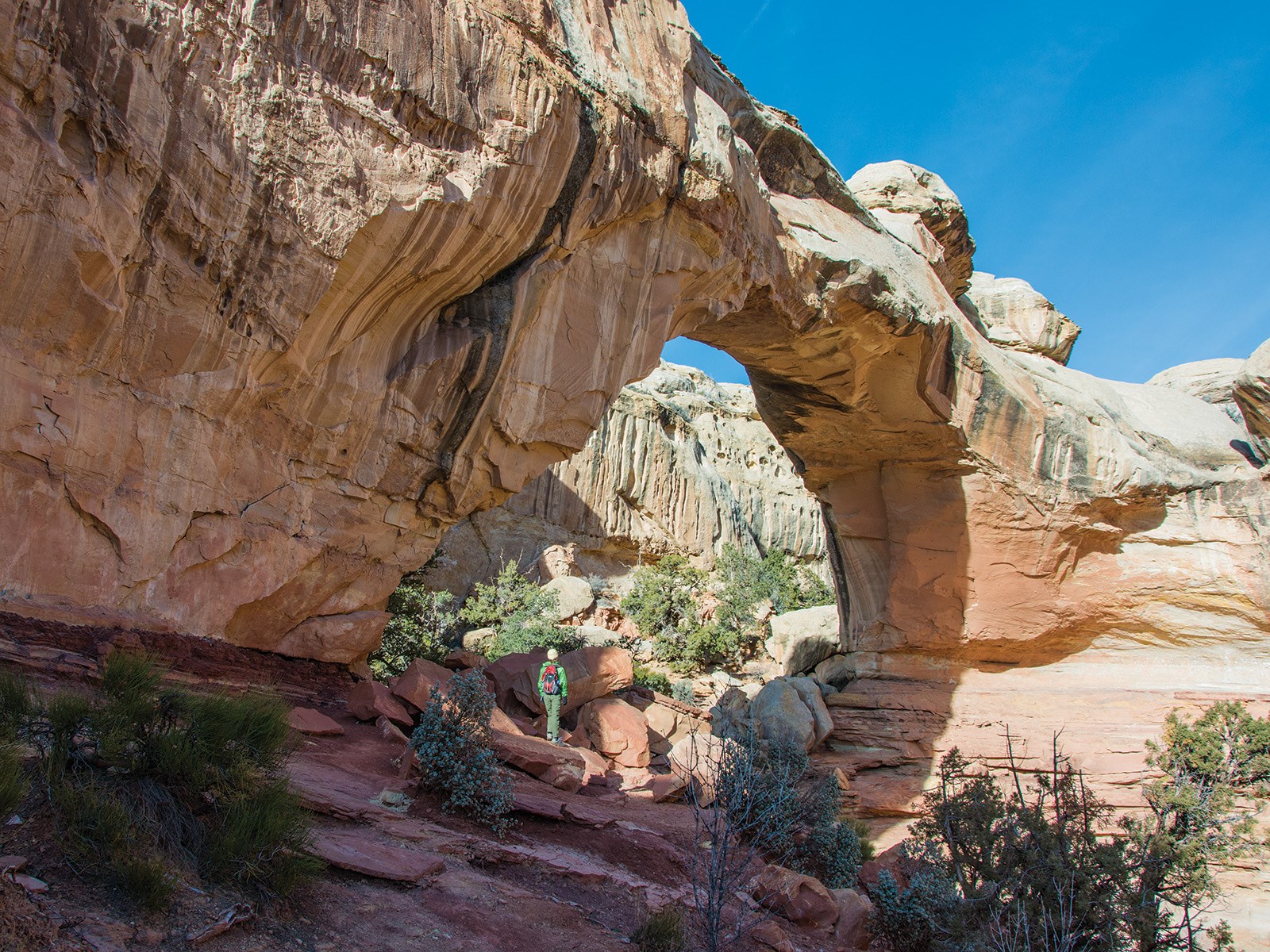
Most visited national parks
The national ranking by recreation visits.
There are five national parks in Utah: Zion, Bryce Canyon, Arches, Capitol Reef and Canyonlands. Zion and Bryce Canyon are in the southwest, Arches and Canyonlands in the southeast, and Capitol Reef between them. Spring and fall are the milder seasons in the desert parks, and Bryce Canyon sits much higher.
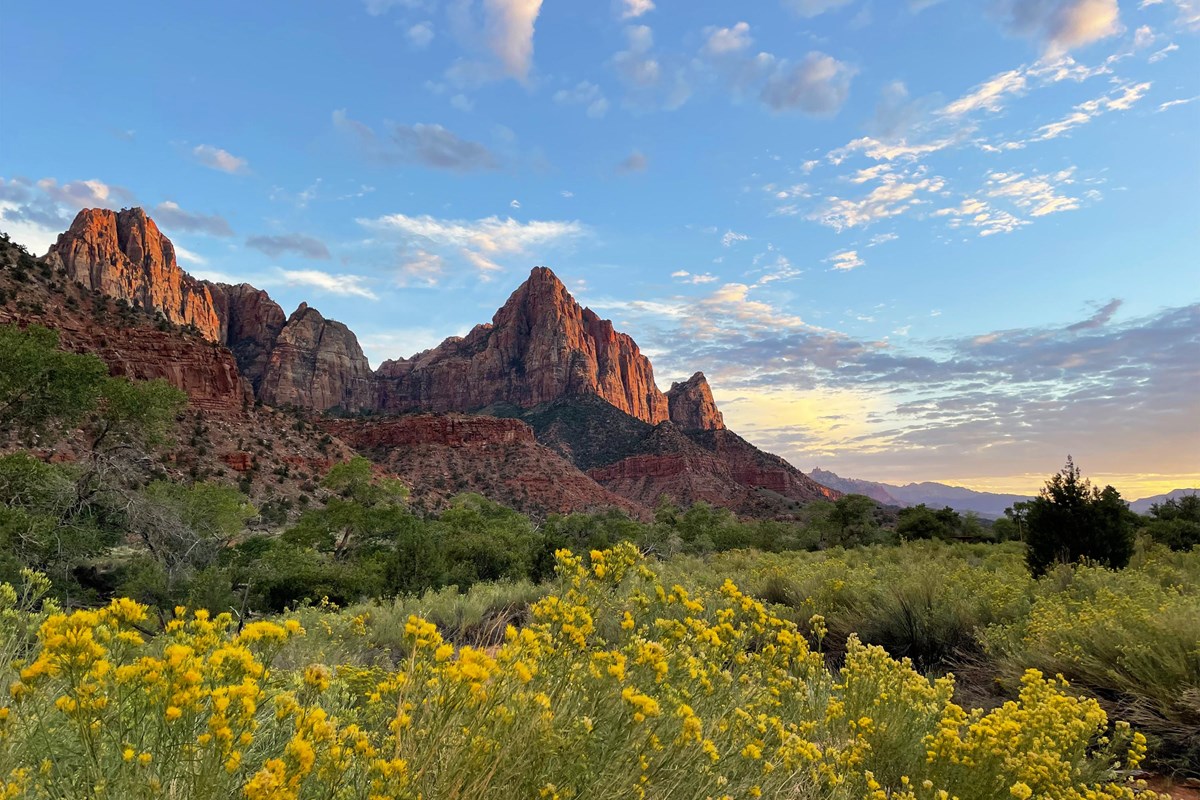
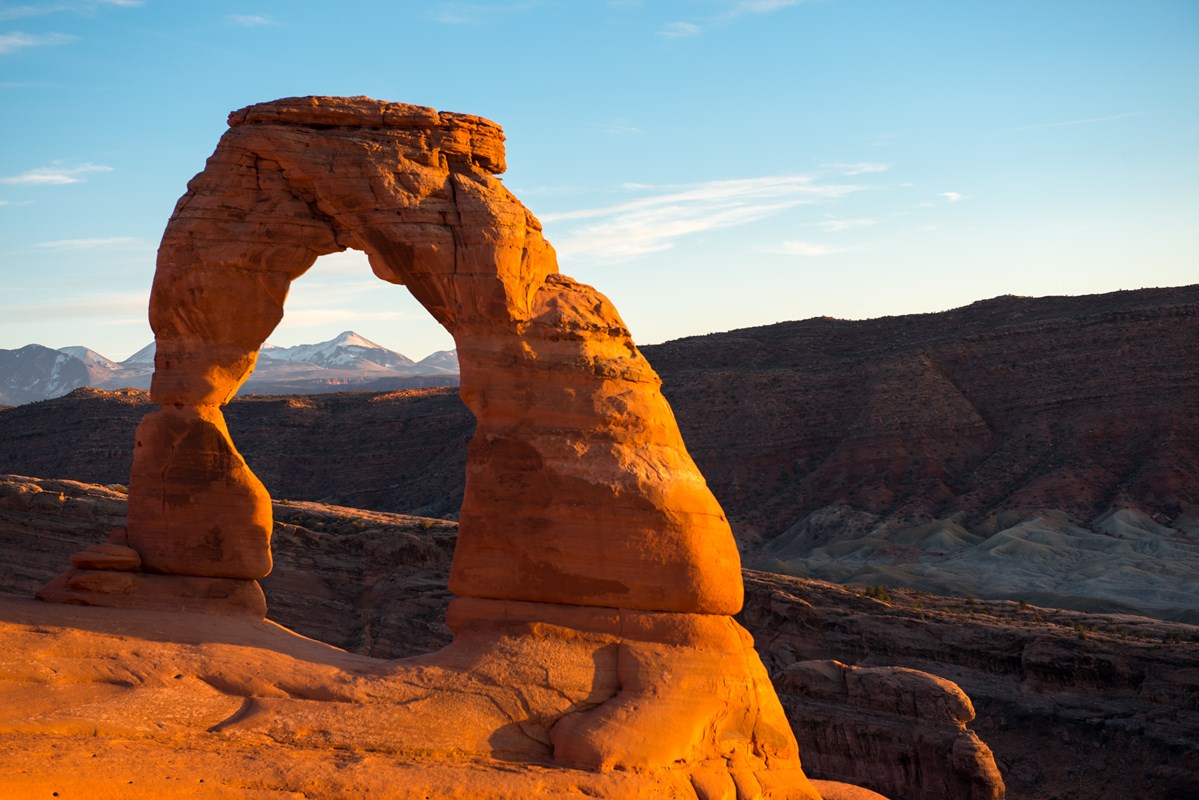
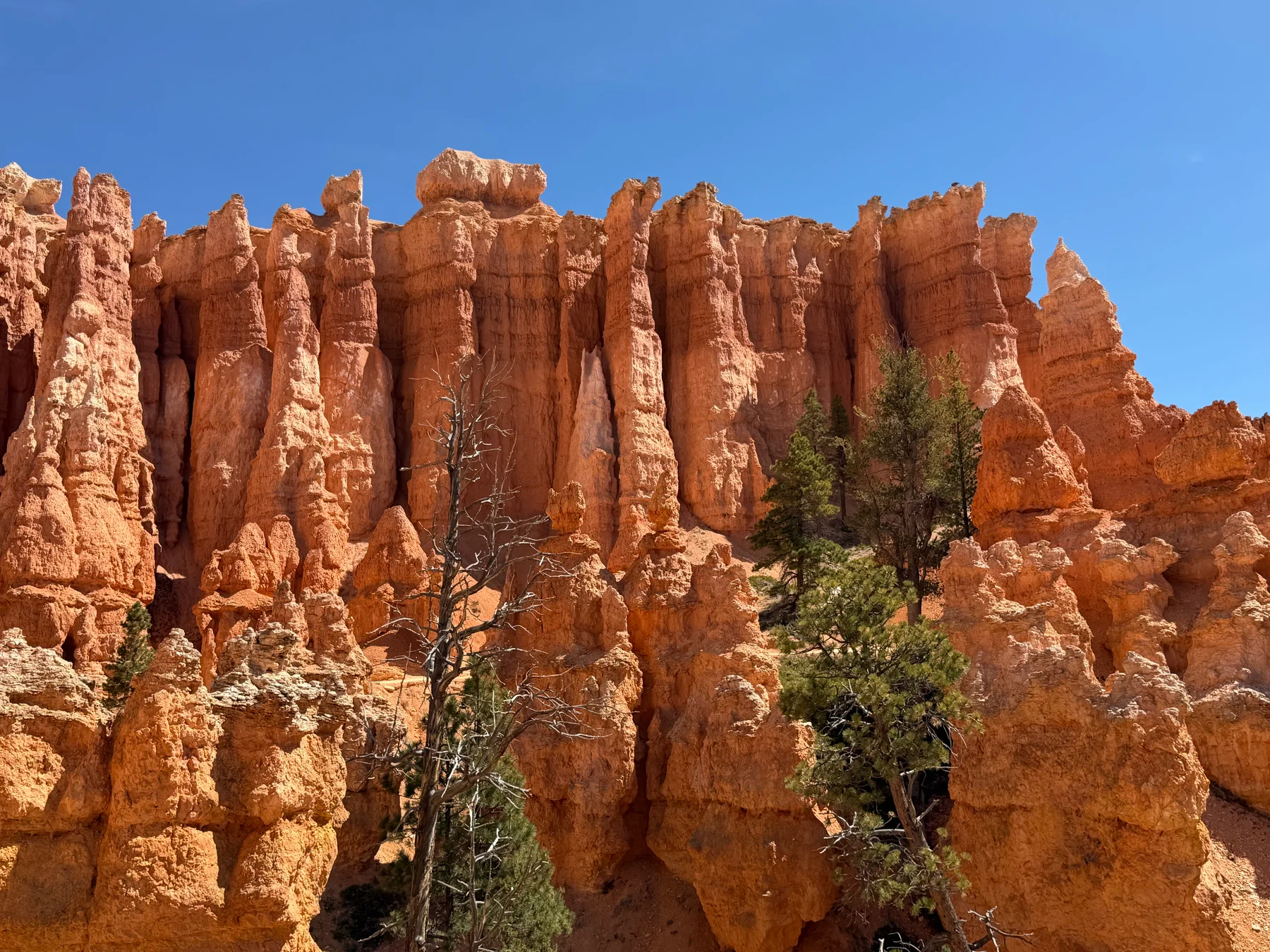
Open each park from the NPS Utah directory. Closures, alerts and conditions are posted on the park’s own pages.
Check how the Zion Canyon shuttle runs before you plan to drive into the canyon. NPS says no permit or reservation is needed to ride it.
NPS warns that desert summers often pass 100°F (38°C) and that late-summer storms often cause flash floods. Check the forecast for each area you plan to hike.
Select a park on the map or in the list to see photos, what it is best for and when to go. Park areas are simplified NPS boundaries, colored by region to match the list. Land outside Utah is muted.
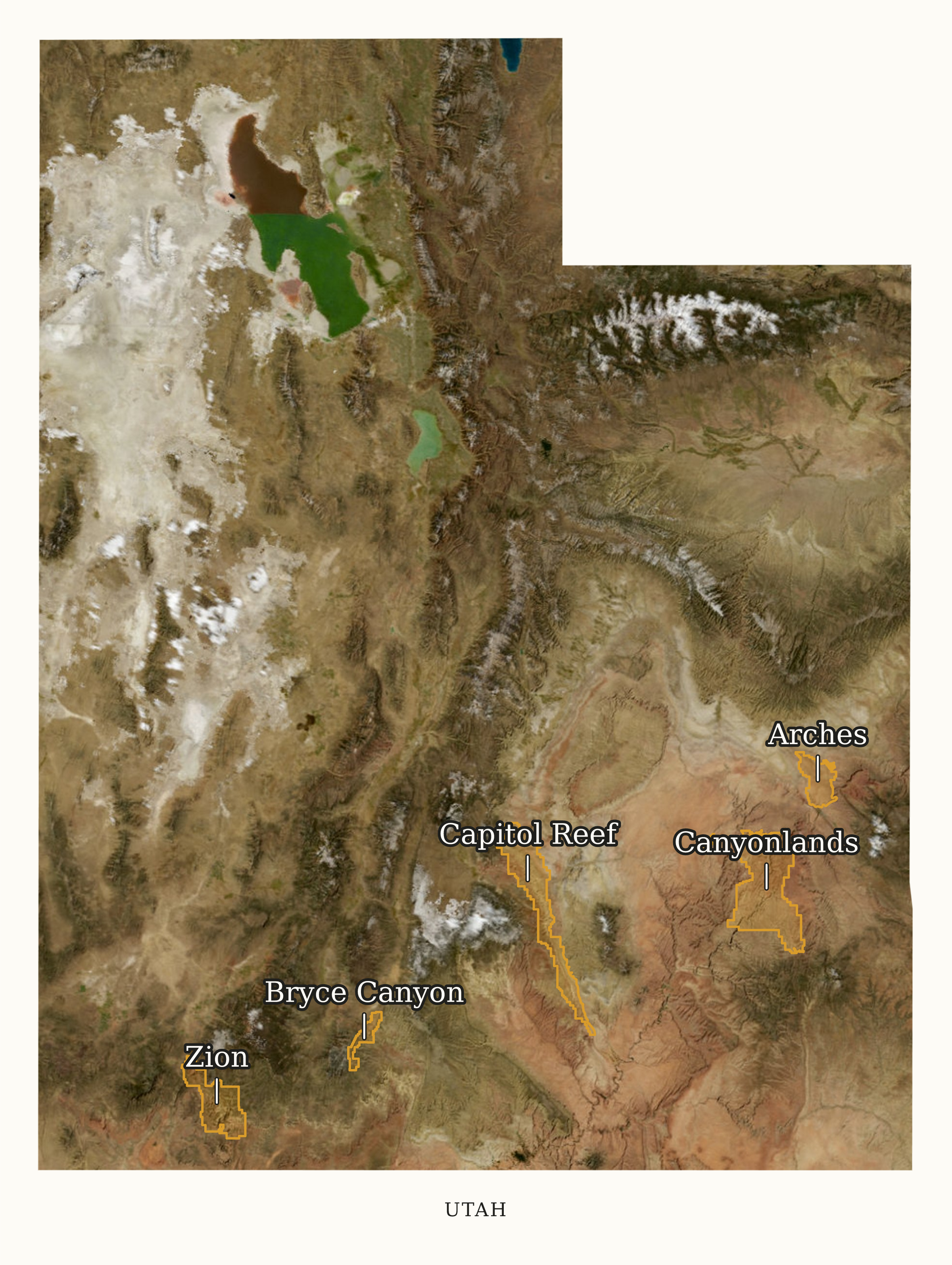
Customize or download the Utah map. Change the names, marker style and background, or download a ready-made PNG or SVG.
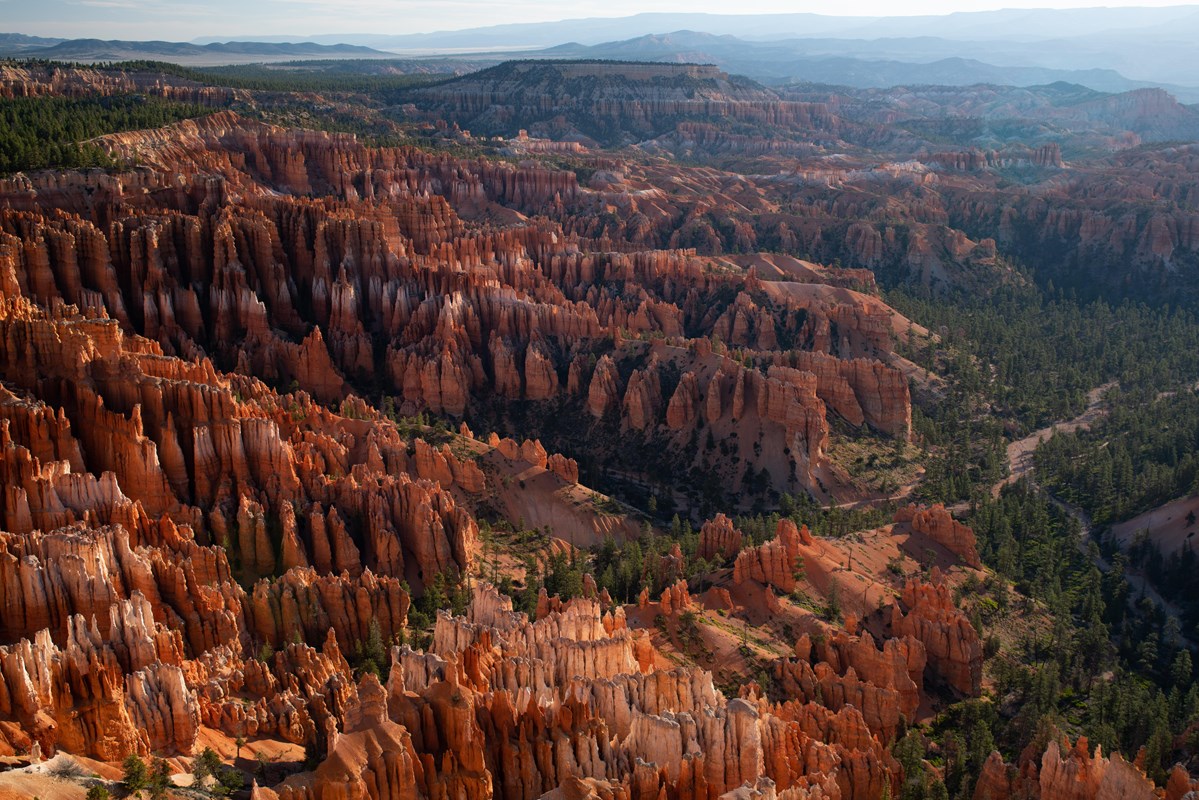
Zion National ParkSouthwestern Utah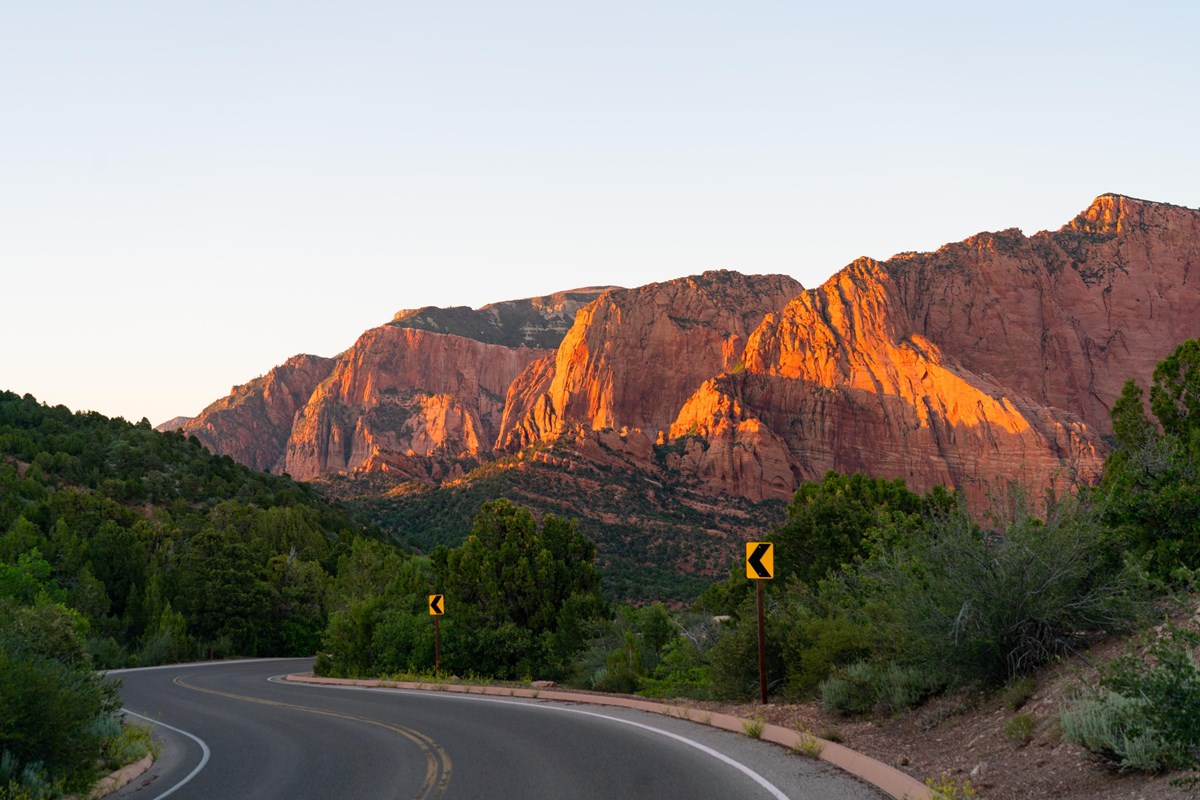 Bryce Canyon National ParkSouthwestern Utah
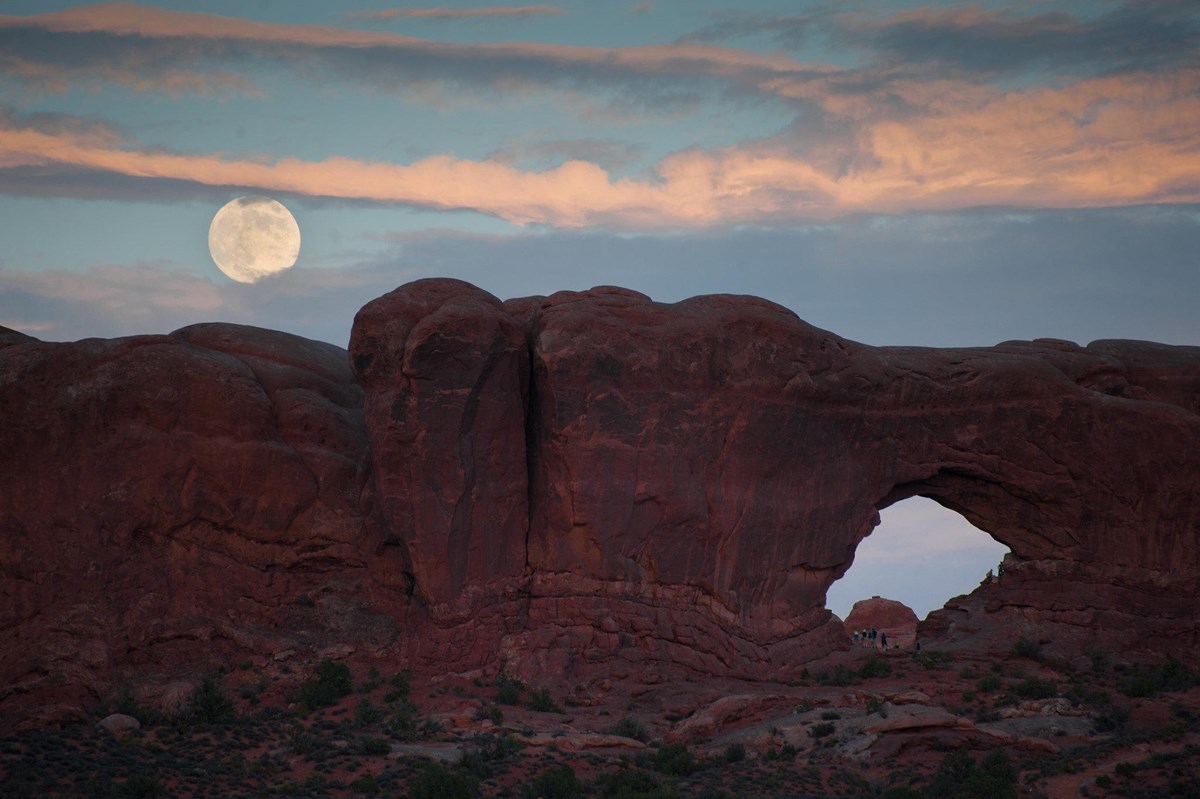
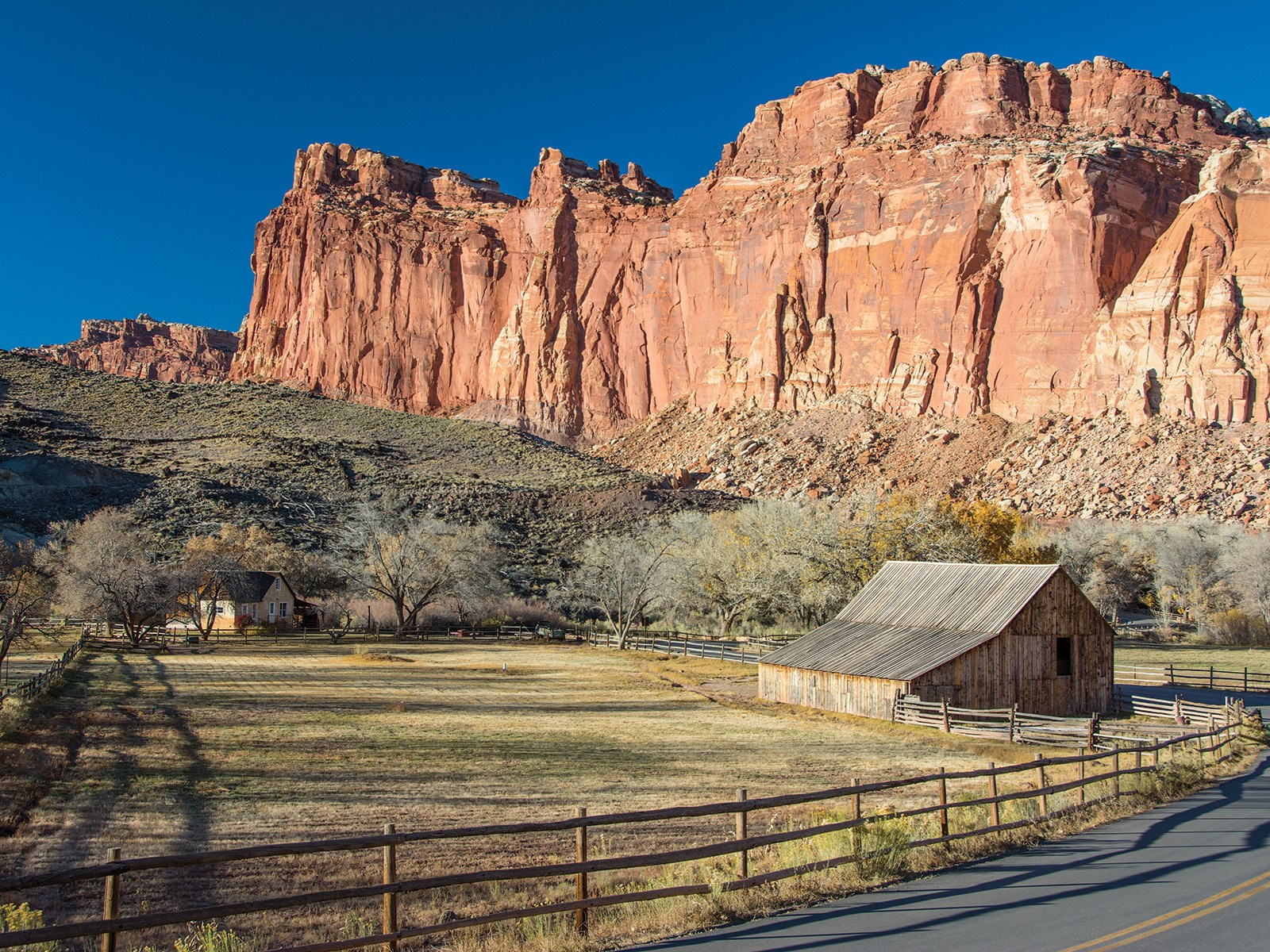 Capitol Reef National ParkSouth-central UtahArches National ParkSoutheastern Utah
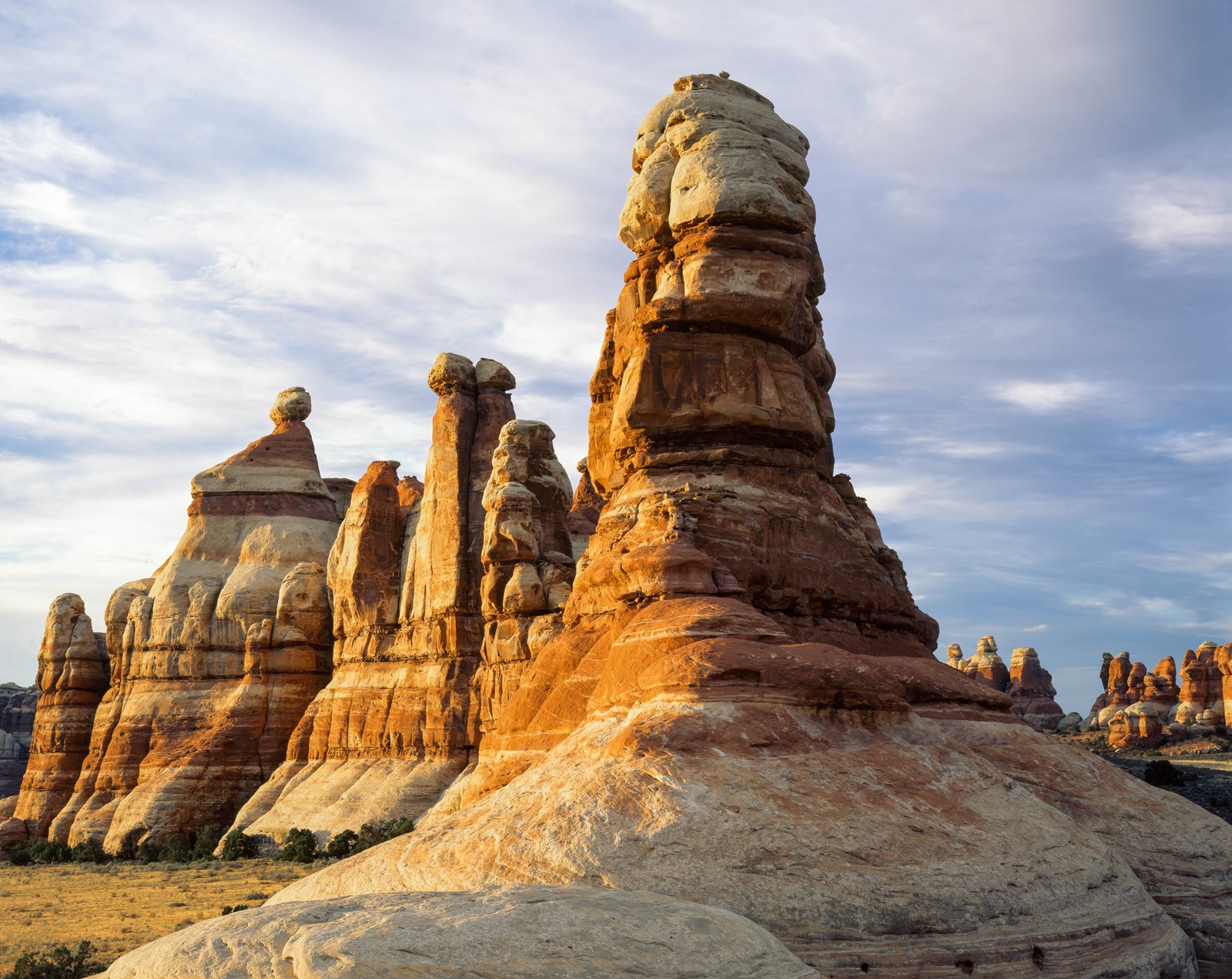
 Canyonlands National ParkSoutheastern Utah
Shading shows how busy each month normally is for that park. Green outlines mark our reviewed best-time window.
Visits compared with each park's own busiest month
| Park | Jan | Feb | Mar | Apr | May | Jun | Jul | Aug | Sep | Oct | Nov | Dec | Timing |
|---|---|---|---|---|---|---|---|---|---|---|---|---|---|
| Low | Low | High, in our best-time window | High, in our best-time window | Peak, in our best-time window | Peak | Peak | High | High | High, in our best-time window | Moderate, in our best-time window | Moderate | March to May and October to November | |
| Low | Low | Low | High | Peak, in our best-time window | Peak, in our best-time window | Peak, in our best-time window | High, in our best-time window | Peak, in our best-time window | High, in our best-time window | Low | Low | May to October | |
Capitol Reef | Lowest | Low | Moderate | High | Peak | High | Moderate | Moderate | High | High | Moderate | Low | Open all year |
| Low | Low | High | High, in our best-time window | Peak, in our best-time window | Peak | Peak | High | High, in our best-time window | High, in our best-time window | Moderate | Low | April to May and September to October | |
Canyonlands | Lowest | Low | High | Peak | Peak | High | Moderate | Moderate | High | High | Moderate | Low | Spring and fall |
Shading compares 2021–2025 average monthly recreation visits with the same park’s busiest month, so colors do not compare one park with another. Capitol Reef and Canyonlands have no reviewed window yet; their timing comes from NPS seasonal guidance.
Ranked by five-year average recreation visits, with the latest full year beside it. A visit counts an entry, not a unique person.
Bar length shows the 2021–2025 average. Bar color shows the park’s region on the map.
| Rank | National park | Average a year, 2021–2025 | 2025 visits | Busiest month, 2021–2025 average |
|---|---|---|---|---|
| 1 | Southwestern Utah | 4,984,525 | June | |
| 2 | Southwestern Utah | 1,967,367 | June | |
| 3 | Southeastern Utah | 1,511,740 | May | |
| 4 | Capitol Reef South-central Utah | 1,388,476 | May | |
| 5 | Canyonlands Southeastern Utah | 796,057 | May |
Find another stop: a high amphitheater, natural bridges, a cave or the place the transcontinental railroad was completed.
Site locators, not entrances or directions.
These 8 places are a starting selection. The full directory includes national historic trails and every other NPS source record for Utah.
Marker positions are each unit's official NPS coordinates. State outline: U.S. Census cartographic boundary (public domain). Independent site, not affiliated with the National Park Service.
| Unit | Designation | 5-yr avg visits | Busiest month |
|---|---|---|---|
| Zion National Park | National ParkZION | 4,857,321 | June |
| Glen Canyon National Recreation Area | National Recreation AreaGLCA | 3,929,828 | June |
| Bryce Canyon National Park | National ParkBRCA | 2,277,194 | June |
| Arches National Park | National ParkARCH | 1,545,566 | May |
| Capitol Reef National Park | National ParkCARE | 1,342,558 | May |
| Canyonlands National Park | National ParkCANY | 821,122 | May |
| Cedar Breaks National Monument | National MonumentCEBR | 703,334 | July |
| Dinosaur National Monument | National MonumentDINO | 334,989 | July |
| Timpanogos Cave National Monument | National MonumentTICA | 121,053 | July |
| Natural Bridges National Monument | National MonumentNABR | 74,915 | May |
| Golden Spike National Historical Park | National Historical ParkGOSP | 52,790 | May |
| Hovenweep National Monument | National MonumentHOVE | 29,695 | May |
| Rainbow Bridge National Monument | National MonumentRABR | 6,486 | July |
| California National Historic Trail | National Historic TrailCALI | — | — |
| Mormon Pioneer National Historic Trail | National Historic TrailMOPI | — | — |
| Old Spanish National Historic Trail | National Historic TrailOLSP | — | — |
| Pony Express National Historic Trail | National Historic TrailPOEX | — | — |
Bristlecone pines, wildflower meadows and dark night skies at the top of the Grand Staircase.
Cedar Breaks National MonumentA national recreation area that runs for hundreds of miles from Lees Ferry in Arizona into southern Utah.
Glen Canyon National Recreation AreaA span that neighboring Native American tribes consider sacred. Check the NPS page for how to reach it.
Rainbow Bridge National MonumentView the bridges from overlooks, or take the trails down to see them from below.
Natural Bridges National MonumentSix groups of structures built between 1200 and 1300 CE, across the Utah–Colorado line.
Hovenweep National MonumentA national monument across the Utah–Colorado line, where fossils from 150 million years ago remain in the rock.
Dinosaur National MonumentHike past mountain views to explore a hidden underground world of beautifully decorated rooms.
Timpanogos Cave National MonumentSee the Last Spike Site and 1869 construction features, and walk or drive the original railroad grade.
Golden Spike National Historical Park8 places
Short answers, with the official source for each.
Five: Zion, Bryce Canyon, Arches, Capitol Reef and Canyonlands. Utah also has national monuments, a national recreation area and a national historical park run by the National Park Service. NPS Utah directory
Zion, by average annual recreation visits from 2021 through 2025. The ranking on this page lists every park’s exact figures. NPS Visitor Use Statistics
Not by any road inside the park. NPS says the rivers split Canyonlands into districts, and driving between them takes two to six hours. Canyonlands basic information (NPS)
No. NPS says you do not need a permit or reservation to ride a park shuttle. Check the shuttle page for how it runs on your dates. Zion Canyon shuttle (NPS)
Entrance fees and pass eligibility vary by park and visitor. Some parks charge non-U.S. residents an extra fee unless they have a qualifying pass. NPS says a few high-traffic sites may also need a reservation, so check each park’s own page. NPS entrance passes NPS Utah directory
An independent guide using official data. Not affiliated with or endorsed by the National Park Service.
Rows in the broader directory come from our combined NPS metadata and Visitor Use Statistics registry, not the Park Service’s official census of managed system units. Per-record visit counts come from the NPS Visitor Use Statistics Data Package, 2025; the five-year average is the mean of 2021–2025 recreation visits. Multi-state records are listed under every state they touch, and their full visit total appears in each state. Official national park counts use our central national-park classification rather than the source designation label alone. Independent site, not affiliated with the National Park Service.