Get the booklet
Download it before the trip or pick one up at any Yellowstone visitor center.
Yellowstone with kids works best with geysers, short boardwalk stops and time between drives. For a first visit, we suggest three full days, with about two park areas a day. Start with Old Faithful, canyon viewpoints and a wildlife drive. Keep children close on thermal boardwalks. August is our school-break pick.
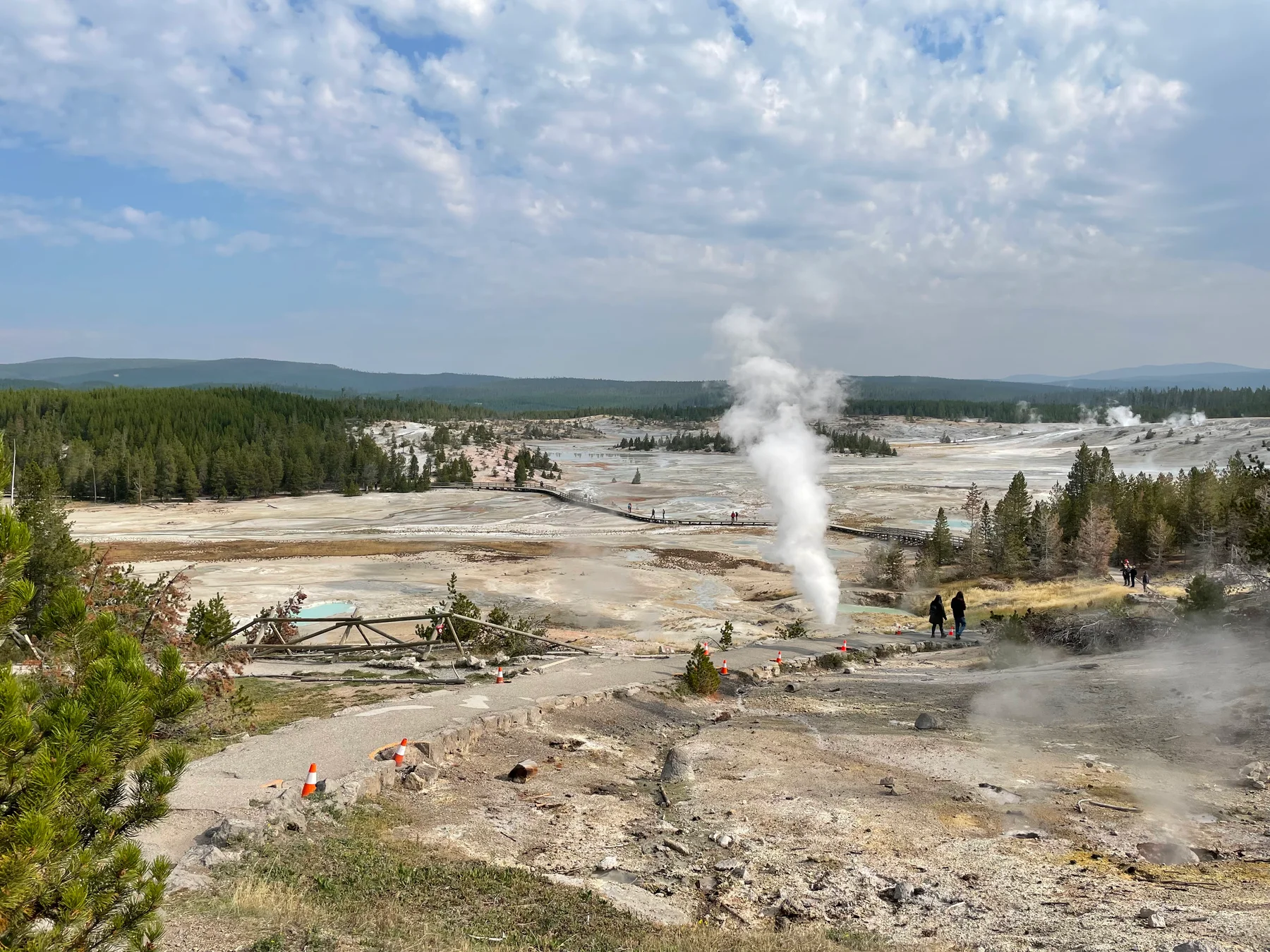
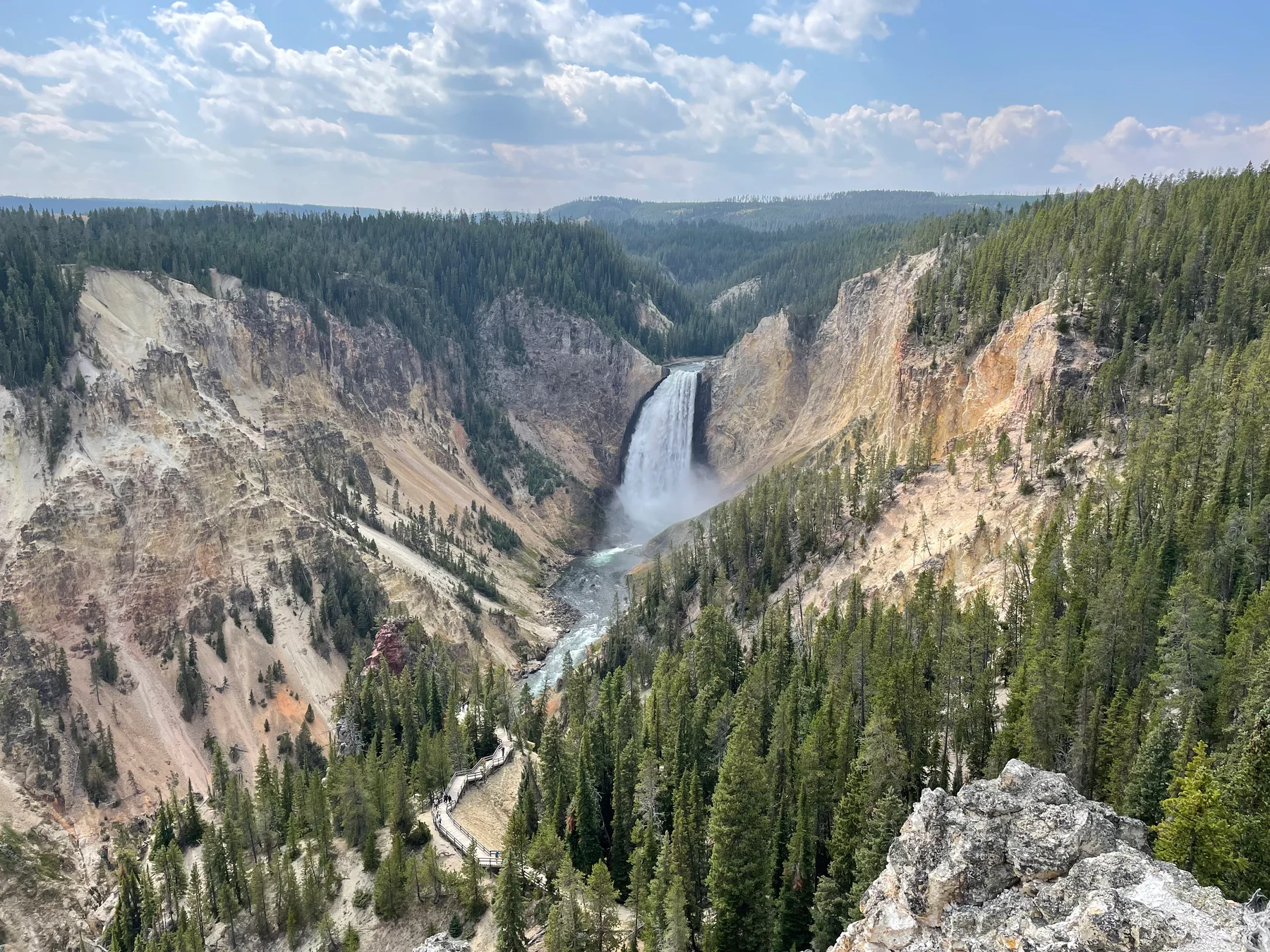
Start with geysers, a canyon viewpoint and a wildlife stop. Pick a few nearby sights rather than crossing the whole park in one day.
| Stop | Why go | With little legs or a stroller |
|---|---|---|
| Old Faithful | Watch a predicted geyser eruption. | Accessible walkways from the parking areas. Check the prediction before finding a seat. |
| Midway Geyser Basin | See Grand Prismatic from the boardwalk. | Accessible boardwalk. The separate Grand Prismatic Overlook trail has steep grades; skip that trail with a stroller. |
| Mud Volcano | Listen to Dragon’s Mouth Spring. | The lower loop is accessible. You do not need to tackle the whole basin. |
| Canyon viewpoints | See the canyon and waterfalls. | NPS lists accessible walkways at Artist Point, Discovery Overlook and the Upper Falls viewpoints. |
| Mammoth Lower Terraces | Explore the hot-spring terraces. | Some asphalt-to-boardwalk transitions need assistance. |
| Hayden or Lamar Valley | Look for wildlife from the car. | Early morning and evening are good viewing windows. Sightings are never guaranteed. |
For children ages 4 and up. Start the booklet early and leave time for a ranger to review it before you leave the park.
Download it before the trip or pick one up at any Yellowstone visitor center.
Follow the age-appropriate requirements in the booklet as you explore.
Have the book reviewed at a visitor center to receive the badge. Badges are awarded in the park, not mailed.
Pick up a Young Scientist booklet at Canyon or Old Faithful. The ages 5–9 version is offered only at Old Faithful.
Practice wildlife distances and walking together on thermal boardwalks. These rules apply even when an animal looks calm or the ground looks solid.
Keep children close. Walk, do not run. Stay on designated trails and boardwalks in thermal areas. Never touch hot springs or runoff.
Back away if an animal approaches. Use binoculars instead of moving closer.
August is our school-break pick. June and August average fewer visits than July, with different weather and access tradeoffs.
830,987 average park visits
Waterfalls and young wildlife.
Watch for: Cold mornings; snow can delay the last high roads.
922,896 average park visits
Long days and broad summer services.
Watch for: The busiest month on average.
820,128 average park visits
Our school-break pick for broad summer access.
Watch for: Wildfire smoke can affect the trip.
We suggest three full days for a first visit, with about two nearby park areas a day. Leave room for wildlife traffic, lunch and rest breaks.
Choose nearby stops. NPS drive times can grow with wildlife, weather and construction. Canyon Visitor Education Center has interactive exhibits for an indoor break; check its hours. Download the NPS app before arrival.
Bring lunch, drinking water and hand sanitizer; most picnic areas lack running water. Pack rain gear and warm layers even in summer.
Book summer lodging as early as the operator allows. Pick a park or gateway base that suits the areas you want to explore.
Quick answers to the practical questions below.
For school-break trips, our pick is August for broad normal summer access and fewer average visits than July. June is another option, with colder mornings and possible snow delays on the high roads.
NPS says the program is for children 4 and older. Pick up the booklet at any visitor center or download it before you arrive.
It can be, if you follow the NPS rules: keep at least 25 yards from bison, elk, and other animals and 100 yards from bears, wolves, and cougars, back away if an animal approaches, keep children close, and do not let them run on boardwalks in thermal areas.
No. Visitors under 16 pay no per-person fee, and a vehicle pass covers everyone in the car.
Soaking in hot springs is prohibited. Yellowstone’s rivers and lakes can be dangerously cold, and swim-area access depends on conditions. Check the NPS swimming page before planning a swim.
Any age works if you plan around boardwalks and driving rather than hikes. Two official markers help. NPS runs Junior Ranger from age 4 and Young Scientist from age 5, with the version for ages 5 to 9 at the Old Faithful Visitor Education Center only. From about 4 up, a child can carry a booklet and have a job for the week.
Plan three full days for a first trip. Our Yellowstone itinerary page builds one- to five-day plans from official NPS drive times.
Yes, on suitable routes. The comparison above lists accessible approaches at Old Faithful, Midway, Mud Volcano and the canyon viewpoints. Check each route’s surface and grade. The separate Grand Prismatic Overlook trail is steep; skip it with a stroller.
Ticks are a concern in grassy, brushy lower elevations from mid-March to mid-July. Check clothes and bodies often and follow the NPS clothing and repellent guidance. Mosquitoes can also be widespread near lakes and streams in June and July.
Mudpots such as Mud Volcano can smell of rotten eggs because of hydrogen sulfide gas. This does not mean every geyser smells the same. If you feel sick while exploring a geyser basin, leave the area immediately. See NPS thermal-area safety.
Build your budget from lodging or camping, transport and meals, then add the applicable entrance fee. Children under 16 pay no per-person entrance fee. Compare passes and eligibility on our Yellowstone fees guide; use the lodging and camping guides for your overnight choices.
An independent guide using official data. Not affiliated with or endorsed by the National Park Service.
Thermal-boardwalk rules, wildlife distances, bear spray, altitude, weather preparation and insect guidance come from NPS Yellowstone safety. Mudpot odors are explained by NPS Mud Volcano. Swimming hazards and the official access pointer come from NPS swimming guidance.
Walkways, accessible loops and grade qualifications come from NPS accessibility. Attraction planning uses NPS geyser predictions and NPS wildlife viewing.
Program ages, booklet pickup and awards come from NPS Junior Ranger and NPS Young Scientist. Indoor exhibits are described by NPS Canyon Visitor Education Center.
Practical advice uses NPS picnic areas, NPS transport guidance, NPS fees and Every Kid Outdoors rules.
The summer comparison uses five-year NPS recreation-visit averages, 2021–2025. These are park visits, not family counts or parking availability. August and the two-areas-per-day limit are editorial recommendations, not guarantees of access or capacity.
Operational source check: September 13, 2026. Design and emphasized source review: 2026-10-22. A design review does not refresh every underlying record.