Per-month · June

Grand Teton in June.

June serves visitors who want full park access with pre-monsoon stability and the longest daylight of the year.

By Nicholas Major · Last updated

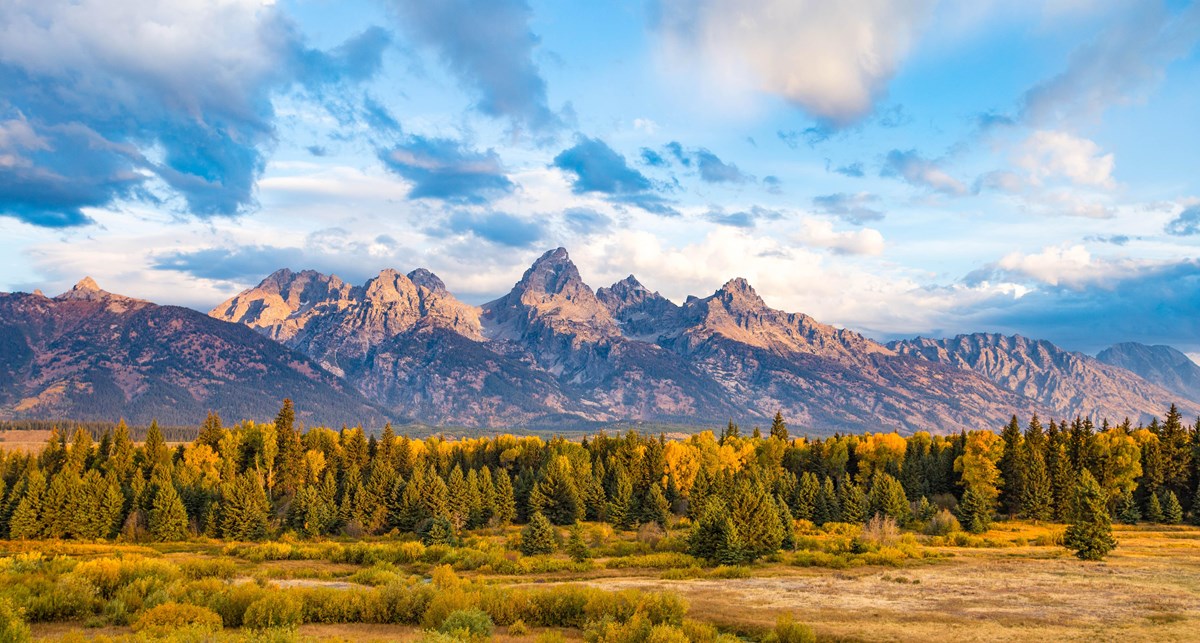
June is the start of high-season at Grand Teton. The five-year mean is about 633,000 recreation visits — about 86% of July's peak and a sharp step up from May. Every park road is reliably open by month's end, including the inner Teton Park Road, Moose-Wilson Road, and the Signal Mountain Summit Road. NOAA normals at the Moran 5WNW station record a high near 67°F with overnight lows near 37°F. Snow often stays in the mountains until mid-July per NPS, and afternoon thunderstorms build over the range through the month with lightning, rain, and hail — exposed alpine routes need an early start and a turnaround before mid-afternoon. Wildflowers in the valley are at full bloom; the moose calving period peaks in the willow flats. Days are the year's longest. For visitors targeting full operations and pre-monsoon conditions, June is the cleanest summer window — but it is firmly peak-shoulder, not quiet.

Crowd snapshot.

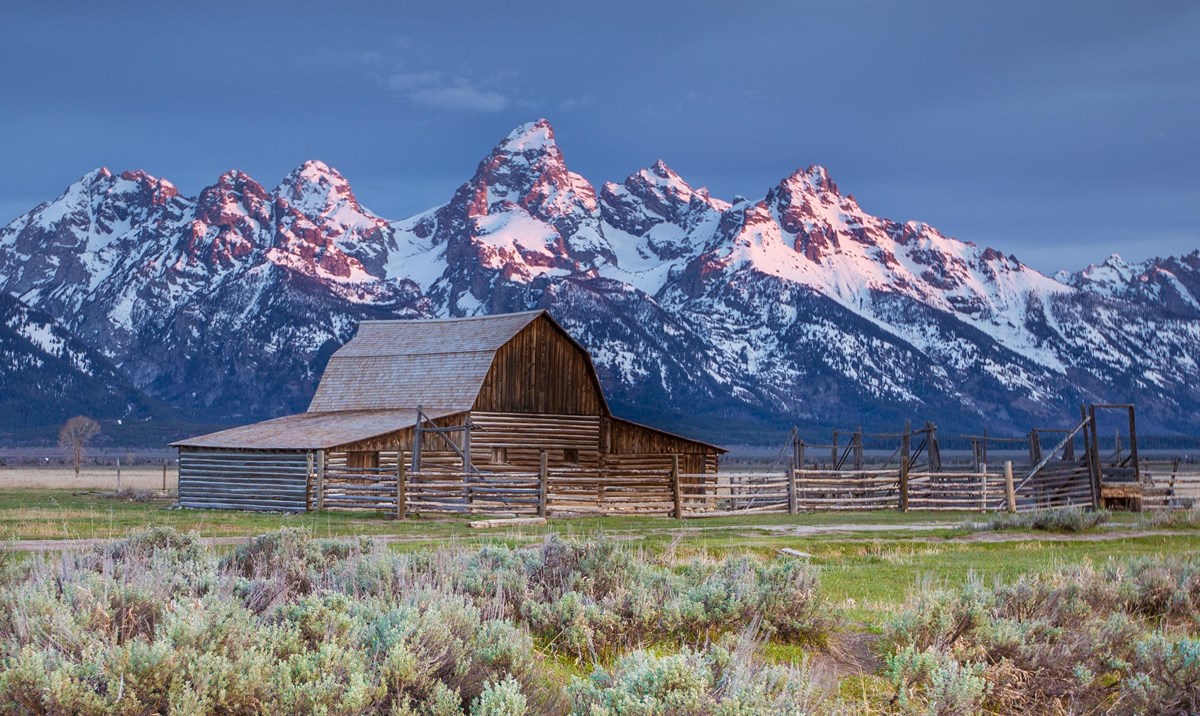
June runs about 633,000 recreation visits in the five-year mean — about 86% of July's peak and well into Grand Teton's heavy-traffic band. The Jenny Lake, String Lake, and Taggart Lake parking lots fill before mid-morning on weekends; the Jenny Lake Boating shuttle runs at its full summer schedule. In-park lodges run at near-sold-out on weekends and steady through midweek. The Mormon Row pullouts and Schwabacher Landing see persistent dawn crowding for the classic sunrise compositions. Weekday traffic eases incrementally, but the gap between weekend and weekday narrows as the month progresses.

FieldValue
June recreation visits (5-yr mean)632,518
Share of July's peak86%
Crowd bandpeak
Park's busiest month (5-yr mean)July
Park's quietest month (5-yr mean)December

Weather snapshot.

The Moran 5WNW NOAA station records a June high near 67.0°F and a low near 37.0°F. Snowfall ends at the valley elevation by early June; the range above 9,000 ft can still see late-June storm flurries. Snow lingers in the mountains until mid-July per NPS climbing guidance, and afternoon thunderstorms above treeline begin to build through the month: clear morning, cumulus by late morning, lightning and rain by early afternoon on active days. Days are the year's longest, with usable photography light extending past 9:00 PM local time. Mosquitoes intensify at lower-elevation riparian areas — the Snake River bottomlands, the willow flats, and the Moose-Wilson corridor are the worst stretches.

FieldValue
Average high (°F)67.0
Average low (°F)37.0
Precipitation (inches)1.75
Snowfall (inches)0.3
Weather bandshoulder
StationMoran 5WNW HCN, WY at 6,805 ft

Access snapshot.

Every park road is reliably open in June. Inner Teton Park Road, Moose-Wilson Road, and Signal Mountain Summit Road operate full season — confirm current status on the NPS Grand Teton roads page. The Jenny Lake Boating shuttle runs daily on its peak-season schedule (7 AM-7 PM) per the Jenny Lake Boating site. In-park lodges and campgrounds are at full operation through Grand Teton Lodge Company and Signal Mountain Lodge. The 7-day vehicle pass is $35 with America the Beautiful and Senior Pass accepted per the NPS Grand Teton fees page. Bear spray applies on every hike — 100 yards from bears and wolves, 25 yards from all other wildlife per the NPS safety page.

FieldValue
June access score (0-100)100
Year-round routeUS-89 / US-191 / US-26 through-corridor along the east side of the park (inner Teton Park Road closed November 1 through April 30; Moose-Wilson Road closed November 1 until mid-May)
Verify current road and conditions statusOfficial NPS Grand Teton roads page

Seasonal events.

June is wildflower-explosion month in the sagebrush valley and the lower forest. Arrowleaf balsamroot, lupine, sticky geranium, sego lily, and the first columbine produce overlapping waves of bloom; NPS Grand Teton wildflowers notes that dominant species shift dramatically week to week. Moose calving peaks in the willow flats along the Moose-Wilson corridor and the Buffalo Fork bottomlands — cow moose with calves are exceptionally dangerous and warrant the full 25-yard distance plus extra. Elk calves are common across the sage benches and meadow edges. Bears continue actively foraging; black-bear sightings on Moose-Wilson are routine, and grizzly sightings along the through-corridor are reported through the month. Cutthroat trout spawn in the gravel-bottomed inlets of Jackson Lake.

Audience verdict.

June serves visitors who want full park access with pre-monsoon stability and the longest daylight of the year. Photographers gain wildflower-with-Tetons compositions and the year's strongest dawn light over Mount Moran from Oxbow Bend. Families locked to early-summer school breaks should book lodging well ahead; afternoon thunderstorms in the range are common, so any high-elevation plan needs an early start and a turnaround before mid-afternoon. RV travelers benefit from full campground operations. Anyone optimizing for solitude should wait for September; the Memorial-Day-through-Labor-Day window is now firmly peak. Bear-safety with kids on family-friendly trails (Taggart Lake, String Lake) is a real constraint.

Methodology

Monthly recreation visits come from the official NPS Visitor Use Statistics Data Package, 2025 on NPS IRMA Stats; the statistic shown is Recreation Visits, the 5-year mean across 1979-2025. Climate normals come from NOAA NCEI's 1991-2020 U.S. Climate Normals at Moran 5WNW HCN, WY (station USC00486440, 6,805 ft elevation). The access score weights named park roads by route importance for typical wheeled-vehicle openings that month. Year-variable specifics — exact inner Teton Park Road open/close dates, Moose-Wilson Road open/close dates, the Jenny Lake Boating shuttle season, in-park lodge operating windows — drift year to year and are hedged in the editorial above; confirm current dates on the official NPS Grand Teton page before booking. Independent site, not affiliated with the National Park Service.

Independence

Independent site. Not affiliated with or endorsed by the National Park Service. Data comes from the official NPS Visitor Use Statistics Data Package, 2025; editorial analysis is ours. The NPS Arrowhead and other NPS marks are not used.

Last updated · 2026-05-20