Per-month · July

Grand Teton in July.

July is a peak-crowd, peak-weather audience month.

By Nicholas Major · Last updated

July is the absolute peak month at Grand Teton. The five-year mean is about 732,000 recreation visits — the highest of any month — driven by school-summer-break traffic from across the Mountain West and the regional Front Range. Every park road runs full season. NOAA normals at the Moran 5WNW station record a July high of about 77°F (the year's warmest) with overnight lows near 42°F. Snow finally clears most of the high country by mid-July per NPS climbing guidance, and afternoon thunderstorms over the range are at their reliable peak. The Grand Teton climbing season hits its core window through the back half. Bears remain active; moose with calves are exceptionally dangerous in the willow flats. The Independence Day window (July 3-5) is the densest weekend of the month. For visitors locked to a peak-summer school-break trip, July is operationally cleanest — but it is the worst month for crowd density and the highest-stakes month for alpine weather safety.

Crowd snapshot.

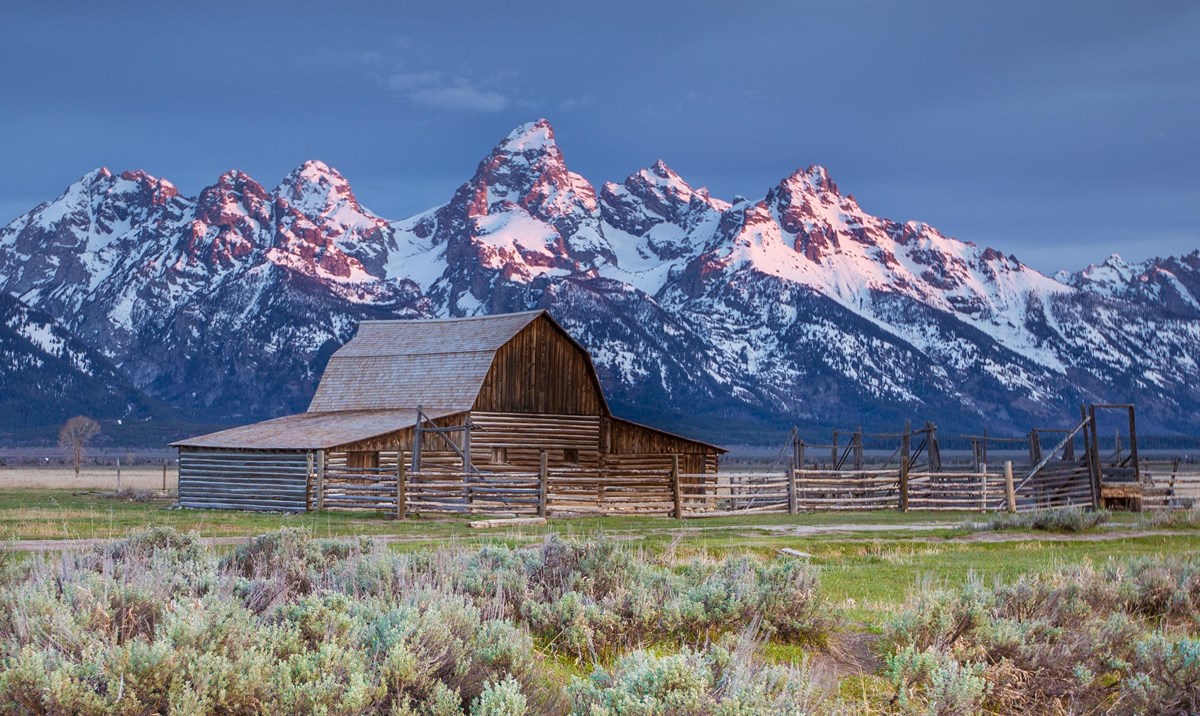
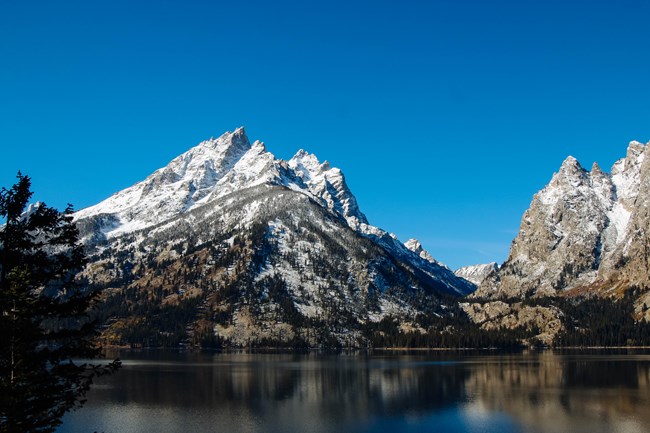
July is the peak month at Grand Teton by five-year mean — about 732,000 recreation visits, the highest of any month. The Jenny Lake, String Lake, and Taggart Lake parking lots fill before 7 AM on weekends. Jackson and in-park lodging are sold out weeks in advance. The Jenny Lake Boating shuttle queue runs long through the middle of the day; the Mormon Row dawn crowd and the Oxbow Bend pre-sunrise crowd both reach their year's peak density. The Independence Day window (July 3-5) is the densest weekend of the month; mid-month and late month run marginally easier as some heat-averse visitors shift trips to Yellowstone or higher-elevation regional parks.

FieldValue
July recreation visits (5-yr mean)732,380
Share of July's peak100%
Crowd bandpeak
Park's busiest month (5-yr mean)July
Park's quietest month (5-yr mean)December

Weather snapshot.

The Moran 5WNW NOAA station records a July high near 76.9°F — the year's warmest — and a low near 42.2°F. The monthly precipitation normal is about 1.02 inches, delivered in concentrated afternoon thunderstorm bursts rather than steady cover. Storms typically build over the range and reach the valley by mid-to-late afternoon on active days. Lightning is the principal alpine hazard above treeline. High-country temperatures at the upper Cascade Canyon and Garnet Canyon elevations run 15-25°F below the valley reading; afternoon wind at exposed alpine pulpits is reliably 20-30 mph. Snow still lingers on north-aspect slopes above ~10,000 ft into mid-July per NPS climbing guidance.

FieldValue
Average high (°F)76.9
Average low (°F)42.2
Precipitation (inches)1.02
Snowfall (inches)0.0
Weather bandwarm
StationMoran 5WNW HCN, WY at 6,805 ft

Access snapshot.

Every park road runs full season. The Jenny Lake Boating shuttle operates daily on its peak-season schedule per the Jenny Lake Boating site. In-park lodges and campgrounds are at peak demand through Grand Teton Lodge Company and Signal Mountain Lodge. Climbing access: no permit required for day climbs, but Garnet Canyon and technical climbing trips must pick up permits at the Jenny Lake Ranger Station June through September per the NPS climbing page. Afternoon storms over the range are routine — start alpine routes before dawn. Bear spray applies on every hike; 100 yards from bears and wolves, 25 yards from all other wildlife per the NPS safety page.

FieldValue
July access score (0-100)100
Year-round routeUS-89 / US-191 / US-26 through-corridor along the east side of the park (inner Teton Park Road closed November 1 through April 30; Moose-Wilson Road closed November 1 until mid-May)
Verify current road and conditions statusOfficial NPS Grand Teton roads page

Seasonal events.

July is the Grand Teton climbing core window. The Grand itself, the Middle and South Tetons, and the rest of the named range reach their best snow-cleared rock-climbing conditions through the back half; Garnet Canyon permits are picked up at the Jenny Lake Ranger Station (NPS Grand Teton climbing). Alpine wildflowers — paintbrush, columbine, alpine forget-me-not, sky pilot — peak above treeline. Valley sagebrush wildflowers wind down through the front half as drought sets in. Cutthroat trout fishing along the Snake River, Pacific Creek, and Buffalo Fork is at the season's prime under NPS regulations. Moose with calves remain along the willow flats. Bears are actively feeding on huckleberry and other emerging mid-summer forage; bear sightings along Moose-Wilson run at the year's peak.

Audience verdict.

July is a peak-crowd, peak-weather audience month. It rewards families locked to mid-summer school breaks (July is structurally the only month with every park road open and the lakes warm enough for paddling), climbers (the Grand and the rest of the range hit their core season), photographers chasing alpine wildflowers and storm-light over the range, and visitors targeting summit routes. It is hostile to anyone optimizing for solitude or easy parking — Jenny Lake fills before 7 AM and lodging is sold out weeks in advance. RV travelers should book months ahead. Visitors who can flex outside school-locked weeks should look at the second half of August or late September instead.

Methodology

Monthly recreation visits come from the official NPS Visitor Use Statistics Data Package, 2025 on NPS IRMA Stats; the statistic shown is Recreation Visits, the 5-year mean across 1979-2025. Climate normals come from NOAA NCEI's 1991-2020 U.S. Climate Normals at Moran 5WNW HCN, WY (station USC00486440, 6,805 ft elevation). The access score weights named park roads by route importance for typical wheeled-vehicle openings that month. Year-variable specifics — exact inner Teton Park Road open/close dates, Moose-Wilson Road open/close dates, the Jenny Lake Boating shuttle season, in-park lodge operating windows — drift year to year and are hedged in the editorial above; confirm current dates on the official NPS Grand Teton page before booking. Independent site, not affiliated with the National Park Service.

Independence

Independent site. Not affiliated with or endorsed by the National Park Service. Data comes from the official NPS Visitor Use Statistics Data Package, 2025; editorial analysis is ours. The NPS Arrowhead and other NPS marks are not used.

Last updated · 2026-05-20