Per-month · July

Glacier in July.

July is a peak-crowd, peak-operations audience month.

By Nicholas Major · Last updated

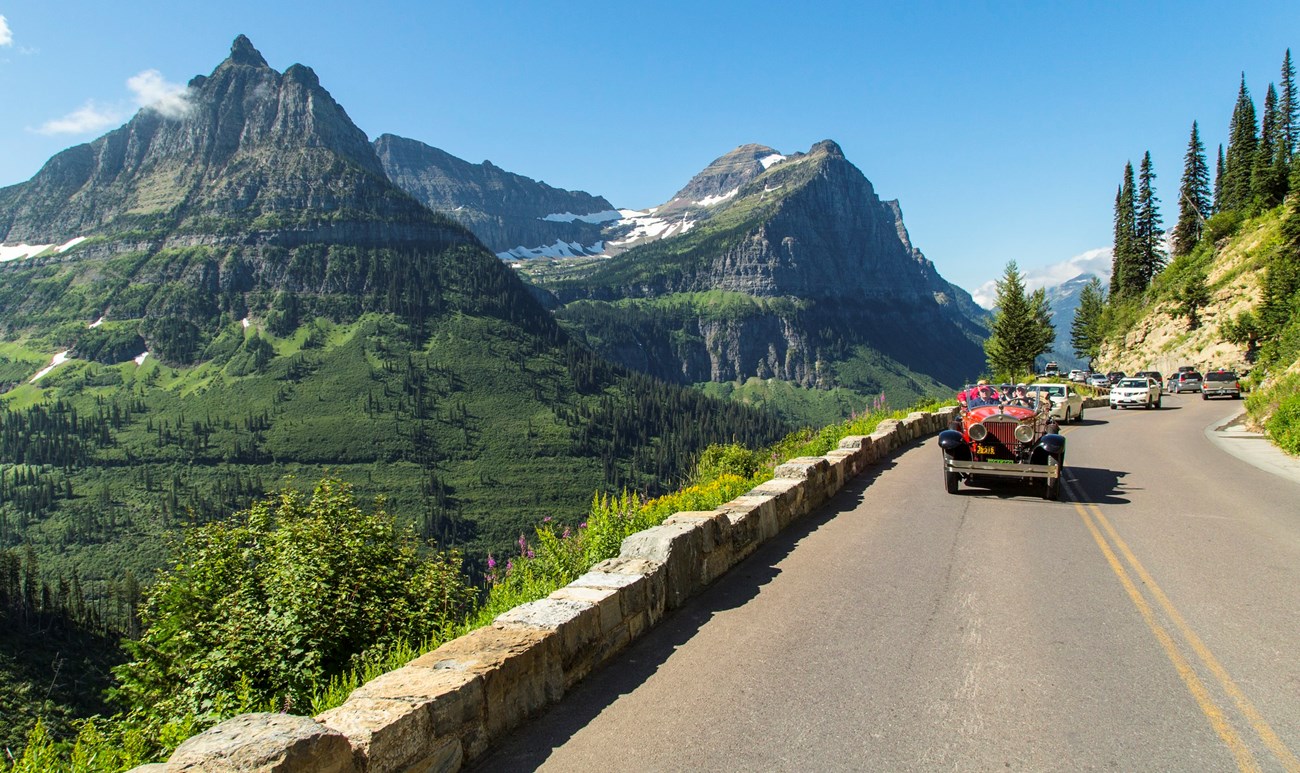
July is Glacier's peak month. The five-year mean is about 761,000 recreation visits — the highest of any month — driven by school-summer-break traffic across the U.S. and Canada and by the full Going-to-the-Sun traverse running over Logan Pass. Many Glacier and Two Medicine are at full schedule, and Logan Pass parking fills before mid-morning on weekends. The W Glacier observer logs a July high near 80°F (the year's warmest) with overnight lows near 50°F. Afternoon thunderstorms above treeline are at their reliable peak. Wildfire smoke risk begins to ramp through the second half in dry years — check AirNow.gov before any trip that hinges on long-distance vistas. Vehicle reservation rules are year-variable and have been active in recent peak Julys; verify current entry rules on the NPS Glacier conditions page well before booking flights. For visitors locked to a peak-summer school-break window, July is operationally cleanest — but the worst month for crowd density and the highest-stakes month for fire-and-storm planning.

Crowd snapshot.

July is the peak month at Glacier by five-year mean — about 761,000 recreation visits, the highest of any month. Logan Pass parking fills before mid-morning even on weekdays; the free Going-to-the-Sun shuttle is the practical solution for the corridor. Many Glacier Hotel and Lake McDonald Lodge are sold out months in advance; the broader West Glacier, Whitefish, Saint Mary, and East Glacier base markets all run at peak weekend pricing. The Independence Day window (July 3-5) is the densest stretch of the month; mid-month and late month run marginally easier as some heat- or smoke-averse visitors flex around regional fire activity.

FieldValue
July recreation visits (5-yr mean)761,346
Share of July's peak100%
Crowd bandpeak
Park's busiest month (5-yr mean)July
Park's quietest month (5-yr mean)February

Weather snapshot.

The W Glacier NOAA station records a July high near 80.2°F — the year's warmest — and a low near 49.6°F. The monthly precipitation normal of 1.39 inches is one of the year's lowest readings, delivered in concentrated afternoon thunderstorm bursts rather than steady cover. Storms typically build over the divide in early afternoon and reach the lower elevations by mid-to-late afternoon on active days. Lightning is the principal alpine hazard above treeline. High-country temperatures at Logan Pass (6,646 ft) read 15-20°F below the W Glacier reading; afternoon wind on the high pullouts is reliably 20-30 mph. Wildfire smoke is a real Glacier July concern in dry years and can shut viewpoints for days.

FieldValue
Average high (°F)80.2
Average low (°F)49.6
Precipitation (inches)1.39
Snowfall (inches)0.0
Weather bandhot
StationW Glacier, MT at 3,148 ft

Access snapshot.

Going-to-the-Sun Road runs full schedule over the divide. Many Glacier and Two Medicine Road operate at full season per NPS Glacier hours. Vehicle reservation rules are year-variable — confirm on the NPS Glacier conditions page well before booking flights. Summer $35 vehicle pass per the NPS fees page. In-park lodges at full operation via Glacier National Park Lodges and Pursuit. Bear activity is high — review the NPS bear-safety page. Smoke can affect viewsheds; check AirNow.gov for current AQI.

FieldValue
July access score (0-100)100
Year-round routeLower Going-to-the-Sun Road from West Glacier through Apgar to Lake McDonald Lodge (Going-to-the-Sun upper section closed ~mid-October through late June; Many Glacier and Two Medicine closed ~third weekend November through late May)
Verify current road and reservation statusOfficial NPS Glacier conditions page

Seasonal events.

July is alpine wildflower peak along the Highline Trail, around Logan Pass, and in the upper subalpine meadows. Beargrass, glacier lily, paintbrush, monkey-flower, and gentian carpet the upper meadows through the first three weeks. Mountain goats with kids are reliably visible at Logan Pass and at the cliff bands above the Going-to-the-Sun upper section (NPS Glacier wildlife). Hoary marmots and pikas are at full activity along the Garden Wall and the Hidden Lake Trail. Bighorn sheep concentrate at the Many Glacier and Two Medicine east-side ridges. Lake McDonald and Saint Mary briefly reach fingertip-swimmable temperatures on the warmest afternoons. Late-month dark-sky conditions are very good at Apgar during new-moon windows; Glacier is an International Dark Sky Park.

Audience verdict.

July is a peak-crowd, peak-operations audience month. It rewards families locked to mid-summer school breaks (July is structurally the only month with the full Going-to-the-Sun reliably open from day one), photographers chasing alpine wildflowers and storm-light over the divide, and visitors targeting summit hikes (Iceberg Lake, Grinnell Glacier, Highline, Siyeh Pass — start before dawn, off the ridgelines by early afternoon, lightning-aware). It is hostile to anyone optimizing for solitude or easy parking at Logan Pass. Vehicle reservation rules are year-variable and a missed reservation can mean turning around at the entrance. RV travelers should book months ahead. Visitors who can flex outside school-locked weeks should look at the second half of September instead.

Methodology

Monthly recreation visits come from the official NPS Visitor Use Statistics Data Package, 2025 on NPS IRMA Stats; the statistic shown is Recreation Visits, the 5-year mean across 1979-2025. Climate normals come from NOAA NCEI's 1991-2020 U.S. Climate Normals at W Glacier, MT (station USC00248809, 3,148 ft elevation). The access score weights named park roads by route importance for typical wheeled-vehicle openings that month. Year-variable specifics — exact Going-to-the-Sun Road open/close dates, Many Glacier and Two Medicine Road dates, vehicle-reservation rules — drift year to year and are hedged in the editorial above; confirm current dates on the official NPS Glacier page before booking. Independent site, not affiliated with the National Park Service.

Independence

Independent site. Not affiliated with or endorsed by the National Park Service. Data comes from the official NPS Visitor Use Statistics Data Package, 2025; editorial analysis is ours. The NPS Arrowhead and other NPS marks are not used.

Last updated · 2026-05-20