Allow for plowing
After snow, the park road may close for several hours. Shaded roads and parking areas can remain icy.
Arches National Park in winter offers quieter trails and cold desert scenery. Bring traction for icy hikes, allow for plowing delays after snow, and use Moab for a room. Winter ranger-led hikes are not offered.
Read the park alerts before choosing your route.
Check the winter trail and road advice.
Compare Moab rooms with camping in the park.
Use the park road for the main viewpoints, with Moab as your hotel base.
Snow and shade can change a short drive or hike. Check the road and trail reports before leaving Moab.
After snow, the park road may close for several hours. Shaded roads and parking areas can remain icy.
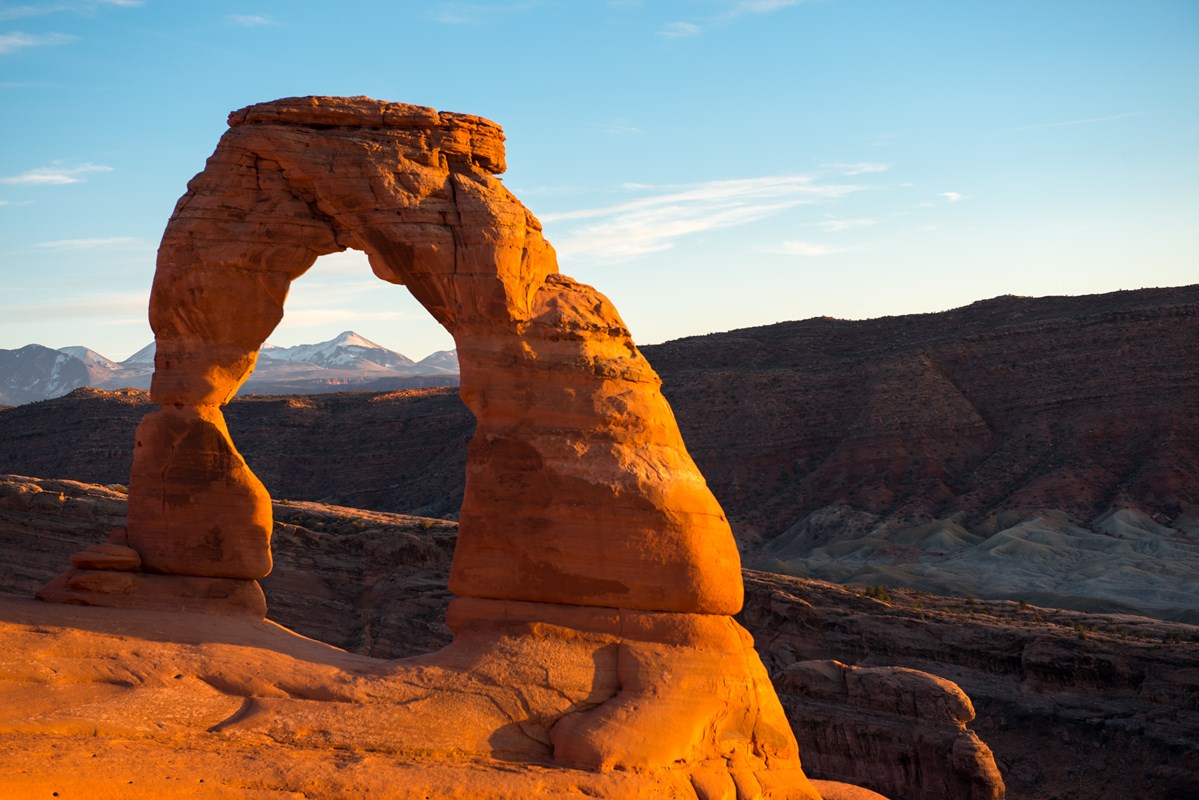
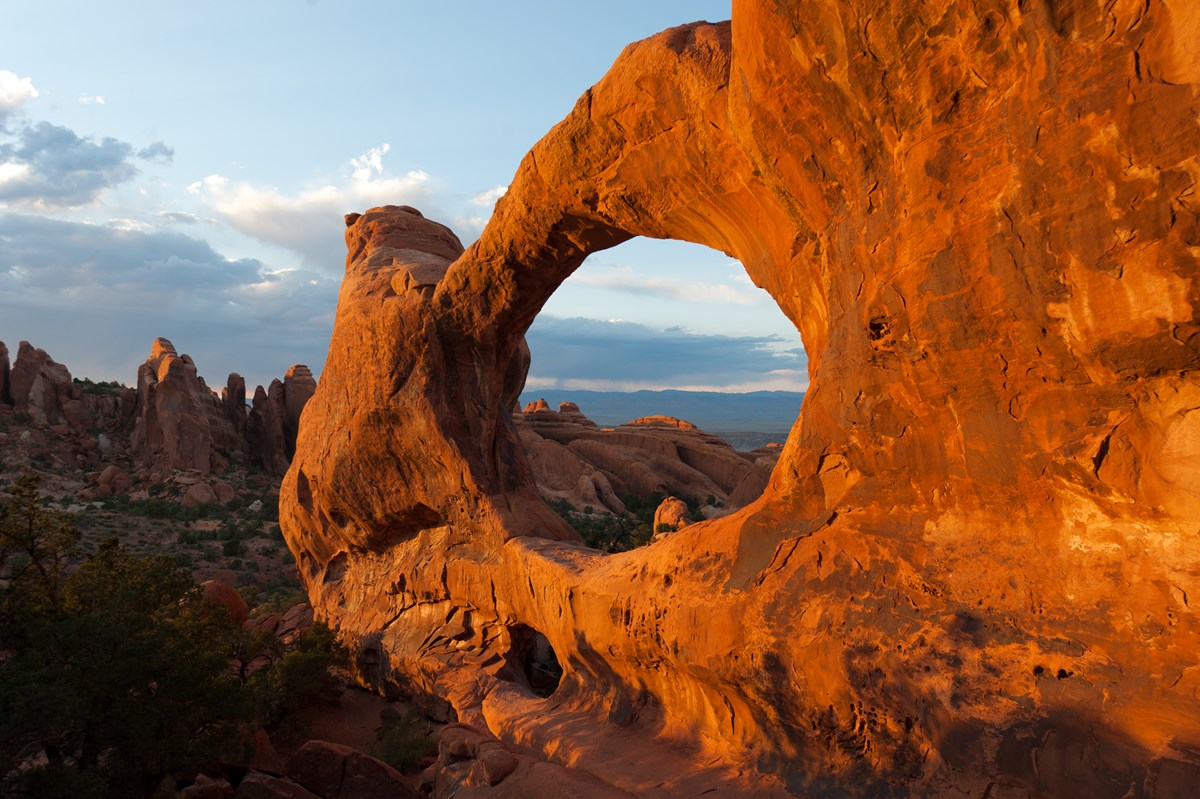
Packed snow makes Delicate Arch and Devils Garden slippery. NPS recommends traction devices and trekking poles.
Choose your hike for the footing, rather than its summer difficulty rating.
Most trails normally remain open year-round. Drifting snow can hide trail markers, even on easier routes.
Pick up a Junior Ranger booklet at the visitor center. Ranger-led hikes and campfire talks are not offered in winter.
There are no hotels or restaurants inside Arches.
The nearest hotels and restaurants are in Moab. Book a town room if you want a warm indoor base.
Camping Devils Garden uses first-come, first-served sites from November through February. Bring your own firewood; collecting it is prohibited.
The highlighted whole months average 55,185 recreation visits per month. May is the annual peak at 195,001.
NOAA 1991-2020 averages at Moab, UT (preview station; full station review pending). The Moab station sits at about 4,053 ft in town, south of the park entrance, not in the park, so conditions on the trails can differ from these numbers. Its 1991-2020 normals show little snow: 4.9 inches in December and under 2 inches in January and February. We have not finished reviewing this station for Arches, so treat the numbers as a preview.
Local sunrise and sunset on the 21st of each selected month. These are astronomical times, not a forecast or an access schedule.
| Date | Sunrise and sunset, local clock time | Daylight |
|---|---|---|
| November 21 | SunriseSunset | |
| December 21Shortest day shown | SunriseSunset | |
| January 21 | SunriseSunset | |
| February 21 | SunriseSunset |
Quick answers to the practical questions below.
Winter offers a quieter visit, with most trails normally open. The tradeoffs are cold mornings, icy trails and occasional road-plowing delays.
The trail can become slippery with packed snow and ice. NPS recommends traction devices and trekking poles; check the latest trail advice before setting out.
Devils Garden normally has first-come, first-served sites from November through February. The winter page lists restrooms and drinking water, but check the campground before relying on services.
NPS says large snowfalls are uncommon except in nearby mountains. Even small amounts of snow or ice can make local roads and trails impassable.
An independent guide using official data. Not affiliated with or endorsed by the National Park Service.
Winter trail footing, ranger programs and plowing patterns come from the NPS Visiting in Winter page. Moab lodging and seasonal campground booking patterns come from NPS Eating and Sleeping. Snow at Arches is possible, not a dependable snow-sport season.
Temperatures are NOAA 1991-2020 normals at Moab, UT; The Moab station sits at about 4,053 ft in town, south of the park entrance, not in the park, so conditions on the trails can differ from these numbers. Its 1991-2020 normals show little snow: 4.9 inches in December and under 2 inches in January and February. We have not finished reviewing this station for Arches, so treat the numbers as a preview. This is a preview station, pending full station review. Daylight is computed from committed USNO 2026 local-time records at Arches Visitor Center, UT (38.62N, 109.62W).
Arches is a cold desert, with occasional snow and ice rather than a dependable snow-recreation season. NPS says large snowfalls are uncommon outside nearby mountains. The muted blue treatment has no snowfall decoration.
Operational source check: October 21, 2026. Design and emphasized source review: 2026-10-21. A design review does not refresh every underlying record.