Per-month · March

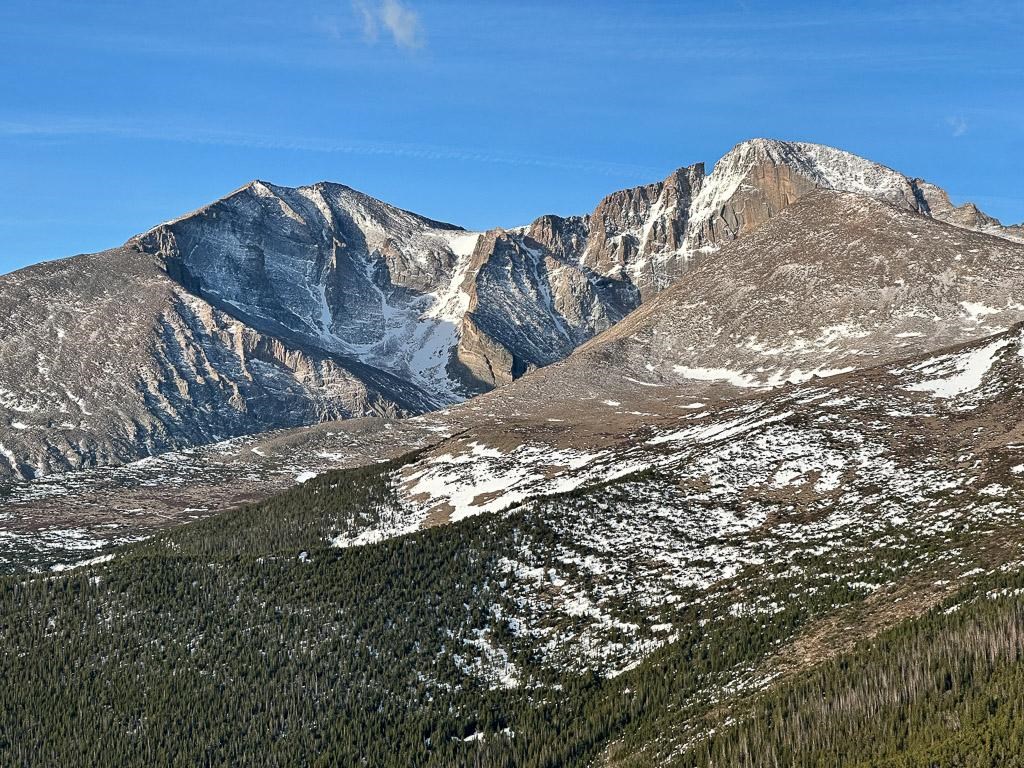
Rocky Mountain in March.

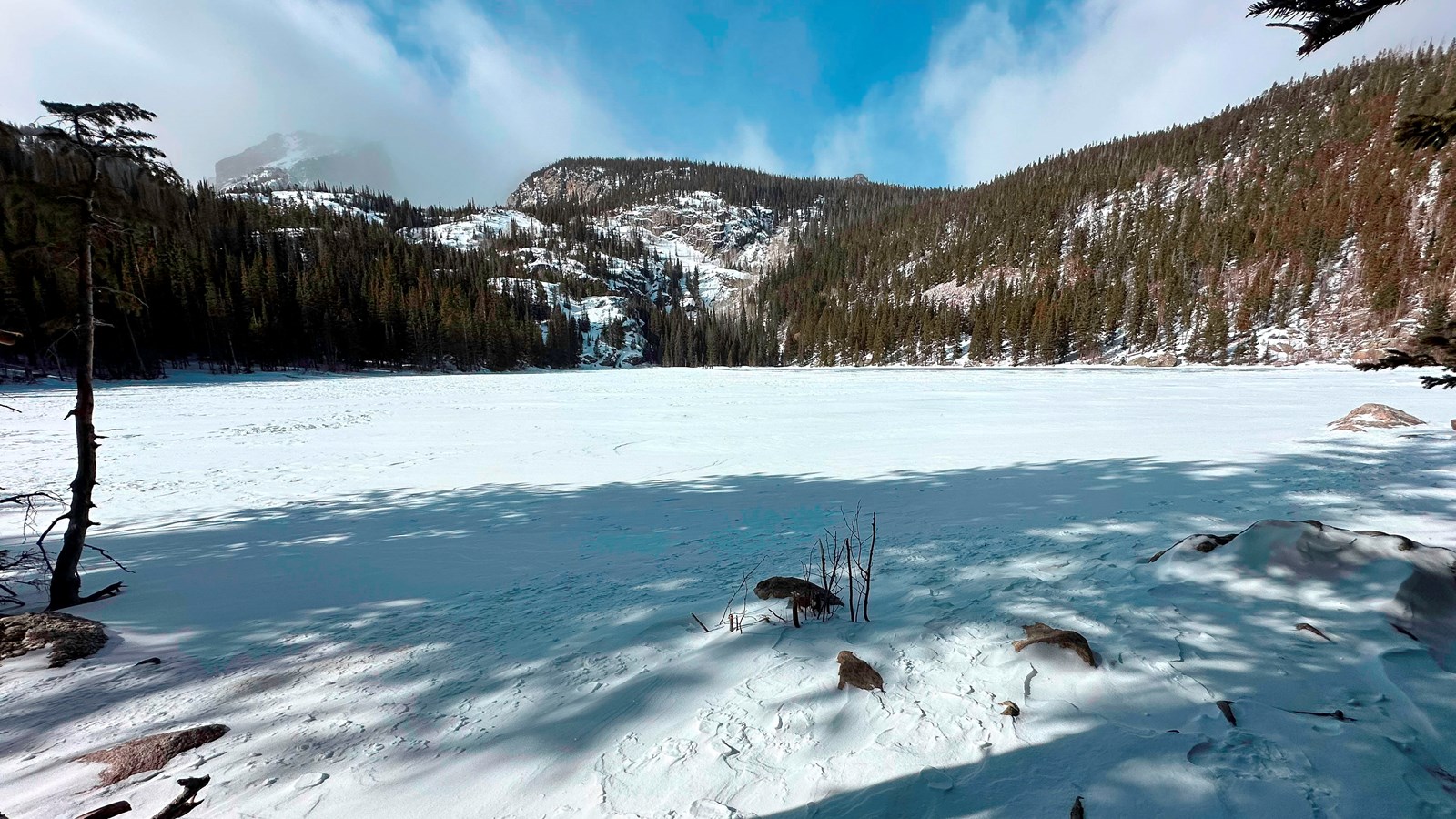
March suits visitors who want winter-recreation conditions with slightly longer light: cross-country skiers and snowshoers on the Bear Lake corridor, dawn photographers in the elk meadows, and Front Range day-trippers from Denver and Boulder who can build a short Estes Park weekend around it.

By Nicholas Major · Last updated

March is a transition month at Rocky Mountain. The five-year mean climbs to about 153,000 recreation visits — still well below summer numbers but the first noticeable lift off the deep winter floor as regional spring-break travel begins. Trail Ridge Road is still closed through the high country until late May per NPS, and Old Fall River Road remains closed for the season. The plowed corridors stay east-side: Bear Lake Road, US-36 and US-34 through Moraine Park and Horseshoe Park. NOAA normals at the Estes Park station record a March high near 46°F with overnight lows near 22°F, and the March snowfall normal of 16.8 inches is the highest single-month reading at the cooperative station. For visitors trading deep snowpack on the high country for slightly warmer days and longer light, March is the strongest pre-spring window — but it is still a winter trip in operational terms.

Crowd snapshot.

March runs about 153,000 recreation visits in the five-year mean — roughly 19% of July's peak and the first month with a meaningful lift off the deep-winter baseline. Regional spring-break traffic from Front Range school districts concentrates traffic into the middle two weeks, with the Bear Lake corridor seeing weekend pulses that thin to nothing midweek. Estes Park lodging starts to tighten on weekends but remains broadly available. The Beaver Meadows Visitor Center desk runs at winter cadence early-month and bumps to spring cadence toward the end.

FieldValue
March recreation visits (5-yr mean)153,039
Share of July's peak19%
Crowd bandlow
Park's busiest month (5-yr mean)July
Park's quietest month (5-yr mean)February

Weather snapshot.

The Estes Park NOAA station records a March high near 46.4°F and a low near 22.4°F. The monthly snowfall normal of 16.8 inches is the highest single-month figure of the year at the cooperative station — March is the snowiest month for the east-side gateway corridor by NOAA's 1991-2020 record, driven by heavy spring storm cycles. The high country absorbs materially more, and Bear Lake itself stays frozen through the month. Daytime sun is strong enough that south-facing pullouts and lower trails melt out between storms, but shaded north-aspect terrain and shaded plowed road sections stay icy.

FieldValue
Average high (°F)46.4
Average low (°F)22.4
Precipitation (inches)1.18
Snowfall (inches)16.8
Weather bandcold
StationEstes Park, CO at 7,522 ft

Access snapshot.

Trail Ridge Road stays closed through the high country in March — confirm on the NPS Rocky Mountain conditions page. The plowed corridors continue to be Bear Lake Road and the east-side US-36 / US-34 routes. Old Fall River Road is closed for the season. The Timed Entry+ Bear Lake permit is not yet in effect; it does not start until late May per the NPS timed-entry page. In-park campgrounds remain mostly closed except Moraine Park (first-come, first-served winter cadence). Estes Park hotels and the YMCA of the Rockies are the practical lodging base.

FieldValue
March access score (0-100)40
Year-round routeBear Lake Road + east-side US-36 / US-34 corridors (Trail Ridge Road closed mid-October through late May)
Verify current road and permit statusOfficial NPS Rocky Mountain conditions page

Seasonal events.

March is the snowiest-storms month at the Estes Park elevation per the NOAA cooperative record, which means winter-recreation conditions on the Bear Lake corridor are at their deepest. Elk remain in the lower montane meadows; bull elk drop their antlers through the month, and shed-antler hunting is heavily regulated and prohibited inside the park. Migratory songbird activity begins building in the last 10 days as the first early-spring arrivals (bluebirds, robins) show along the river corridor. Bighorn sheep activity at Sheep Lakes builds as the snow line begins to retreat from the south-facing slopes. Late-month daylight gain is the strongest of any month.

Audience verdict.

March suits visitors who want winter-recreation conditions with slightly longer light: cross-country skiers and snowshoers on the Bear Lake corridor, dawn photographers in the elk meadows, and Front Range day-trippers from Denver and Boulder who can build a short Estes Park weekend around it. It is not the month for any high-country hiking — Trail Ridge is closed, alpine trails are buried, and avalanche danger above treeline remains real. Families with school-locked spring-break calendars can use Hidden Valley for sledding and a Bear Lake snowshoe day as an entry-level winter mix. RV travelers can use Moraine Park on a first-come basis but should expect cold nights and no hookups.

Methodology

Monthly recreation visits come from the official NPS Visitor Use Statistics Data Package, 2025 on NPS IRMA Stats; the statistic shown is Recreation Visits, the 5-year mean across 1979-2025. Climate normals come from NOAA NCEI's 1991-2020 U.S. Climate Normals at Estes Park, CO (station USC00052759, 7,522 ft elevation). The access score weights named park roads by route importance for typical wheeled-vehicle openings that month. Year-variable specifics — exact Trail Ridge Road open/close dates, Old Fall River Road dates, the Timed Entry+ Bear Lake Road corridor permit window — drift year to year and are hedged in the editorial above; confirm current dates on the official NPS Rocky Mountain page before booking. Independent site, not affiliated with the National Park Service.

Independence

Independent site. Not affiliated with or endorsed by the National Park Service. Data comes from the official NPS Visitor Use Statistics Data Package, 2025; editorial analysis is ours. The NPS Arrowhead and other NPS marks are not used.

Last updated · 2026-05-20