Per-month · April

Rocky Mountain in April.

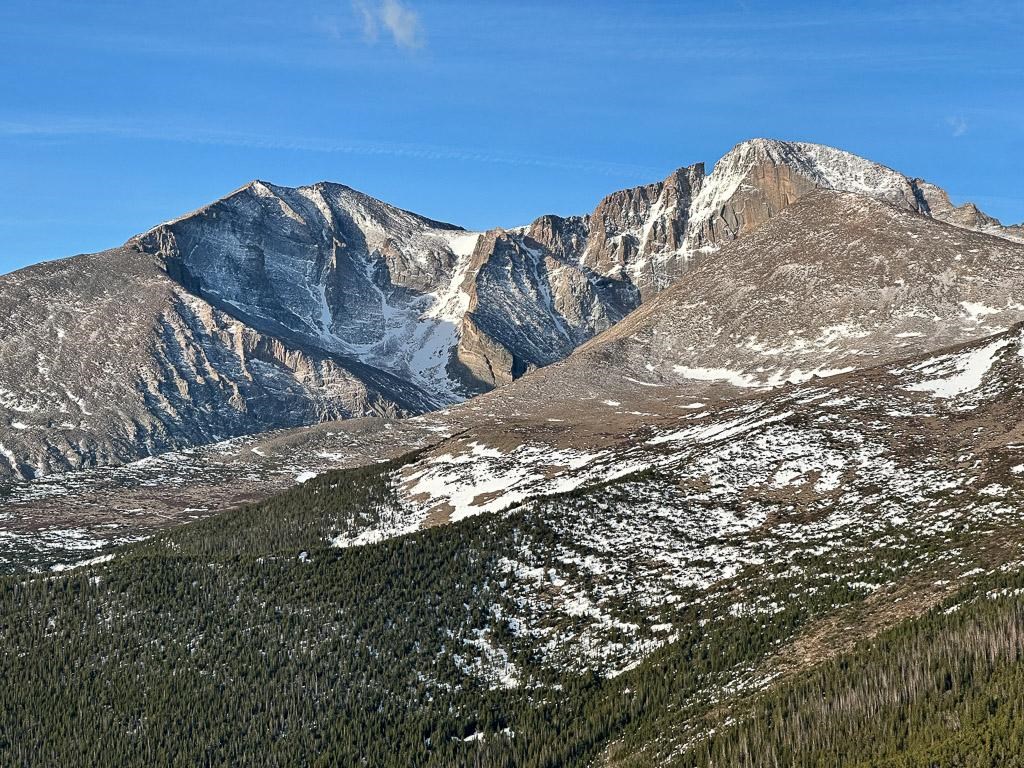
April serves Front Range day-trippers and shoulder-season visitors anchored at Estes Park: bird-watchers chasing early spring arrivals, dawn photographers in the elk meadows, and snowshoers who can target the deepest high-country snowpack of the year.

By Nicholas Major · Last updated

April is the year's other shoulder-quiet month at Rocky Mountain, with a five-year mean near 167,000 recreation visits — about 21% of July's peak, just above November. Trail Ridge Road remains closed through the high country until late May per NPS, and Old Fall River Road stays closed. The plowed corridors are still east-side: Bear Lake Road, US-36 and US-34 through Moraine Park and Horseshoe Park. NOAA normals at the Estes Park station record a high near 54°F with overnight lows near 29°F and an April snowfall normal of 14.2 inches — heavy spring storm cycles continue. Snowpack above 9,000 ft stays deep, and most alpine trails remain unhikeable. For visitors anchored on the east-side corridors who can accept that the high country is still locked up, April is the cleanest pre-spring window of the year.

Crowd snapshot.

April runs about 167,000 recreation visits in the five-year mean — roughly 21% of July's peak. The visitor mix shifts from pure winter-recreation traffic to early-shoulder day-trippers from the Front Range. Easter weekend is the lone holiday spike; the rest of the month remains broadly off-season. The Bear Lake Trailhead and Moraine Park pullouts see weekend pulses but stay quiet midweek. Estes Park lodging is widely available outside the Easter window. The Bear Lake Road shuttle does not yet operate, and the timed-entry+ permit window is not yet in effect.

FieldValue
April recreation visits (5-yr mean)166,885
Share of July's peak21%
Crowd bandlow
Park's busiest month (5-yr mean)July
Park's quietest month (5-yr mean)February

Weather snapshot.

The Estes Park NOAA station records an April high near 53.6°F and a low near 28.7°F. April snowfall normals are 14.2 inches at the cooperative observer, and high-country totals run materially higher. Storm cycles deliver mixed snow and rain at the Estes Park elevation, with the heaviest spring storms (the so-called sloppy spring snowstorms) often producing 1-2 feet at higher elevations in a single event. Daytime sun is strong, lower trails melt out between storms, and Sprague Lake begins to thaw at the edges late month. North-facing high-country aspects remain snowbound; mountain hiking above 9,000 ft is still a winter activity.

FieldValue
Average high (°F)53.6
Average low (°F)28.7
Precipitation (inches)1.85
Snowfall (inches)14.2
Weather bandcold
StationEstes Park, CO at 7,522 ft

Access snapshot.

Trail Ridge Road stays closed through the high country in April; verify on the NPS Rocky Mountain conditions page. The plowed corridors are still Bear Lake Road and the east-side US-36 / US-34 routes through Moraine Park and Horseshoe Park. Old Fall River Road is closed for the season. The Timed Entry+ Bear Lake Road permit is not yet in effect; the 2026 window begins May 22 per the NPS timed-entry page. In-park campgrounds are mostly still closed for the season — Aspenglen, Glacier Basin, and Timber Creek open in late spring. Estes Park hotels and the YMCA of the Rockies remain the practical base.

FieldValue
April access score (0-100)40
Year-round routeBear Lake Road + east-side US-36 / US-34 corridors (Trail Ridge Road closed mid-October through late May)
Verify current road and permit statusOfficial NPS Rocky Mountain conditions page

Seasonal events.

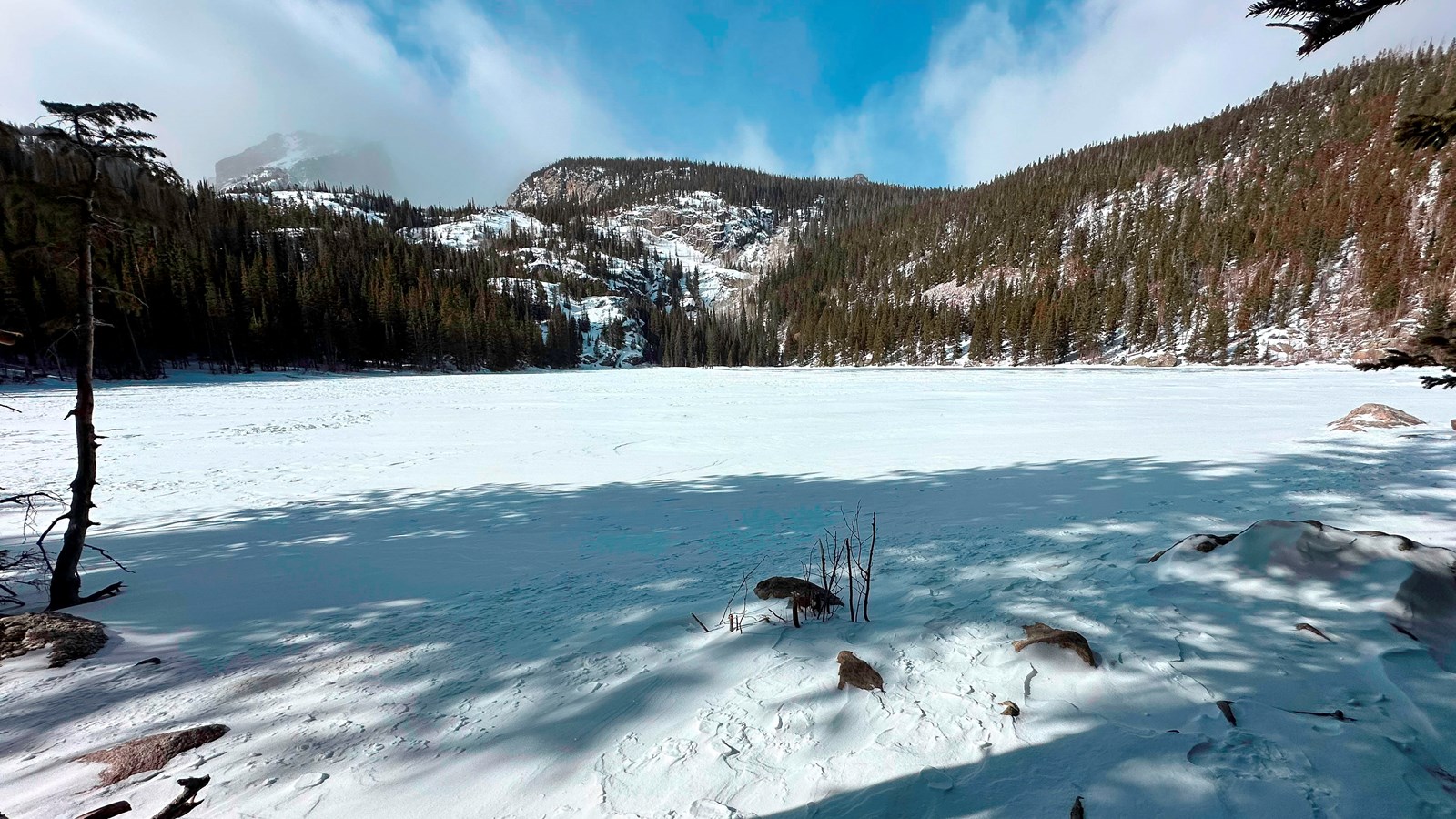
April is the start of the early-spring transition. Wapiti and bighorn sheep move toward Sheep Lakes and the lower montane meadows as the snow line retreats; bull elk are antlerless through April after the March drop. Migratory songbird activity ramps up in the second half of the month as bluebirds, robins, and the first warblers arrive along the Big Thompson and Fall River corridors. Hummingbirds — broad-tailed and rufus — begin to appear in the last week (NPS Rocky Mountain birds). The first alpine snowmelt at lower elevations begins; waterfalls along the east-side trails start to run higher. Lakes at lower elevations begin to thaw at the edges; Bear Lake itself stays frozen.

Audience verdict.

April serves Front Range day-trippers and shoulder-season visitors anchored at Estes Park: bird-watchers chasing early spring arrivals, dawn photographers in the elk meadows, and snowshoers who can target the deepest high-country snowpack of the year. It is not yet a high-country hiking month — Trail Ridge is closed, alpine trails are buried, and avalanche danger above treeline persists. Families with school-locked spring-break calendars can use the easier Bear Lake area for an introductory winter-into-spring day. RV travelers should hold for late May once the in-park summer campgrounds open and the timed-entry+ permit window starts.

Methodology

Monthly recreation visits come from the official NPS Visitor Use Statistics Data Package, 2025 on NPS IRMA Stats; the statistic shown is Recreation Visits, the 5-year mean across 1979-2025. Climate normals come from NOAA NCEI's 1991-2020 U.S. Climate Normals at Estes Park, CO (station USC00052759, 7,522 ft elevation). The access score weights named park roads by route importance for typical wheeled-vehicle openings that month. Year-variable specifics — exact Trail Ridge Road open/close dates, Old Fall River Road dates, the Timed Entry+ Bear Lake Road corridor permit window — drift year to year and are hedged in the editorial above; confirm current dates on the official NPS Rocky Mountain page before booking. Independent site, not affiliated with the National Park Service.

Independence

Independent site. Not affiliated with or endorsed by the National Park Service. Data comes from the official NPS Visitor Use Statistics Data Package, 2025; editorial analysis is ours. The NPS Arrowhead and other NPS marks are not used.

Last updated · 2026-05-20