Per-month · July

Joshua Tree in July.

July is an astrophotographer-and-night-photographer audience only.

By Nicholas Major · Last updated

July is the absolute quietest month at Joshua Tree by visits, with a five-year mean near 137,000 recreation visits — about 33% of March's peak — and also the most hostile. Daytime highs at the Twentynine Palms station average 104°F, the hottest NOAA monthly normal at any major U.S. National Park within reach of Los Angeles; overnight lows hover near 77°F. NPS specifically advises avoiding hiking between 10 a.m. and 5 p.m. and lists strenuous hikes as do-not-attempt — the Paul Miller Story on the NPS hiking page is the cautionary record of summer-heat hiker fatalities at Joshua Tree. Independence Day weekend pulls the only meaningful holiday bump. The monsoon pattern begins mid-month — afternoon thunderstorms with flash-flood and lightning risk become possible. Plan around an air-conditioned hotel.

Crowd snapshot.

July is the year's quietest month at Joshua Tree by five-year mean — about 137,000 recreation visits, roughly 33% of March's peak. The visitor mix is climbers anchored at Hidden Valley with strict sunrise-only itineraries, astrophotographers chasing new-moon galactic-center windows, and a thin stream of one-and-done visitors checking off a National Park visit. The Independence Day weekend is the only meaningful holiday bump — a few extra hundred visitors per day above the baseline. Reservation campgrounds at Black Rock, Indian Cove, Jumbo Rocks, and Cottonwood show broad availability including weekends. Twentynine Palms, Joshua Tree, and Yucca Valley lodging is widely available at reduced summer rates.

FieldValue
July recreation visits (5-yr mean)136,502
Share of March's peak33%
Crowd bandmoderate
Park's busiest month (5-yr mean)March
Park's quietest month (5-yr mean)July

Weather snapshot.

The Twentynine Palms NOAA station records a July high near 104.0°F — the year's peak — and a low near 77.4°F. Precipitation normals are about 0.40 inches as the southwestern monsoon pattern begins mid-month: afternoon convective storms become possible, with flash flood and lightning risk in the Pinto Basin and the open desert washes. Daytime highs frequently exceed 110°F at the station; the Cottonwood district at ~3,000 ft runs hotter. Overnight lows in the campgrounds remain in the upper 70s°F to low 80s°F — there is no nighttime relief at the lower elevations. Sun-angle and direct-overhead radiation are at their year's peak. Working hiking window is dawn to about 8 a.m. and the hour after sunset, no exceptions.

FieldValue
Average high (°F)104.0
Average low (°F)77.4
Precipitation (inches)0.40
Snowfall (inches)0.0
Weather bandhot
StationTwentynine Palms, CA at 1,975 ft

Access snapshot.

All paved roads remain open in July — confirm any localized advisories or flash-flood closures on the NPS Joshua Tree conditions page. Belle, White Tank, and Ryan remain closed for the summer per the NPS campgrounds page. Black Rock, Indian Cove, Jumbo Rocks, Cottonwood, and Hidden Valley operate but campground heat is severe. NPS hiking page specifically advises avoiding 10 a.m. to 5 p.m. and lists strenuous hikes as do-not-attempt — see the NPS hiking page for the trail-by-trail summer advisory. Standard fees apply per the NPS fees page.

FieldValue
July access score (0-100)70
Year-round routeAll paved roads year-round (Park Boulevard, Pinto Basin Road, Keys View Road, Cottonwood corridor, Black Rock + Indian Cove access)
Verify current road, campground, and safety statusOfficial NPS Joshua Tree conditions page

Seasonal events.

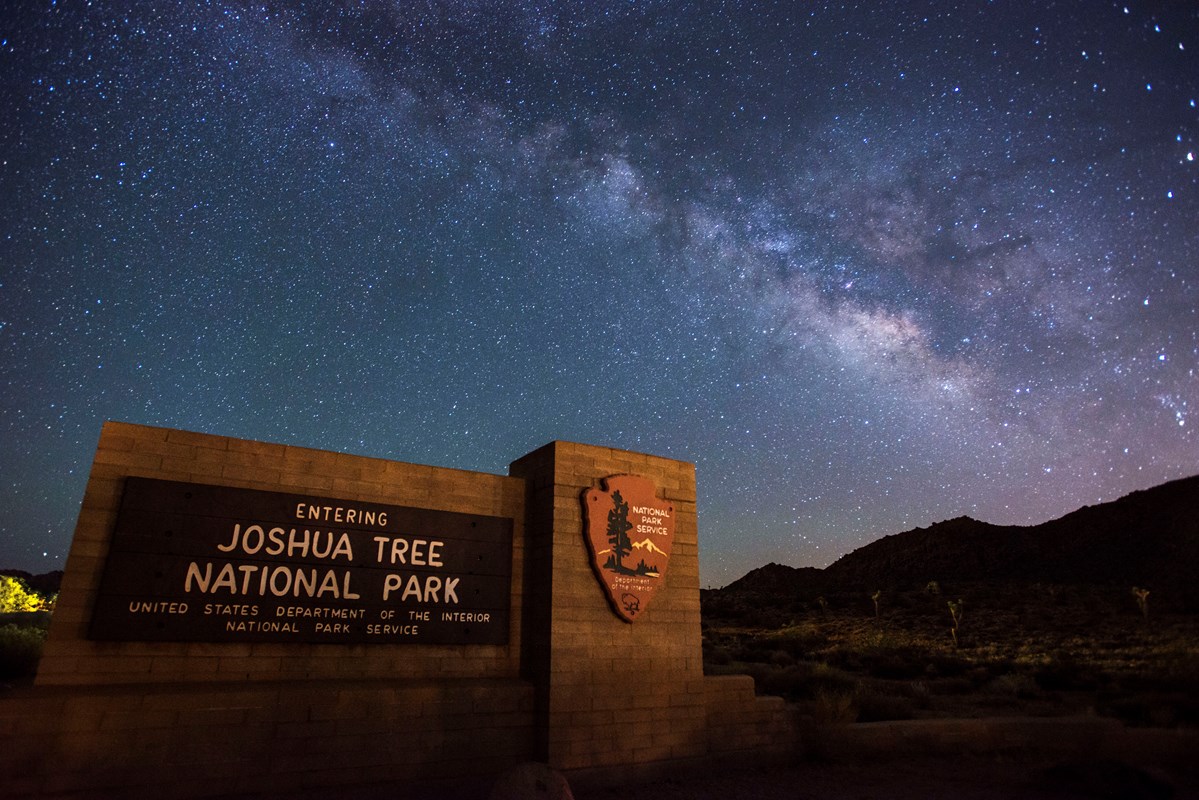
July is dark-sky prime by night and hostile by day. New-moon weeks deliver the year's clearest galactic-center Milky Way arch from the Pinto Basin Road and Cottonwood — NPS stargazing notes the Milky Way is at its best on a moonless summer night. The monsoon pattern adds dramatic late-afternoon convective skies for landscape photographers but also flash-flood risk in the desert washes — never enter a wash or low-lying area when a thunderstorm is upcanyon. Wildlife activity shifts almost entirely to nocturnal — kit foxes, kangaroo rats, snakes, and reptile species are most active in pre-dawn and after-sunset windows. Wildflowers from the spring bloom are long gone; the desert vegetation is in summer-dormancy mode.

Audience verdict.

July is an astrophotographer-and-night-photographer audience only. Visitors who can structure a trip around new-moon galactic-center photography from Cottonwood Campground or the Pinto Basin Road, with an air-conditioned vehicle and a strict sunrise-and-after-sunset hiking discipline, can have a meaningful July visit. Everyone else should not visit Joshua Tree in July — the Paul Miller Story (NPS hiking safety) is the published cautionary record of how badly summer-heat hiking decisions go wrong at this park. Families, day-hikers, RV travelers, and first-time visitors should target October-December or January-March instead. Heat is the headline; everything else is in service to managing it.

Methodology

Monthly recreation visits come from the official NPS Visitor Use Statistics Data Package, 2025 on NPS IRMA Stats; the statistic shown is Recreation Visits, the 5-year mean across 1979-2025. Climate normals come from NOAA NCEI's 1991-2020 U.S. Climate Normals at Twentynine Palms, CA (station USC00049099, 1,975 ft elevation). The access score weights named park roads by route importance for typical wheeled-vehicle openings that month; Joshua Tree has no major seasonal road closure inside the park, so the score reflects campground reopenings and summer heat-safety advisories rather than pavement closures. Year-variable specifics — exact Belle / White Tank / Ryan summer closure dates, Night Sky Festival dates — drift year to year and are hedged in the editorial above; confirm current dates on the official NPS Joshua Tree page before booking. Independent site, not affiliated with the National Park Service.

Independence

Independent site. Not affiliated with or endorsed by the National Park Service. Data comes from the official NPS Visitor Use Statistics Data Package, 2025; editorial analysis is ours. The NPS Arrowhead and other NPS marks are not used.

Last updated · 2026-05-28