Per-month · August

Joshua Tree in August.

August serves the Perseids amateur-astronomer audience, astrophotographers chasing the late-summer monsoon-storm-meets-dark-sky light, and climbers anchored at sunrise-only Hidden Valley sessions.

By Nicholas Major · Last updated

August at Joshua Tree is heat and monsoon humidity, with a five-year mean near 140,000 recreation visits — about 34% of March's peak. Daytime highs at the Twentynine Palms station average 103°F with overnight lows near 76°F; the monsoon pattern delivers about 0.65 inches of precipitation — the year's highest single month — in concentrated afternoon thunderstorms with flash flood and lightning risk. NPS specifically advises avoiding hiking between 10 a.m. and 5 p.m. and lists strenuous hikes as do-not-attempt per the NPS hiking page. The Perseids meteor shower peaks mid-month under a still-dark-but-warm sky — the astrophotographer's calendar of the year, with Cottonwood Campground and the Pinto Basin Road darkest-sky stretch as the practical viewing spots per NPS stargazing. Belle, White Tank, and Ryan remain closed for the summer; plan around an air-conditioned hotel base in Twentynine Palms or Joshua Tree town rather than tent camping.

Crowd snapshot.

August runs about 140,000 recreation visits in the five-year mean — about 34% of March's peak and one of the year's two quietest months alongside July. The visitor mix mirrors July: climbers anchored at Hidden Valley with sunrise-only itineraries, astrophotographers and stargazers chasing the Perseids meteor shower peak and the new-moon galactic-center, and a thin stream of one-and-done visitors. Lodging and reservation campgrounds remain broadly available. The Perseids peak (around August 12-13 per NASA) pulls a small but meaningful astrophotographer-and-amateur-astronomer spike for 3-4 nights around the peak. Late-month school-restart eases the already-thin family traffic.

FieldValue
August recreation visits (5-yr mean)140,063
Share of March's peak34%
Crowd bandmoderate
Park's busiest month (5-yr mean)March
Park's quietest month (5-yr mean)July

Weather snapshot.

The Twentynine Palms NOAA station records an August high near 102.7°F and a low near 76.4°F. Precipitation normals are about 0.65 inches — the year's highest single-month reading and the monsoon-season prime. Convective storms typically build over the Little San Bernardino Mountains and the Eagle Mountains in early to mid-afternoon and reach the Pinto Basin and Cottonwood corridor by late afternoon. Flash flood risk in the desert washes is the principal weather hazard; lightning risk on the higher ground at Keys View and Hidden Valley is the secondary. Overnight lows remain in the mid-70s°F to upper 70s°F. Working hiking window stays dawn to about 8 a.m. and the hour after sunset.

FieldValue
Average high (°F)102.7
Average low (°F)76.4
Precipitation (inches)0.65
Snowfall (inches)0.0
Weather bandhot
StationTwentynine Palms, CA at 1,975 ft

Access snapshot.

All paved roads remain open in August — verify any flash-flood or monsoon advisories on the NPS Joshua Tree conditions page. Belle, White Tank, and Ryan remain closed per the NPS campgrounds page. Black Rock, Indian Cove, Jumbo Rocks, Cottonwood, and Hidden Valley operate. NPS hiking page maintains the avoid 10 a.m. to 5 p.m. advisory and the strenuous-hike do-not-attempt list per the NPS hiking page; flash flood watches are routine. Standard fees per the fees page.

FieldValue
August access score (0-100)70
Year-round routeAll paved roads year-round (Park Boulevard, Pinto Basin Road, Keys View Road, Cottonwood corridor, Black Rock + Indian Cove access)
Verify current road, campground, and safety statusOfficial NPS Joshua Tree conditions page

Seasonal events.

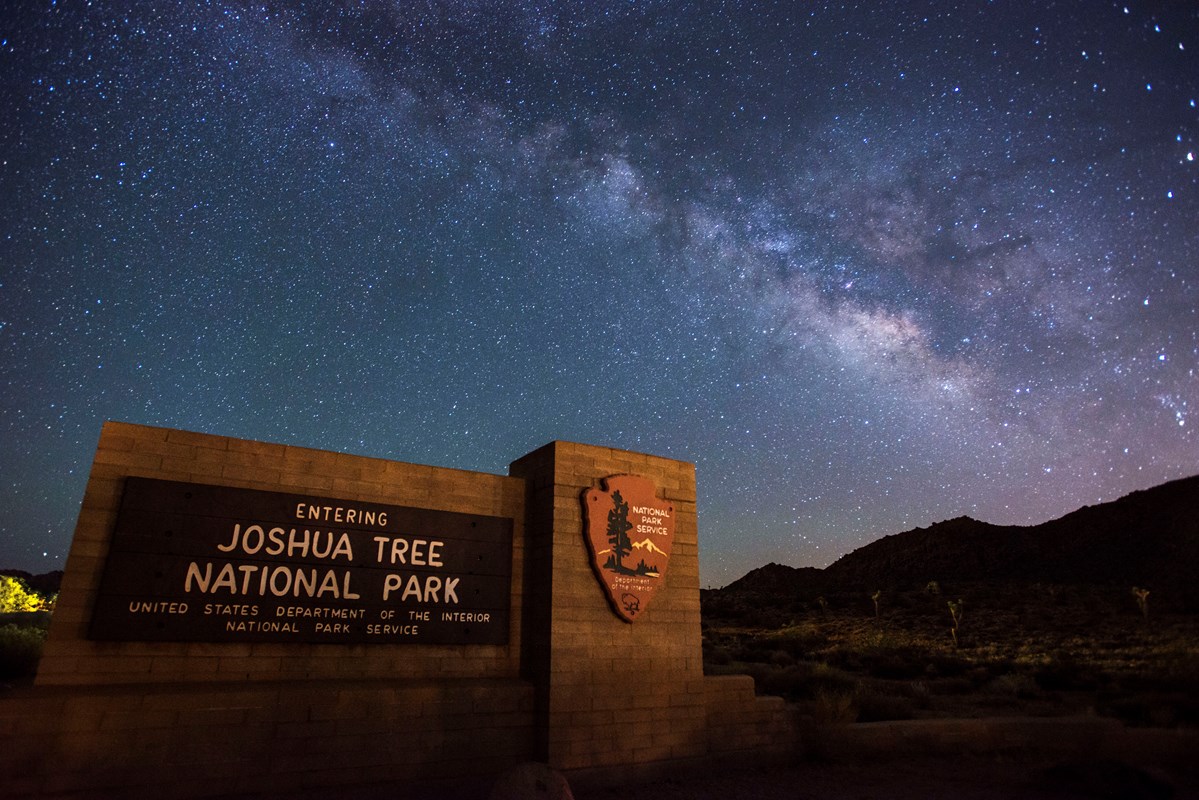
August is the Perseids month at Joshua Tree. The Perseids peak around August 12-13 each year per NASA and deliver one of the best amateur-astronomer events under the park's certified dark skies — Cottonwood Campground and the Pinto Basin Road between Cholla Cactus Garden and Cottonwood are the practical viewing spots. The heat caveat applies even at night: overnight lows in the mid-70s°F to upper 70s°F make a tent uncomfortable, so the practical play is a hotel in Twentynine Palms with a late-night Cottonwood drive. The monsoon adds dramatic afternoon convective skies for photographers — clouds, lightning, and double rainbows over the open desert — but also flash flood risk. Wildlife stays nocturnal.

Audience verdict.

August serves the Perseids amateur-astronomer audience, astrophotographers chasing the late-summer monsoon-storm-meets-dark-sky light, and climbers anchored at sunrise-only Hidden Valley sessions. Visitors planning around the Perseids peak should target the 3-4 nights around August 12-13 with a hotel base in Twentynine Palms (no tent, AC required) and a late-night drive to Cottonwood. Families, day-hikers, and first-time visitors should not visit in August. The strenuous-hike summer-heat advisory remains in effect; the Paul Miller Story (NPS hiking safety) is the cautionary record. Flash flood and lightning risk add a second-tier hazard on top of the heat.

Methodology

Monthly recreation visits come from the official NPS Visitor Use Statistics Data Package, 2025 on NPS IRMA Stats; the statistic shown is Recreation Visits, the 5-year mean across 1979-2025. Climate normals come from NOAA NCEI's 1991-2020 U.S. Climate Normals at Twentynine Palms, CA (station USC00049099, 1,975 ft elevation). The access score weights named park roads by route importance for typical wheeled-vehicle openings that month; Joshua Tree has no major seasonal road closure inside the park, so the score reflects campground reopenings and summer heat-safety advisories rather than pavement closures. Year-variable specifics — exact Belle / White Tank / Ryan summer closure dates, Night Sky Festival dates — drift year to year and are hedged in the editorial above; confirm current dates on the official NPS Joshua Tree page before booking. Independent site, not affiliated with the National Park Service.

Independence

Independent site. Not affiliated with or endorsed by the National Park Service. Data comes from the official NPS Visitor Use Statistics Data Package, 2025; editorial analysis is ours. The NPS Arrowhead and other NPS marks are not used.

Last updated · 2026-05-28