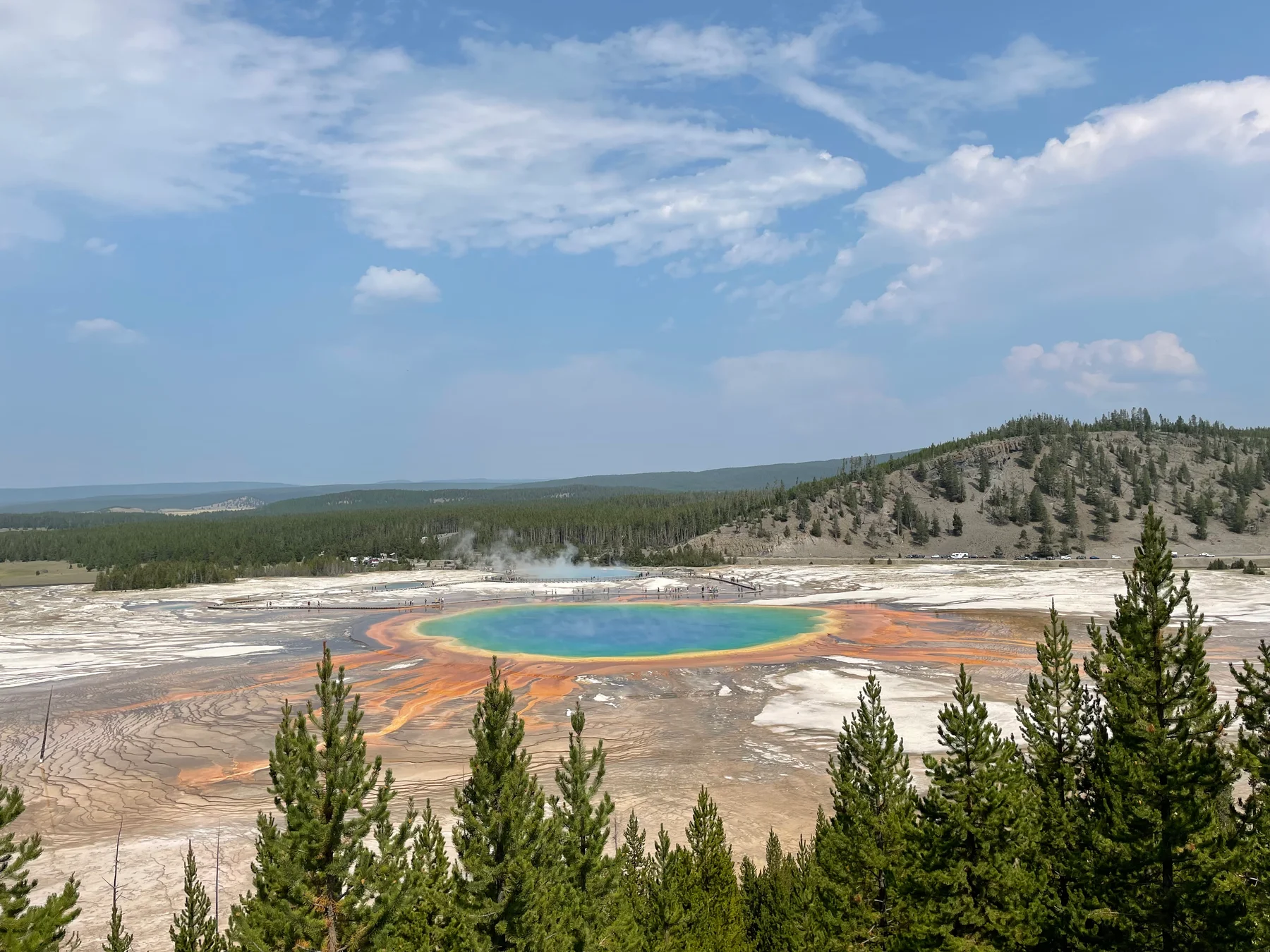
Yellowstone for geysers and hot springs
Build the trip around thermal areas such as Old Faithful, Grand Prismatic Spring or Norris. Choose a few areas rather than rushing between every sight.
Yellowstone vs Yosemite: choose Yellowstone for geysers and hot springs. Choose Yosemite for granite cliffs, waterfalls and a visit centered on Yosemite Valley. Both have hikes and scenic stops. Decide which scenery matters most, then check the roads and season for the places you want to reach.
Check official entry guidance, roads, trails and weather before setting your route.
Check official entry guidance, roads, trails and weather before setting your route.
Choose your entrances and actual stops before mapping transfers or booking a base.
Geysers or granite walls? Choose the experience you want before comparing visitor totals.
Build the trip around thermal areas such as Old Faithful, Grand Prismatic Spring or Norris. Choose a few areas rather than rushing between every sight.
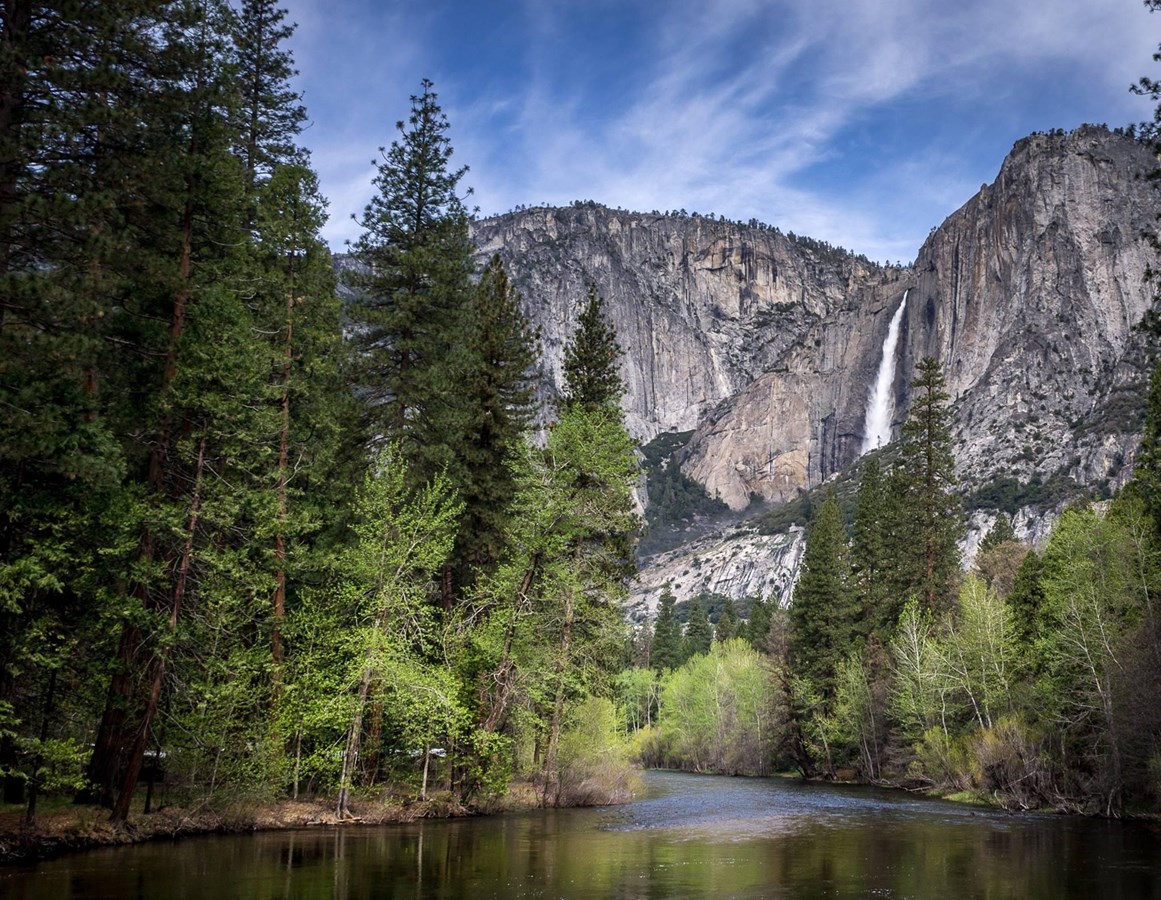
Start in Yosemite Valley for cliff views and waterfall walks. Add other park areas only after checking their road access and how much time your hikes need.
Yellowstone peaks in July and Yosemite in August in the 2021–2025 averages. Each chart compares a park with its own busiest month. These are whole-park totals, not separate counts for thermal areas or Yosemite Valley.
| Month | Yellowstone | Yosemite |
|---|---|---|
| January | 42,1535% of peakLowest | 115,01421% of peakLow |
| February | 44,6685% of peakLowest | 129,41224% of peakLow |
| March | 33,4794% of peakLowest | 136,08125% of peakLow |
| April | 73,4708% of peakLowest | 256,08348% of peakModerate |
| May | 508,11155% of peakModerate | 383,09271% of peakHigh |
| June | 830,98790% of peakPeak | 507,61795% of peakPeak |
| July | 922,896100% of peakPeak | 535,577100% of peakPeak |
| August | 820,12889% of peakPeak | 537,020100% of peakPeak |
| September | 796,02786% of peakPeak | 472,98388% of peakPeak |
| October | 302,46833% of peakModerate | 412,60777% of peakHigh |
| November | 23,8073% of peakLowest | 216,34140% of peakModerate |
| December | 33,6484% of peakLowest | 148,66128% of peakLow |
June averages 830,987 visits at Yellowstone, 90% of its peak, and 507,617 at Yosemite, 95% of its peak. These totals describe seasonal visitation, not the crowd at a particular trail or overlook.
Park-wide recreation visits. A lower total does not establish lower crowd density.
| Measure | Yellowstone | Yosemite |
|---|---|---|
| Recreation visits, 2025 | 4,762,988 | 4,278,413 |
| Average annual visits, 2021–2025 | 4,431,841 | 3,850,487 |
| Busiest month | July | August |
| Quietest month | November | January |
| Peak-to-quiet ratio | 38.8 to 1 | 4.7 to 1 |
| Months at 80%+ of peak | 4 | 4 |
Give each destination its own time. A low visitor bar does not establish seasonal road access.
Pick a Yellowstone region or Yosemite Valley and leave time to get out of the car. At Yellowstone’s thermal areas, stay on boardwalks and designated trails.
Plan this as two destinations with travel between them. Yosemite Valley normally has year-round road access; Yellowstone’s regular vehicle access varies strongly by season. Check the specific routes before booking.
Choose Yellowstone if geysers and hot springs are the main reason for your trip. Choose Yosemite if you want granite cliffs and waterfall walks. Neither visitor totals nor personal taste establish an overall winner.
Yes, if your trip allows time for separate park visits and the travel between them. Choose the entrances, stops and overnight bases before estimating the transfer. With limited time, focus on one destination.
Yosemite Valley normally has road access all year, while much of Yellowstone’s road network normally closes to regular vehicles for winter. That can favor a Valley-focused plan, but check weather, chain requirements and the access needed for your exact dates.
The 2021–2025 monthly averages peak in July at Yellowstone and August at Yosemite, with 922,896 and 537,020 average recreation visits. These are park-wide seasonal patterns. They do not measure the crowd at a particular stop.
An independent guide using official data. Not affiliated with or endorsed by the National Park Service.