June
Snowmelt and waterfallsWaterfalls run strongly, but snow is still possible high up. High water can limit some backcountry campsites and swimming areas.
830,987 average visits in June
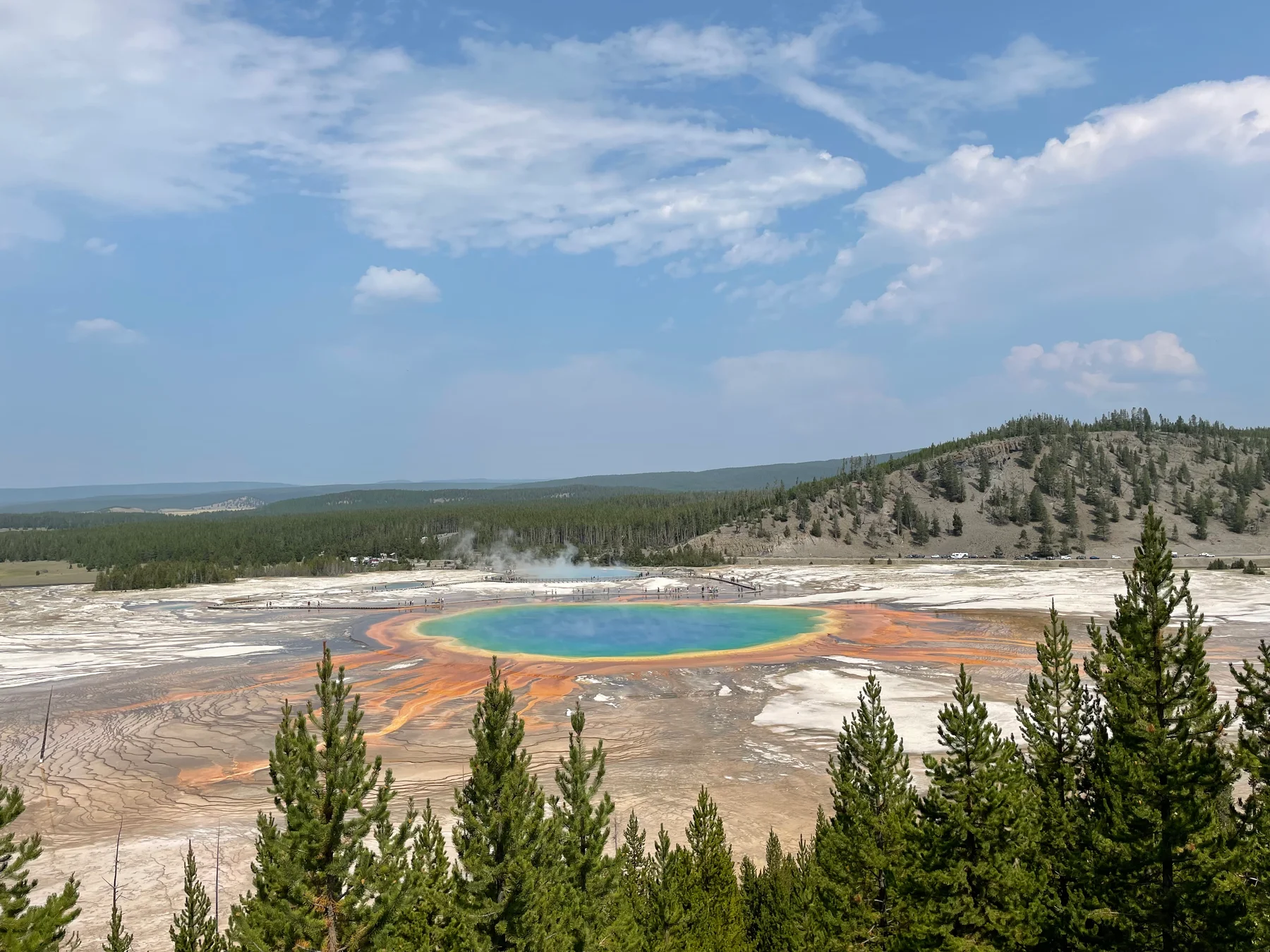
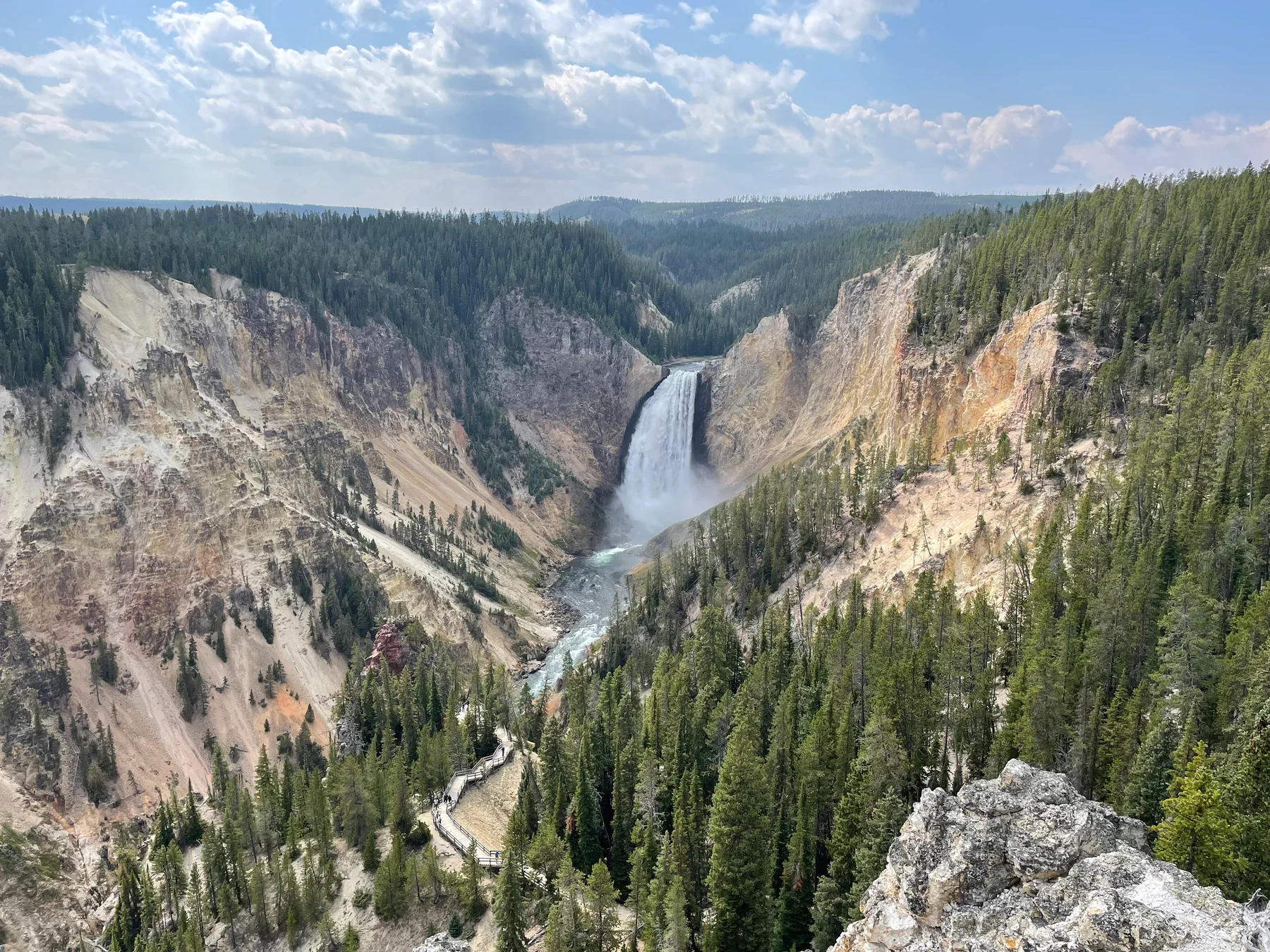
Yellowstone in summer is the busiest season, with geyser basins, waterfalls and wildlife. June brings snowmelt, July is the warmest month, and August is bison-rut season. Reserve your overnight base early and pack layers for cold nights and afternoon storms.
Read official alerts before choosing your route.
Review the road map before choosing an entrance.
Check lodge seasons and reservation options.
Choose for snowmelt, warmer hiking weather or late-summer wildlife. Each month has a different tradeoff.
Waterfalls run strongly, but snow is still possible high up. High water can limit some backcountry campsites and swimming areas.
830,987 average visits in June
Plan exposed hikes around frequent afternoon thunderstorms. Summer haze is possible, and popular stops stay busy.
922,896 average visits in July
Look for bison in Lamar and Hayden valleys. Weather is generally warm and dry, with occasional storms or wildfire haze.
820,128 average visits in August
Choose a part of the park for each day, rather than treating every entrance as interchangeable.
Pair a geyser-basin visit with canyon views, then leave room for wildlife stops.
Check eruption predictions at the visitor center or in the NPS app. Walk the Upper Geyser Basin on designated trails and boardwalks.
Use Canyon Village as the starting point for Lower and Upper Falls overlooks and rim trails.
Late July and August are rut season. Look in Lamar and Hayden valleys. Stay at least 25 yards from bison and 100 yards from bears, wolves and cougars.
Summer is a driving trip with long distances. Road conditions still need a separate check.
Yellowstone has five entrances and several hours of driving between them. Match each day to a realistic part of the park.
NPS suggests entering before 7 a.m. or after noon, and avoiding main attractions during the 10 a.m. to 4 p.m. peak.
Choose the part of Yellowstone you want to wake up in, then reserve early.
Lodge rooms and cabins put you beside the Upper Geyser Basin. Check each property's operating season and book through the official concessioner.
Canyon Lodge and Cabins is near the canyon overlooks and trails. Use it for a canyon-focused overnight base.
Camping Reserve a designated campground for summer. Most campsites book far ahead; roadside pullouts and parking areas are not overnight camping alternatives.
The highlighted whole months average 858,004 recreation visits per month. July is the annual peak at 922,896.
NOAA 1991-2020 averages at Yellowstone Park, Mammoth, WY. Elevation matters. Summer nights can be cold, and afternoon thunderstorms are common.
Quick answers to the practical questions below.
June suits waterfalls and snowmelt scenery, with snow and high-water limits in some areas. July is the warmest month but brings frequent afternoon thunderstorms. August is generally warm and dry and falls within bison-rut season. All three are busy summer months.
Days are often warm, but nights are cool and can drop below freezing at higher elevations. Afternoon thunderstorms are common. Pack layers and rain gear rather than only summer clothing.
Summer is the normal road-trip season, but check the entrance and road map before travel. Five entrances and long driving distances make route planning important; a seasonal pattern does not guarantee a particular road is accessible.
Old Faithful is a base for geyser-basin exploring, while Canyon Village suits the canyon overlooks and trails. Reserve early and confirm each property's operating dates.
Reserve ahead for summer camping. The NPS campground page requires advance reservations outside the winter first-come exception at Mammoth. You cannot camp in pullouts or parking areas.
An independent guide using official data. Not affiliated with or endorsed by the National Park Service.
NPS Weather supplies the summer thunderstorm, cold-night and layered-clothing guidance. NPS Park Roads supplies the driving scale and route-check requirement. The Old Faithful, Safety, Lodging and Camping pages supply the activities and overnight decisions. This guide covers June through August; it does not guarantee every high-elevation trail or service is available throughout that window.
The month comparison and activity choices follow the independently reviewed seasonal source packet. Monthly recreation visits are full-calendar-month 2021–2025 averages.
Temperatures are NOAA 1991-2020 normals at Yellowstone Park, Mammoth, WY; Mammoth is Yellowstone HQ at 6,194 ft. The northern-range districts (Lamar Valley, Tower) read close to these numbers. Old Faithful (7,365 ft) and Norris (7,484 ft) typically run 5-8°F colder; Yellowstone Lake (7,733 ft) and high passes colder still. Lake Yellowstone has its own NOAA station (USC00485345) at 7,892 ft if you need higher-elevation numbers.
Seasonal highlights mark the editorial month window, not guaranteed access or travel-date weather.
Operational source check: October 21, 2026. Design and emphasized source review: 2026-10-21. A design review does not refresh every underlying record.