Wildlife distance
Stay at least 25 yards from bison, elk and other wildlife, and 100 yards from bears, wolves and cougars. Back away if an animal approaches; disturbing or displacing one is illegal even beyond the minimum.
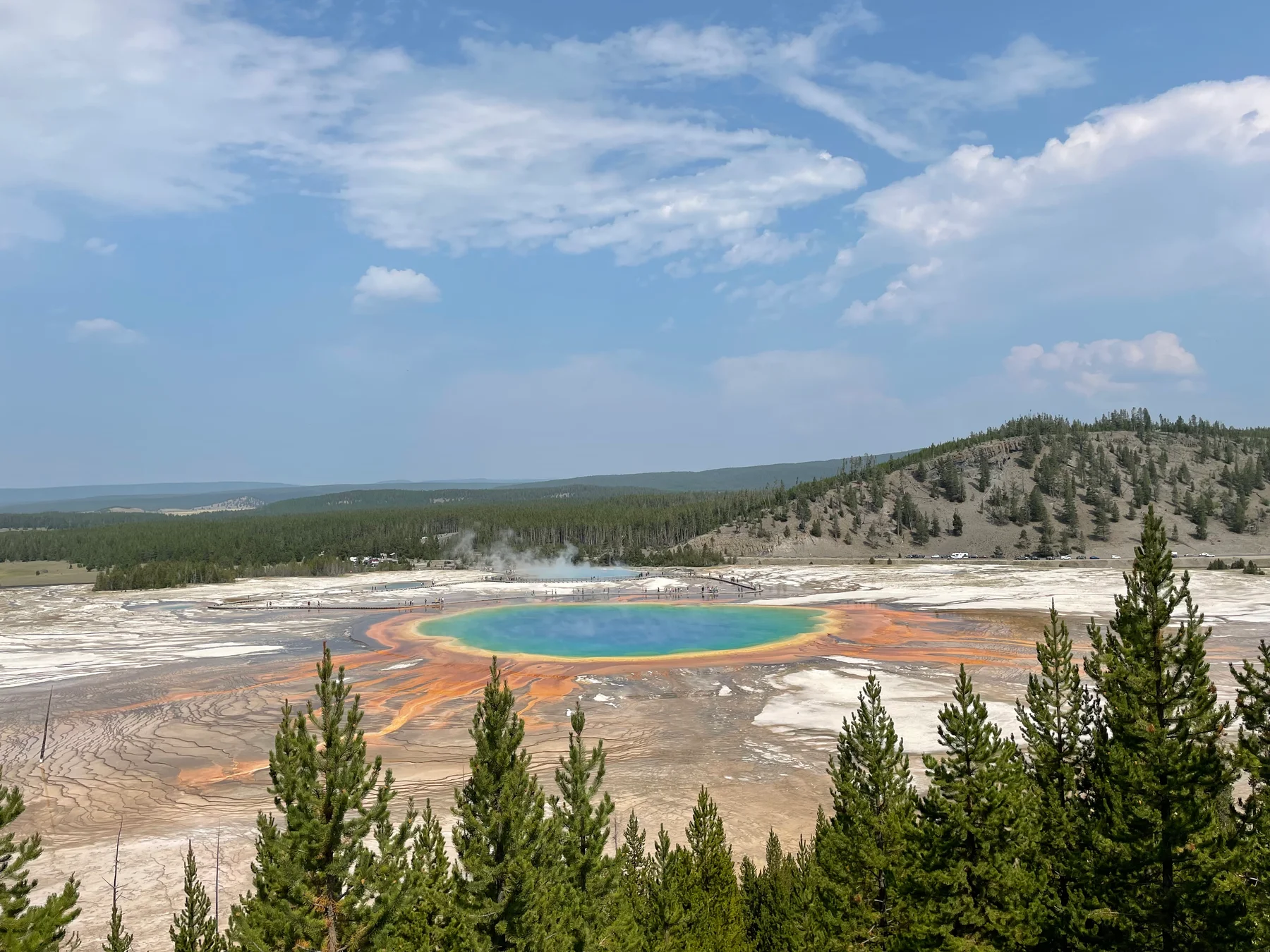
Yellowstone photography rewards matching the subject to the season: Lamar Valley wildlife at dawn, Grand Prismatic color after the air warms, and the elk rut from early September to mid-October. September and October are our fall picks, with color moving from higher to lower elevations. Check road access before choosing a distant subject.
Confirm the approach, weather hazards and restrictions before leaving for a photo stop.
Review distances and bear precautions before a dawn wildlife stop.
Confirm the route to Lamar, Canyon, Midway or Dunraven Pass.
These are subject windows, not sighting or light guarantees. The Grand Prismatic and Artist Point time-of-day choices are editorial; NPS supplies the access rules and seasonal wildlife windows.
| Photo spot | When to plan it | What to know |
|---|---|---|
| Lamar Valley wildlife | Dawn and dusk | NPS says wolves are most active at dawn and dusk. Snow can make distant animals easier to pick out, an editorial observation; sightings are never assured. |
| Grand Prismatic Spring | Late morning to early afternoon | Our light choice is warmer air with less steam. Use the designated overlook or Midway boardwalks; off-trail travel is prohibited and parking is limited. |
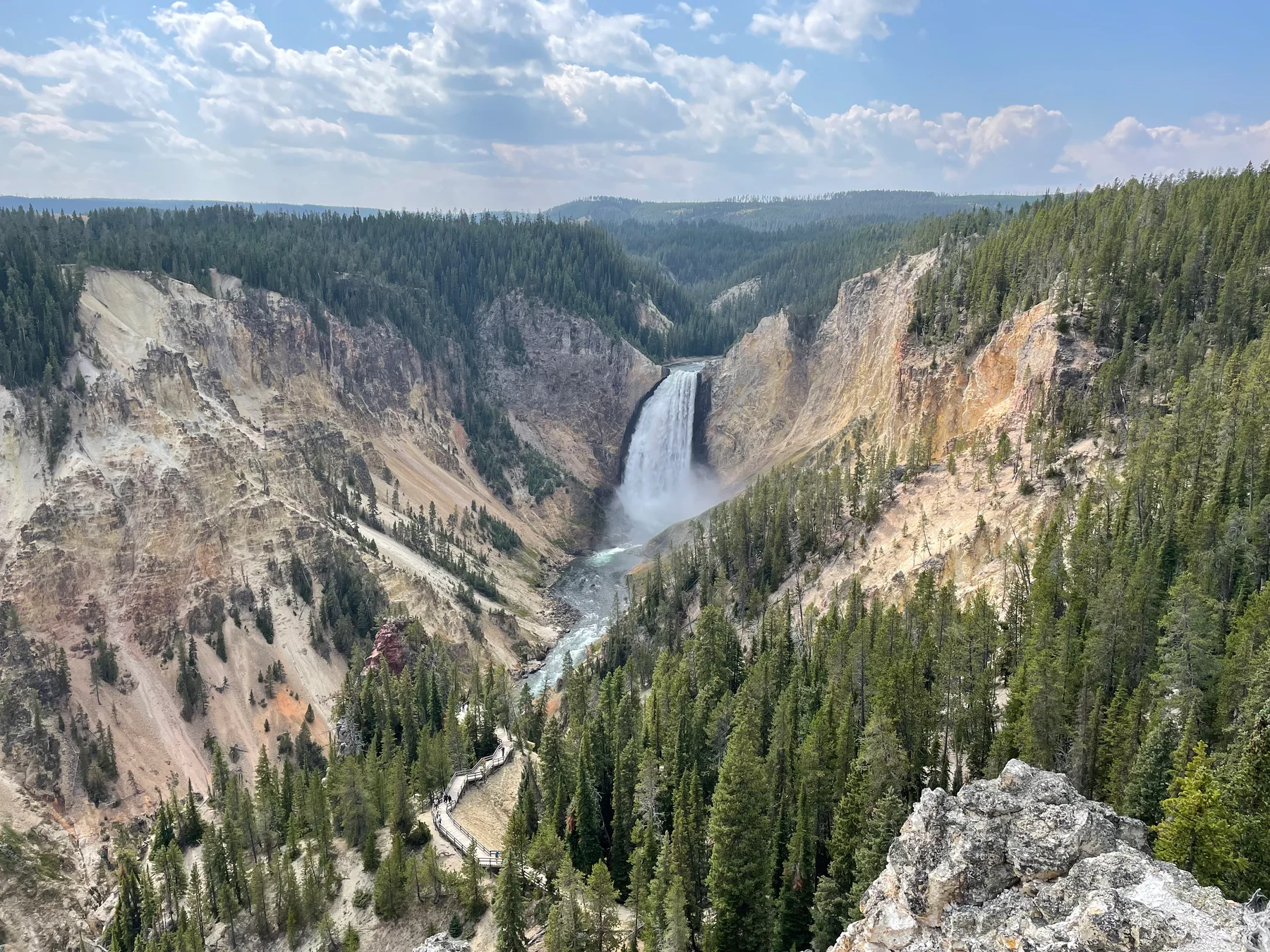
| Lower Falls at Artist Point | Early to mid-morning | Early to mid-morning is our editorial choice. NPS also names Lookout Point and Brink of Lower Falls for different views. |
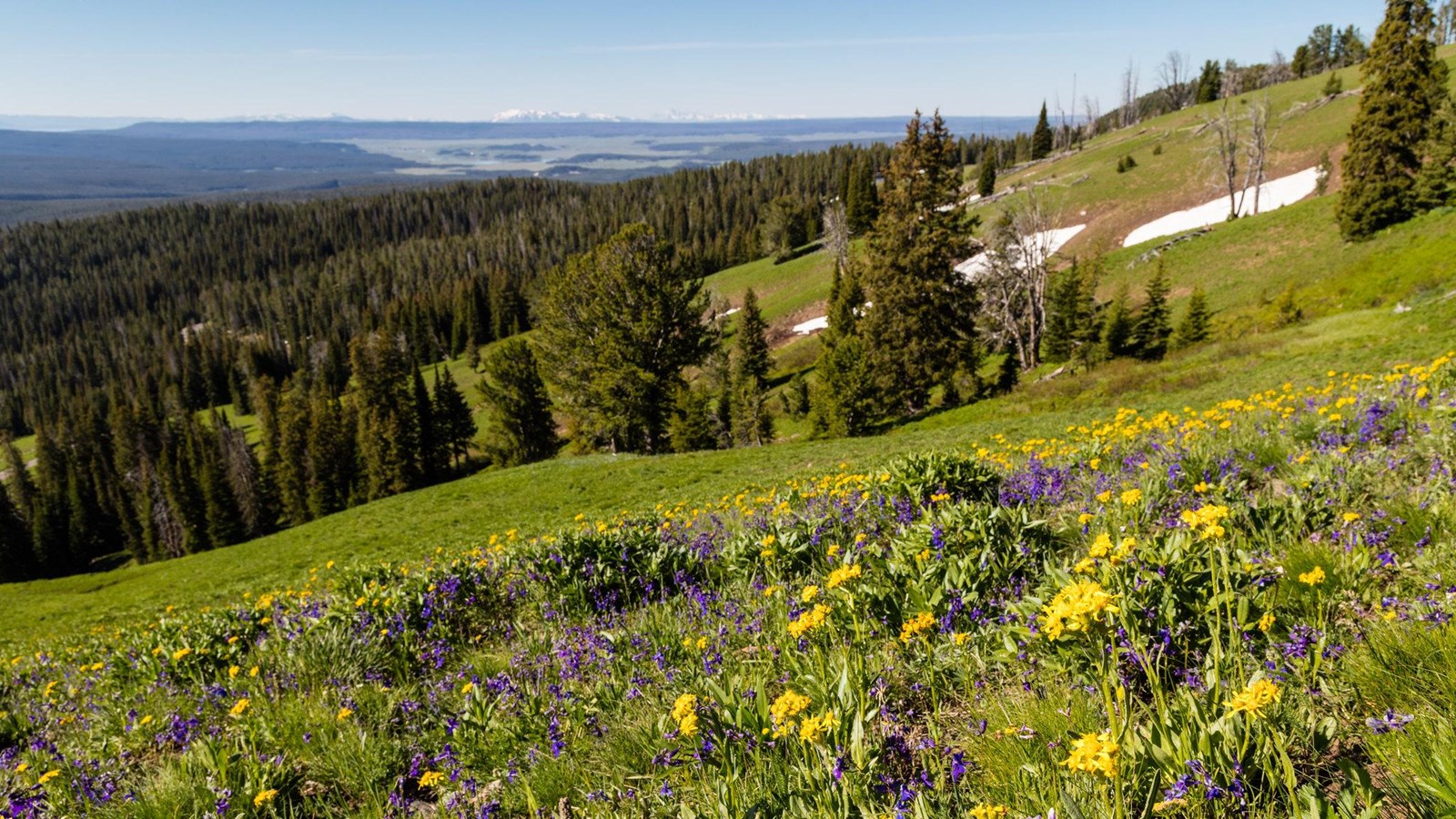
| Dunraven Pass flowers | July | NPS places mountain wildflowers in July. Road access depends on the season and weather. |
| Mammoth elk rut | Early September to mid-October | Use a long lens and keep at least 25 yards away. Rutting elk can be dangerous around the developed area. |
| Hayden and Lamar bison rut | Late July through August | NPS dates the breeding season to late July and August. Stay at least 25 yards away and leave animals room to move. |
| Fall color and Beartooth approach | September high; October low | NPS puts fall color above 7,000 feet in September and below it in October. The Beartooth approach is an editorial choice outside the park; check its road season. |
Match each map number to the photos and location labels below. Parking areas and visitor centers mark approaches, rather than exact camera positions.
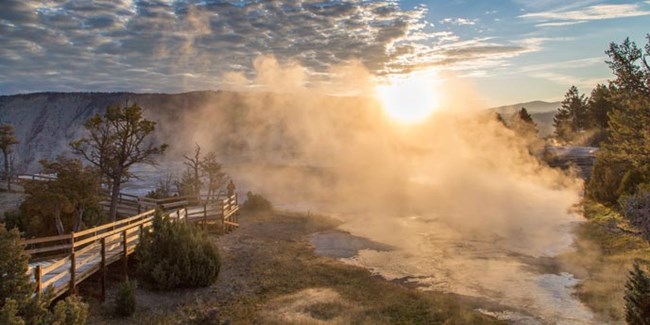
Four USNO samples show local clock time at Mammoth Hot Springs, WY. Mountains and clouds can shift visible light; check the linked air-quality information before planning distant views.
| Date | Sunrise and sunset, local clock time | Daylight |
|---|---|---|
| March 21Daylight saving time | SunriseSunset | |
| June 21Daylight saving time | SunriseSunset | |
| September 21Daylight saving time | SunriseSunset | |
| December 21Shortest day shown | SunriseSunset |
July averages 922,896 park visits, the busiest month. Monthly NPS park visits show the broad seasonal pattern. They do not measure photographers or the crowd at an individual viewpoint.
Choose a legal place to stand before setting up. A long lens does not change wildlife or access rules.
Stay at least 25 yards from bison, elk and other wildlife, and 100 yards from bears, wolves and cougars. Back away if an animal approaches; disturbing or displacing one is illegal even beyond the minimum.
Keep every tripod leg on the boardwalk in thermal areas and leave room for others. Off-trail travel is prohibited around Grand Prismatic and in the Canyon area.
Use designated pullouts, keep traffic moving and keep tires off vegetation. Carry bear spray where you can reach it, including for dawn and night photography.
Launching, landing or operating a drone in Yellowstone is prohibited. A larger or disruptive shoot needs park review; see the permit details below.
Quick answers to the practical questions below.
Our fall choice is September for the elk rut and higher-elevation color, with October for lower-elevation color and fewer park visits. Winter offers snow and northern-range wildlife, with much more limited road access.
Late morning to early afternoon is our editorial choice when warmer air thins the steam. The NPS overlook trail is 0.6 miles each way with 105 feet of climb; NPS records steep grades of 14% to 19%. Use the boardwalk for a ground-level view. Start at the Fairy Falls Trailhead, one mile south of Midway Geyser Basin; parking is very limited.
Use a long lens in the northern range, often around Lamar Valley. NPS wolf guidance names dawn and dusk as active periods. Keep at least 100 yards away, never displace an animal, and treat winter visibility as a possibility rather than a promise.
NPS photography guidance names April through October. For night trips bring flashlights, companions and bear spray, and stay on the boardwalk in thermal areas. NPS describes aurora as appearing once or twice a year, with a K-index of 7 or higher suggesting it might be visible. Treat that as a possibility, not a sighting promise.
Yellowstone permit rules require a permit for nine or more participants, or whenever any exception condition fails. Eight or fewer must use handheld gear, a tripod or monopod in public areas, with no exclusive use, adverse impacts or added park costs. The exception also excludes small or confined high-visitation areas. NPS names Old Faithful, Grand Prismatic, Fairy Falls Overlook, Artist Point and other canyon overlooks in summer and asks photographers to contact the park about activity there or activity that may impede other visitors. The activity must also be incidental to, or document, an activity or event allowed or authorized in the park, such as a wedding or family reunion. Entrance fees still apply. NPS lists a non-refundable $350 application fee and 2 to 4 weeks for processing.
Choose Lamar for wildlife, Mammoth for elk, Grand Prismatic for thermal color, and Artist Point for Lower Falls. For other light choices, NPS names Yellowstone Lake for sunrise and the Lower Geyser Basin for sunset. Check geyser predictions before an Old Faithful shoot and be ready when the eruption starts. Yellowstone Lake has east-facing views from west-shore Grand Loop Road pullouts, with West Thumb geysers as foreground. At sunset, Lower Geyser Basin steam is backlit along Firehole Lake Drive and Fountain Paint Pot. The NPS geyser activity page, NPS app and visitor education center provide predictions for Old Faithful and other predictable geysers, including Castle, Grand, Daisy, Riverside and Great Fountain. Predictions are unavailable when the visitor education center is closed; check the source rather than assuming the last prediction is new. Frame Old Faithful before the first surge because it reaches peak height shortly after eruption begins.
The park concessioner lists the Picture Perfect Photo Safari from Lake Yellowstone Hotel to Hayden Valley and the Grand Canyon of the Yellowstone, with optional photography instruction. Check the operator for dates, rates and booking terms; this guide does not rank operators.
An independent guide using official data. Not affiliated with or endorsed by the National Park Service.
Subjects, seasonal windows and camera rules come from the linked National Park Service pages. Timing recommendations identified as editorial are planning judgments, not NPS forecasts.
Sunrise and sunset come from the U.S. Naval Observatory for 2026 at Mammoth in local clock time; subject locations from OpenStreetMap; the park boundary from the NPS boundary service and state outlines from the U.S. Census.
Monthly crowd values are committed NPS park-visit averages, not counts of photographers. Map coordinates retain the existing NPS or OpenStreetMap source pins; NPS boundaries and U.S. Census state outlines supply geographic context.
Operational source check: September 13, 2026. Design and emphasized source review: 2026-10-22. A design review does not refresh every underlying record.