Per-month · January

Rocky Mountain in January.

January is a solitude-and-winter-recreation audience.

By Nicholas Major · Last updated

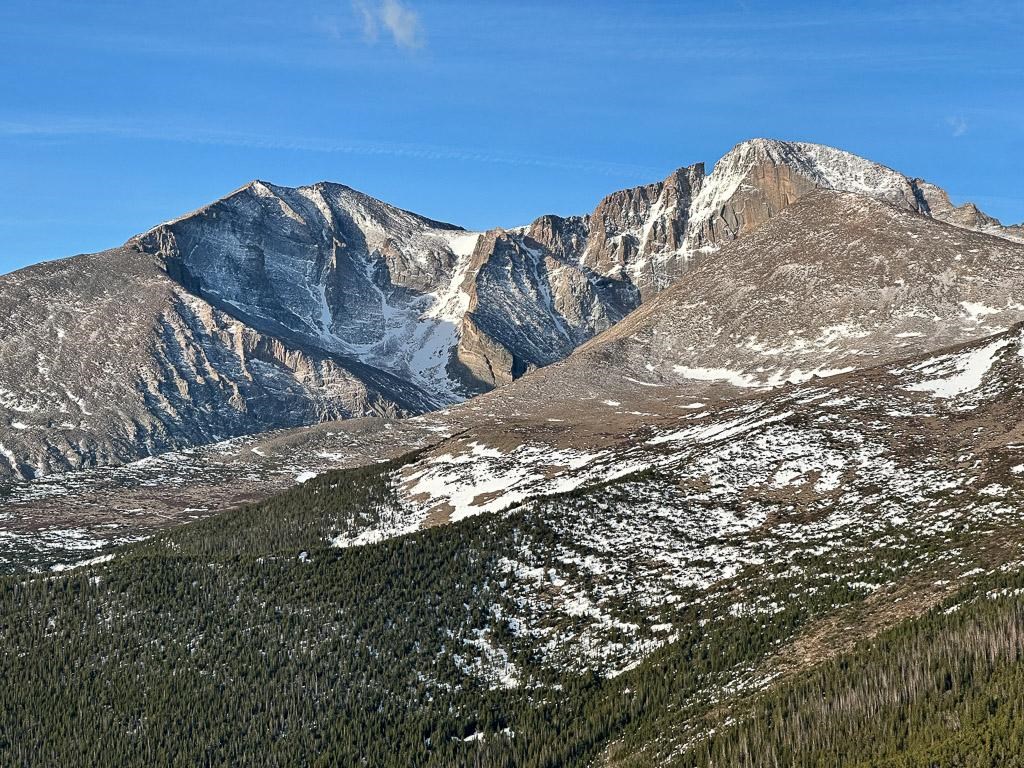
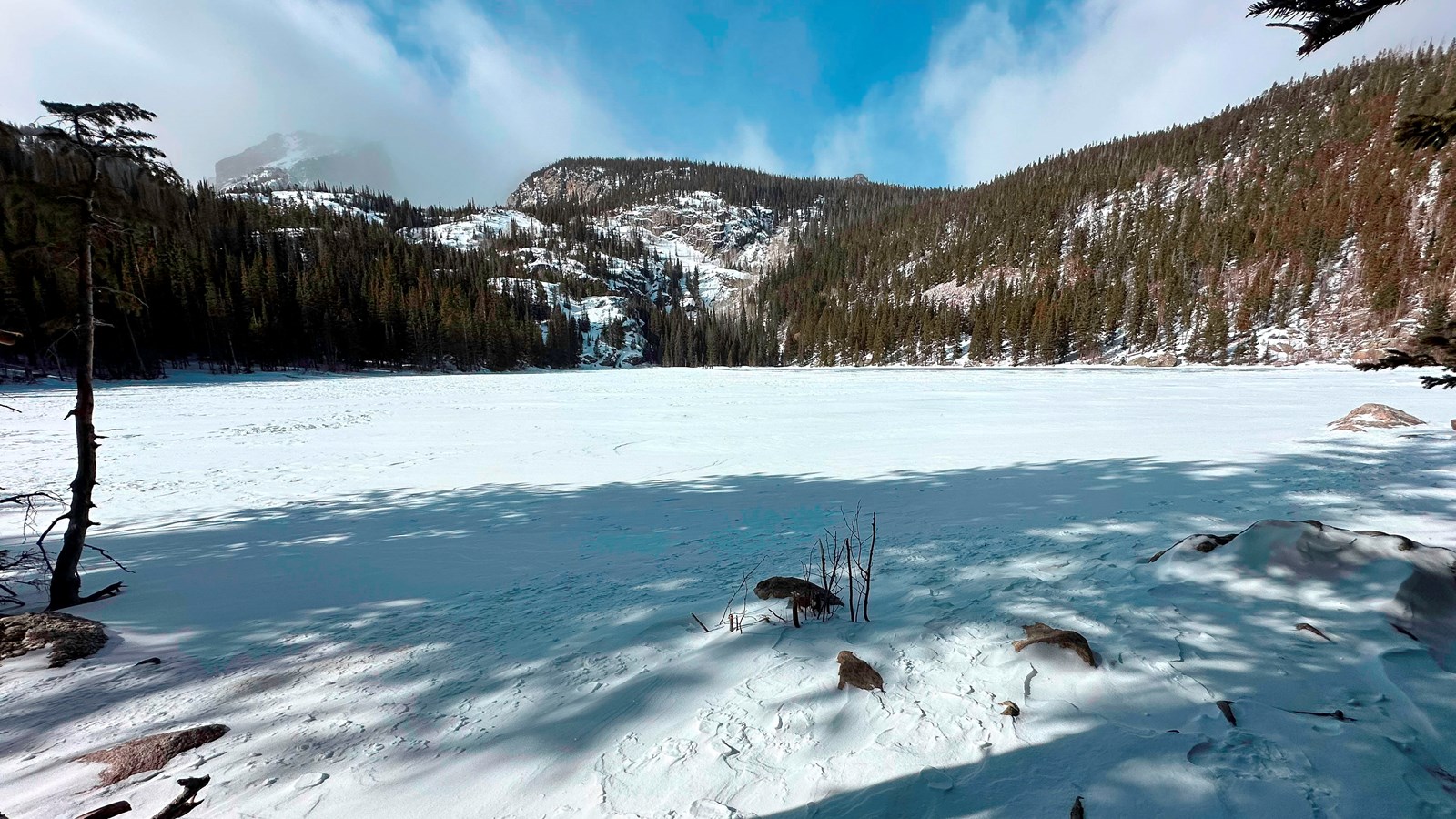
January at Rocky Mountain is firmly an off-season month, with a five-year mean near 119,000 recreation visits — about 15% of July's peak. Trail Ridge Road is closed through the high country and stays that way until late May per NPS; the only roads plowed for general visitor traffic are Bear Lake Road and the east-side entrance corridors from Estes Park. NOAA normals at the Estes Park station (~7,522 ft) put the daytime high near 38°F with overnight lows around 15°F and a January snowfall normal of 9.4 inches. High country sits 15-25°F colder and absorbs several times more snow than Estes Park totals. Bear Lake, Sprague Lake, and Hidden Valley draw the small but steady winter-recreation crowd for snowshoeing, cross-country skiing, and sledding at the Hidden Valley Sledding Hill. For visitors trading short daylight and frozen mornings for solitude in the elk meadows, January is the cleanest low-crowd window of the year.

Crowd snapshot.

January is among the quietest months on the calendar at Rocky Mountain — a five-year mean near 119,000 recreation visits, roughly 15% of July's peak. The visitor mix is mostly day-trippers from Denver, the Front Range, and Boulder plus a steady core of Estes Park lodging guests. Bear Lake Trailhead parking sees its lightest demand of the year, and the Beaver Meadows and Fall River visitor centers run winter cadence. Weekday traffic on the plowed corridors is genuinely light; the New Year's Day weekend is the only meaningful holiday-traffic spike.

FieldValue
January recreation visits (5-yr mean)119,123
Share of July's peak15%
Crowd bandlow
Park's busiest month (5-yr mean)July
Park's quietest month (5-yr mean)February

Weather snapshot.

The Estes Park NOAA station records a January high near 38.5°F and a low near 15.5°F at the cooperative observer elevation of about 7,522 ft. Snow at the cooperative station averages 9.4 inches for the month, but the high country (Bear Lake, Trail Ridge Road, the upper Bear Lake corridor) absorbs several times more — Bear Lake itself is reliably frozen and snow-covered. Mornings on the east-side entrance corridors are routinely below 10°F. Wind off the Continental Divide is the under-rated hazard: gusts at the higher pullouts push wind-chill notably below the air temperature on clear days.

FieldValue
Average high (°F)38.5
Average low (°F)15.5
Precipitation (inches)0.45
Snowfall (inches)9.4
Weather bandcold
StationEstes Park, CO at 7,522 ft

Access snapshot.

Trail Ridge Road is closed through the high country in January — confirm closures on the NPS Rocky Mountain current conditions page. The roads plowed for general visitor traffic are Bear Lake Road from the Beaver Meadows entrance up to the Bear Lake Trailhead and the east-side US-36 / US-34 corridors through Moraine Park and Horseshoe Park. The Timed Entry+ Bear Lake Road permit is not in effect in January. Old Fall River Road is closed entirely. Estes Park lodging stays open year-round; in-park campgrounds are mostly closed for the season except Moraine Park, which operates first-come, first-served in winter per the NPS camping page.

FieldValue
January access score (0-100)40
Year-round routeBear Lake Road + east-side US-36 / US-34 corridors (Trail Ridge Road closed mid-October through late May)
Verify current road and permit statusOfficial NPS Rocky Mountain conditions page

Seasonal events.

January is winter-recreation prime at the east-side corridors. Cross-country skiing and snowshoeing on the Bear Lake corridor (Bear Lake, Sprague Lake, Glacier Gorge) and the Hidden Valley area draw the season's steady crowd; the Hidden Valley Sledding Hill is the only place inside the park where sledding is allowed (NPS winter recreation). Elk concentrate in the lower montane meadows — Moraine Park, Horseshoe Park, Upper Beaver Meadows — for the post-rut foraging period, and dawn or dusk drives along US-36 and US-34 routinely produce roadside herds. Bighorn sheep can be spotted on the south-facing slopes near Sheep Lakes when the wind permits. Migratory songbird activity is at the winter baseline; wintering raptors hold territory along the river corridors.

Audience verdict.

January is a solitude-and-winter-recreation audience. It rewards visitors anchored at Estes Park who want quiet trails, cross-country skiing or snowshoeing on the Bear Lake corridor, sledding at Hidden Valley, and dawn elk-photography in Moraine Park. It is not a family-with-young-kids month for high-country hiking — cold, snow on plowed road edges, and short daylight cut into a kids itinerary. Trail Ridge Road and Old Fall River Road are off the table entirely. RV travelers can use Moraine Park Campground year-round on a first-come basis but should expect cold nights, no hookups, and minimal services.

Methodology

Monthly recreation visits come from the official NPS Visitor Use Statistics Data Package, 2025 on NPS IRMA Stats; the statistic shown is Recreation Visits, the 5-year mean across 1979-2025. Climate normals come from NOAA NCEI's 1991-2020 U.S. Climate Normals at Estes Park, CO (station USC00052759, 7,522 ft elevation). The access score weights named park roads by route importance for typical wheeled-vehicle openings that month. Year-variable specifics — exact Trail Ridge Road open/close dates, Old Fall River Road dates, the Timed Entry+ Bear Lake Road corridor permit window — drift year to year and are hedged in the editorial above; confirm current dates on the official NPS Rocky Mountain page before booking. Independent site, not affiliated with the National Park Service.

Independence

Independent site. Not affiliated with or endorsed by the National Park Service. Data comes from the official NPS Visitor Use Statistics Data Package, 2025; editorial analysis is ours. The NPS Arrowhead and other NPS marks are not used.

Last updated · 2026-05-20