Per-month · November

Joshua Tree in November.

November is a broad-appeal value-and-solitude month at Joshua Tree, particularly the first three weeks before Thanksgiving and the week after.

By Nicholas Major · Last updated

November is Joshua Tree's second-peak month, with a five-year mean near 313,000 recreation visits — about 76% of March's peak. Daytime highs at the Twentynine Palms station average 72°F with overnight lows near 47°F; the high-country campgrounds run mid-60s°F days and high-30s°F nights. The Belle, White Tank, and Ryan campgrounds are all back open for the season, and there is no heat-safety concern on any trail. The Thanksgiving holiday week pulls the year's most concentrated late-fall density spike, with lodging in Twentynine Palms, Joshua Tree, and Yucca Valley selling out months ahead. For visitors weighing crowd, weather, and the park's full operational schedule together, the first three weeks of November are the cleanest pre-Thanksgiving window — comfortable temperatures, full operations, and density below the March-April spring peak. Climbing returns to its prime sun-and-cool-night cadence at the Hidden Valley boulders.

Crowd snapshot.

November runs about 313,000 recreation visits in the five-year mean — about 76% of March's peak and Joshua Tree's second-peak month behind March-April. The first three weeks remain the cleanest pre-holiday stretch of the year, with comfortable day-and-night temperatures and full operations. Thanksgiving week pulls the year's most concentrated late-fall density spike — Twentynine Palms, Joshua Tree, and Yucca Valley lodging sells out for the holiday week, reservation campgrounds book months ahead, and the Hidden Valley district sees parking pressure. Veterans Day weekend in the first half pulls a smaller holiday bump. Late-November (the week after Thanksgiving) is the year's cleanest single value-and-solitude window — lodging rates ease before the December holidays return.

FieldValue
November recreation visits (5-yr mean)312,571
Share of March's peak76%
Crowd bandhigh
Park's busiest month (5-yr mean)March
Park's quietest month (5-yr mean)July

Weather snapshot.

The Twentynine Palms NOAA station records a November high near 71.6°F and a low near 47.0°F. Precipitation normals are about 0.19 inches — fall remains the second-driest stretch. The Hidden Valley district runs comfortable upper-60s°F daytime and high-30s°F overnight at ~4,000 ft. Keys View at ~5,185 ft reaches the year's sharpest visibility on offshore-flow days; the Coachella Valley, Salton Sea, and the San Andreas Fault all visible from the overlook on clear afternoons. Daylight saving ends early November — sunset at the station shifts from ~6 p.m. PDT in late October to ~4:45 p.m. PST by month-end. The day-night swing widens further; mornings at the campgrounds are below freezing on clear nights in the high country.

FieldValue
Average high (°F)71.6
Average low (°F)47.0
Precipitation (inches)0.19
Snowfall (inches)0.0
Weather bandwarm
StationTwentynine Palms, CA at 1,975 ft

Access snapshot.

All paved roads inside Joshua Tree are open in November — verify any localized advisories on the NPS Joshua Tree conditions page. All campgrounds — Black Rock, Indian Cove, Jumbo Rocks, Cottonwood, Ryan, Hidden Valley, Belle, White Tank — operate at full schedule per the NPS campgrounds page. Thanksgiving week sells out months ahead on Recreation.gov. The NPS hiking-safety summer-heat advisory does not apply; general-season trail guidance is on the NPS hiking page. Standard 7-day vehicle pass per the fees page.

FieldValue
November access score (0-100)100
Year-round routeAll paved roads year-round (Park Boulevard, Pinto Basin Road, Keys View Road, Cottonwood corridor, Black Rock + Indian Cove access)
Verify current road, campground, and safety statusOfficial NPS Joshua Tree conditions page

Seasonal events.

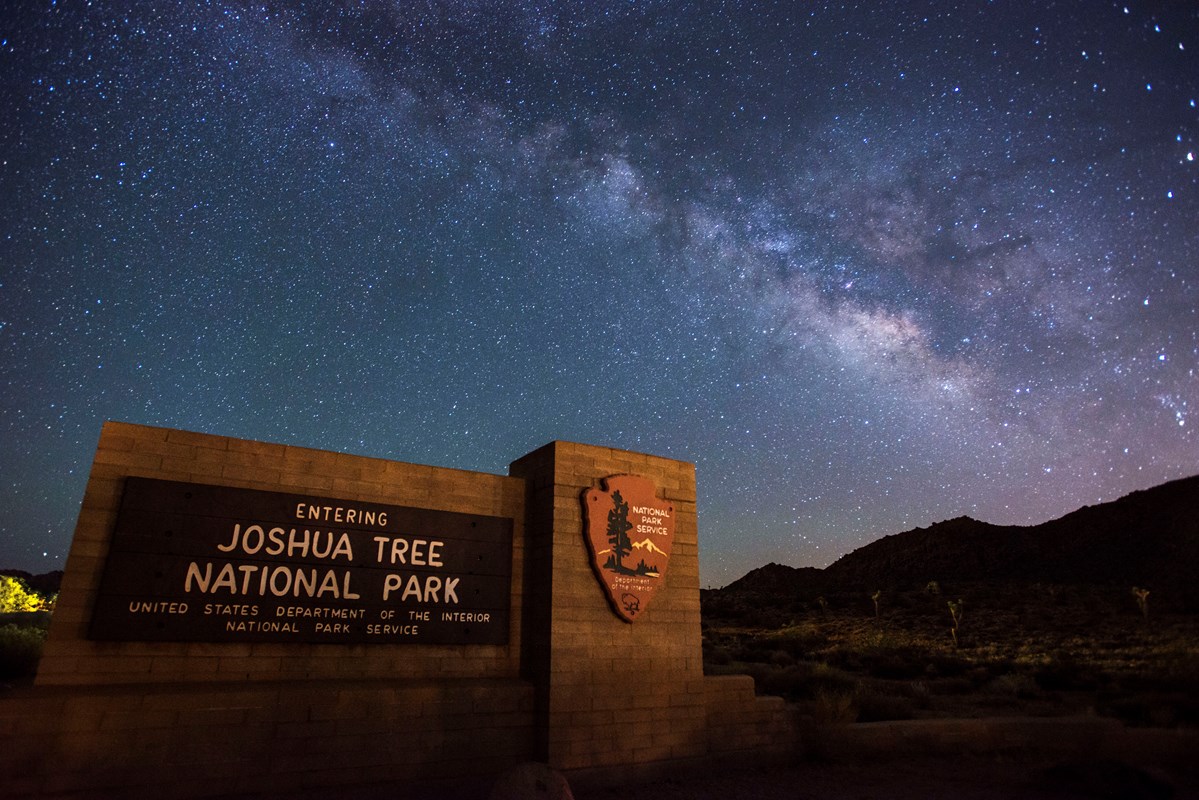
November is the climber's prime month at Joshua Tree — the cleanest, coolest, no-monsoon weather of the year combined with full daytime schedule at the Hidden Valley boulders. Dark-sky photography moves to the year's strongest stretch as nights lengthen and the Pinto Basin Road darkest-sky corridor (NPS stargazing) delivers clear, dry, cold-air conditions for astrophotography. Wildlife activity is at the fall pre-winter baseline — desert tortoise heading into brumation, bighorn sheep on the south-facing slopes, jackrabbits and coyotes active in the mornings. The Leonids meteor shower peaks mid-November, lower volume than the August Perseids but visible under the park's dark skies. Bird activity along the Cottonwood Spring oasis corridor draws birding-group visits.

Audience verdict.

November is a broad-appeal value-and-solitude month at Joshua Tree, particularly the first three weeks before Thanksgiving and the week after. Climbers, photographers, retirees, families with November school breaks, RV travelers, and first-time visitors all do well. The Thanksgiving week is the one heavy spike to plan around — book six months out for lodging and reservation campgrounds. The week after Thanksgiving is the cleanest single value-and-solitude window of the year. Cold nights at the high-country campgrounds (below freezing on clear nights) are the principal planning factor — pack a Sierra-fall sleeping setup, not a desert-summer one.

Methodology

Monthly recreation visits come from the official NPS Visitor Use Statistics Data Package, 2025 on NPS IRMA Stats; the statistic shown is Recreation Visits, the 5-year mean across 1979-2025. Climate normals come from NOAA NCEI's 1991-2020 U.S. Climate Normals at Twentynine Palms, CA (station USC00049099, 1,975 ft elevation). The access score weights named park roads by route importance for typical wheeled-vehicle openings that month; Joshua Tree has no major seasonal road closure inside the park, so the score reflects campground reopenings and summer heat-safety advisories rather than pavement closures. Year-variable specifics — exact Belle / White Tank / Ryan summer closure dates, Night Sky Festival dates — drift year to year and are hedged in the editorial above; confirm current dates on the official NPS Joshua Tree page before booking. Independent site, not affiliated with the National Park Service.

Independence

Independent site. Not affiliated with or endorsed by the National Park Service. Data comes from the official NPS Visitor Use Statistics Data Package, 2025; editorial analysis is ours. The NPS Arrowhead and other NPS marks are not used.

Last updated · 2026-05-28