Per-month · May

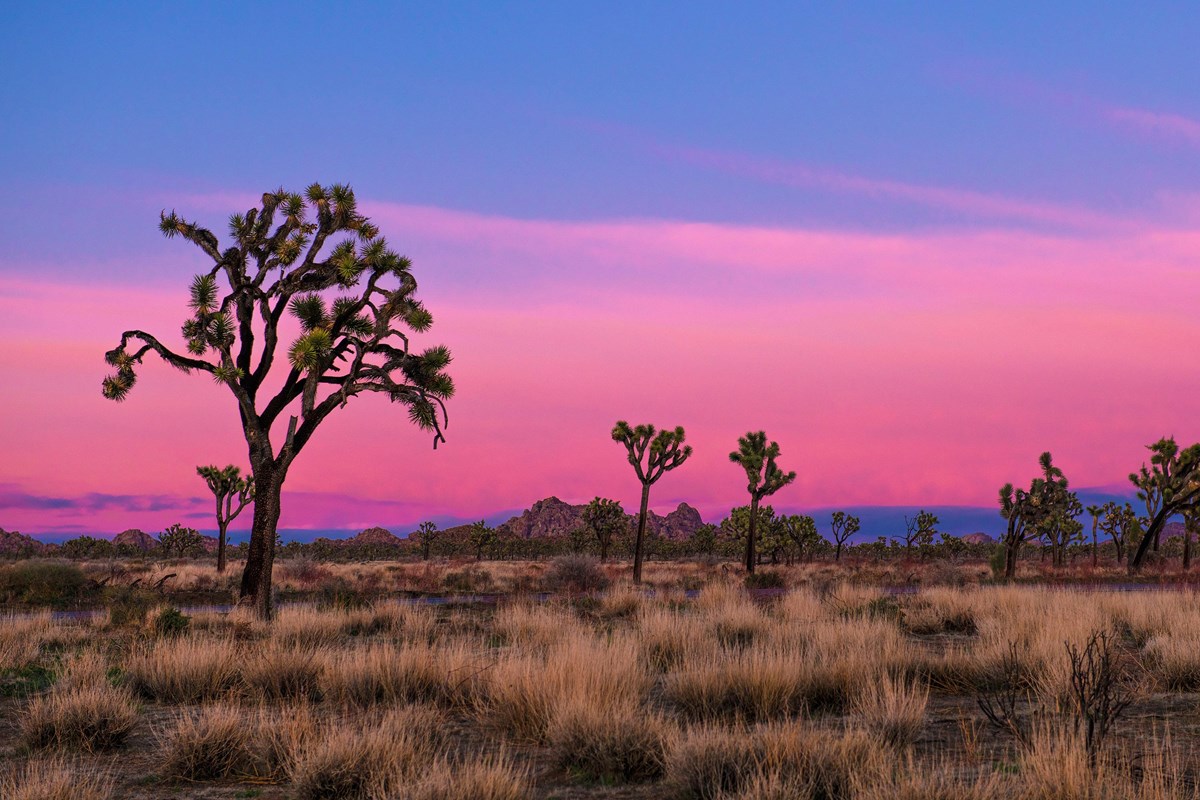
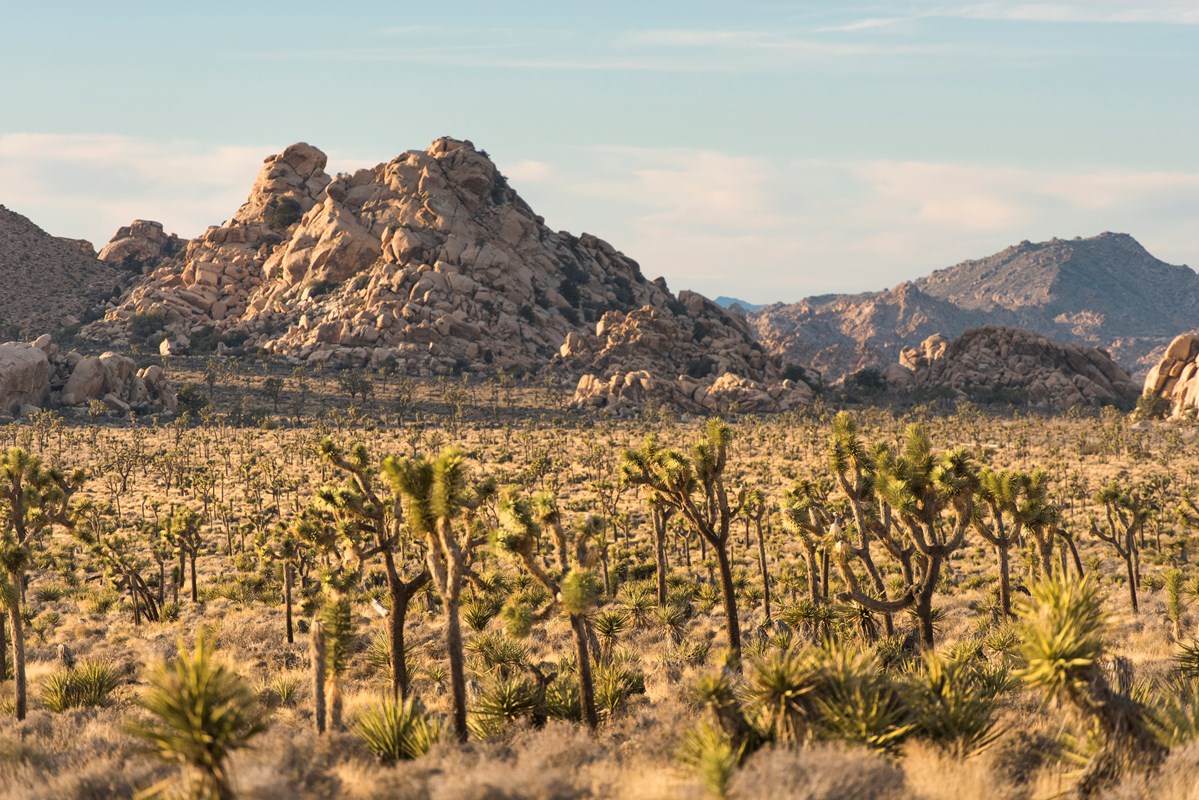
Joshua Tree in May.

May serves a different audience than the March-April spring peak.

By Nicholas Major · Last updated

May at Joshua Tree begins the steep summer drop, with a five-year mean near 254,000 recreation visits — about 62% of March's peak. Daytime highs at the Twentynine Palms station average 90°F with overnight lows near 63°F; the high-country campgrounds run mid-80s°F days. The Belle and White Tank campgrounds begin their summer closures progressively through the month, and Ryan closes for the summer too — confirm exact closure timing on the NPS campgrounds page. Sustained heat begins driving the strenuous-hike summer-heat advisory into effect by mid-month, and the practical hiking window narrows to sunrise-to-mid-morning. Memorial Day weekend at month-end pulls a smaller-than-spring holiday spike — by Memorial Day the heat is already in the way and the holiday density is materially below typical March-April weekend levels. Late May new-moon week is the first reliable galactic-center Milky Way arch window of the year per the NPS Joshua Tree stargazing page.

Crowd snapshot.

May runs about 254,000 recreation visits in the five-year mean — about 62% of March's peak. The first two weeks still track shoulder-season density as cooler-tolerant visitors finish spring trips; mid-month through Memorial Day the visitor count drops as heat becomes the dominant constraint. Memorial Day weekend pulls a holiday bump but the density is materially below the spring peaks — by late May, heat-tolerant visitors (climbers shifted to evening sessions, stargazers, photographers anchoring on sunset and sunrise) replace the day-hiking crowd. Reservation campgrounds show midweek availability for the first time since early February; weekend reservations remain meaningful but no longer impossible.

FieldValue
May recreation visits (5-yr mean)253,671
Share of March's peak62%
Crowd bandhigh
Park's busiest month (5-yr mean)March
Park's quietest month (5-yr mean)July

Weather snapshot.

The Twentynine Palms NOAA station records a May high near 89.9°F and a low near 62.9°F. Precipitation normals drop to about 0.05 inches — effectively bone-dry. Daytime highs routinely cross 95°F at the station on warm-pattern days late month, and the heat-island effect makes shaded pullouts and rock-bowls noticeably hotter than the open-air station reading. The Hidden Valley district at ~4,000 ft still runs marginally cooler. Cottonwood district at ~3,000 ft begins reading well into the 90s°F by the back half. Nights remain pleasant — overnight lows around 60°F at the campground band — which keeps stargazing comfortable but day-hiking dangerous. Wind from the south-southwest pushes heat into the higher elevations through the afternoon.

FieldValue
Average high (°F)89.9
Average low (°F)62.9
Precipitation (inches)0.05
Snowfall (inches)0.0
Weather bandhot
StationTwentynine Palms, CA at 1,975 ft

Access snapshot.

All paved roads inside Joshua Tree remain open in May; verify localized advisories on the NPS Joshua Tree conditions page. The Belle, White Tank, and Ryan campgrounds enter their summer closure window — confirm exact dates on the NPS campgrounds page. The year-round reservation campgrounds (Black Rock, Indian Cove, Jumbo Rocks, Cottonwood) and the year-round Hidden Valley first-come continue operating. The strenuous-hike summer-heat advisory begins applying mid-month — NPS specifically advises avoiding hiking 10 a.m. to 5 p.m. per the NPS hiking page. Standard fees apply.

FieldValue
May access score (0-100)90
Year-round routeAll paved roads year-round (Park Boulevard, Pinto Basin Road, Keys View Road, Cottonwood corridor, Black Rock + Indian Cove access)
Verify current road, campground, and safety statusOfficial NPS Joshua Tree conditions page

Seasonal events.

May is when the photographer's calendar shifts to the Milky Way: late May new-moon week is the first reliable galactic-center Milky Way arch window of the year per the NPS stargazing page. Climber traffic shifts to sunrise and after-sunset sessions; the boulder crowd at Hidden Valley thins from a daytime social scene to dawn-and-dusk regulars. Bighorn sheep activity remains concentrated on the south-facing slopes of the Eagle Mountains and Cottonwood Spring area. The Joshua tree natural-history cycle finishes its spring phase; pollinator activity (yucca moth and bee species) peaks early month. Memorial Day weekend draws a climbing-and-stargazing audience rather than a day-hiking audience. The last comfortable hiking windows are at sunrise and immediately after sunset.

Audience verdict.

May serves a different audience than the March-April spring peak. Stargazers anchoring on the late-May galactic-center new-moon window, climbers shifted to early-morning and evening sessions, and photographers chasing the long-twilight desert sunsets all do well. Families with school-year flexibility and an early-rising tolerance can still visit the easier short trails (Bajada All-Access, Cholla Cactus Garden Loop, Skull Rock) at sunrise. Heat-averse first-time visitors should wait until October. Reservation campgrounds are gettable for the first time since early February. The strenuous-hike summer-heat advisory has begun to apply — plan around it.

Methodology

Monthly recreation visits come from the official NPS Visitor Use Statistics Data Package, 2025 on NPS IRMA Stats; the statistic shown is Recreation Visits, the 5-year mean across 1979-2025. Climate normals come from NOAA NCEI's 1991-2020 U.S. Climate Normals at Twentynine Palms, CA (station USC00049099, 1,975 ft elevation). The access score weights named park roads by route importance for typical wheeled-vehicle openings that month; Joshua Tree has no major seasonal road closure inside the park, so the score reflects campground reopenings and summer heat-safety advisories rather than pavement closures. Year-variable specifics — exact Belle / White Tank / Ryan summer closure dates, Night Sky Festival dates — drift year to year and are hedged in the editorial above; confirm current dates on the official NPS Joshua Tree page before booking. Independent site, not affiliated with the National Park Service.

Independence

Independent site. Not affiliated with or endorsed by the National Park Service. Data comes from the official NPS Visitor Use Statistics Data Package, 2025; editorial analysis is ours. The NPS Arrowhead and other NPS marks are not used.

Last updated · 2026-05-28