Per-month · January

Joshua Tree in January.

January is a climber-and-stargazer audience.

By Nicholas Major · Last updated

January at Joshua Tree is a cool, quiet shoulder, with a five-year mean near 265,000 recreation visits — about 64% of March's peak. Daytime highs at the Twentynine Palms NOAA station (1,975 ft) average 63°F with overnight lows near 42°F; the Hidden Valley district campgrounds and Keys View overlook run 10-20°F cooler. There is no major seasonal road closure inside Joshua Tree — Park Boulevard, Pinto Basin Road, the Cottonwood corridor, the Black Rock and Indian Cove access roads, and Keys View Road are all open year-round. The first two weeks after the New Year's Day holiday are the cleanest low-crowd window inside high-demand season, before the Presidents' Day weekend lift. Climber traffic is at full schedule; the Hidden Valley boulders draw a steady weekend crowd. If late-fall rains delivered, the first low-elevation wildflowers begin per the NPS Joshua Tree blooms page.

Crowd snapshot.

January is a quieter month relative to the March and April peaks, with a five-year mean near 265,000 recreation visits — roughly 64% of March's peak. The visitor mix is a steady stream of Los Angeles and San Diego weekend traffic, climbers anchored at Hidden Valley campground, and Twentynine Palms / Joshua Tree / Yucca Valley hotel guests. The New Year's Day weekend is a meaningful spike; the second and third weeks after the holiday are the cleanest low-crowd window of the high-demand season. Martin Luther King Jr. Day weekend at month-end pulls a weekend bump. Reservation campgrounds (Black Rock, Indian Cove, Jumbo Rocks, Cottonwood) book weeks ahead for weekends but generally show midweek openings.

FieldValue
January recreation visits (5-yr mean)264,502
Share of March's peak64%
Crowd bandhigh
Park's busiest month (5-yr mean)March
Park's quietest month (5-yr mean)July

Weather snapshot.

The Twentynine Palms NOAA station records a January high near 63.3°F and a low near 41.8°F. Precipitation normals are about 0.50 inches for the month — almost entirely from Pacific frontal passages rather than the summer monsoon pattern. Light dustings of snow at Keys View (~5,185 ft) and in the high country occur a few days per typical January but do not register in the long-period normals. Mornings at Hidden Valley campground at ~4,000 ft routinely drop below freezing on clear nights as cold air drains down from the Wonderland of Rocks. Days are short — sunrise around 6:45 a.m. and sunset by 4:50 p.m. Pacific Time — and the dry air makes the temperature swing day-to-night the biggest planning factor.

FieldValue
Average high (°F)63.3
Average low (°F)41.8
Precipitation (inches)0.50
Snowfall (inches)0.0
Weather bandshoulder
StationTwentynine Palms, CA at 1,975 ft

Access snapshot.

Every paved road inside Joshua Tree is open in January — confirm any localized advisories on the NPS Joshua Tree conditions page. Park Boulevard runs the full West-to-North-entrance through-route; Pinto Basin Road delivers the south corridor to Cottonwood Visitor Center and the I-10 south entrance. All campgrounds operate per the NPS campgrounds page: Black Rock, Indian Cove, Jumbo Rocks, Cottonwood, and Ryan on the reservation track, plus Hidden Valley, Belle, and White Tank first-come. No timed-entry permit at Joshua Tree. Standard fees apply per the NPS fees page — 7-day private vehicle pass is $30.

FieldValue
January access score (0-100)100
Year-round routeAll paved roads year-round (Park Boulevard, Pinto Basin Road, Keys View Road, Cottonwood corridor, Black Rock + Indian Cove access)
Verify current road, campground, and safety statusOfficial NPS Joshua Tree conditions page

Seasonal events.

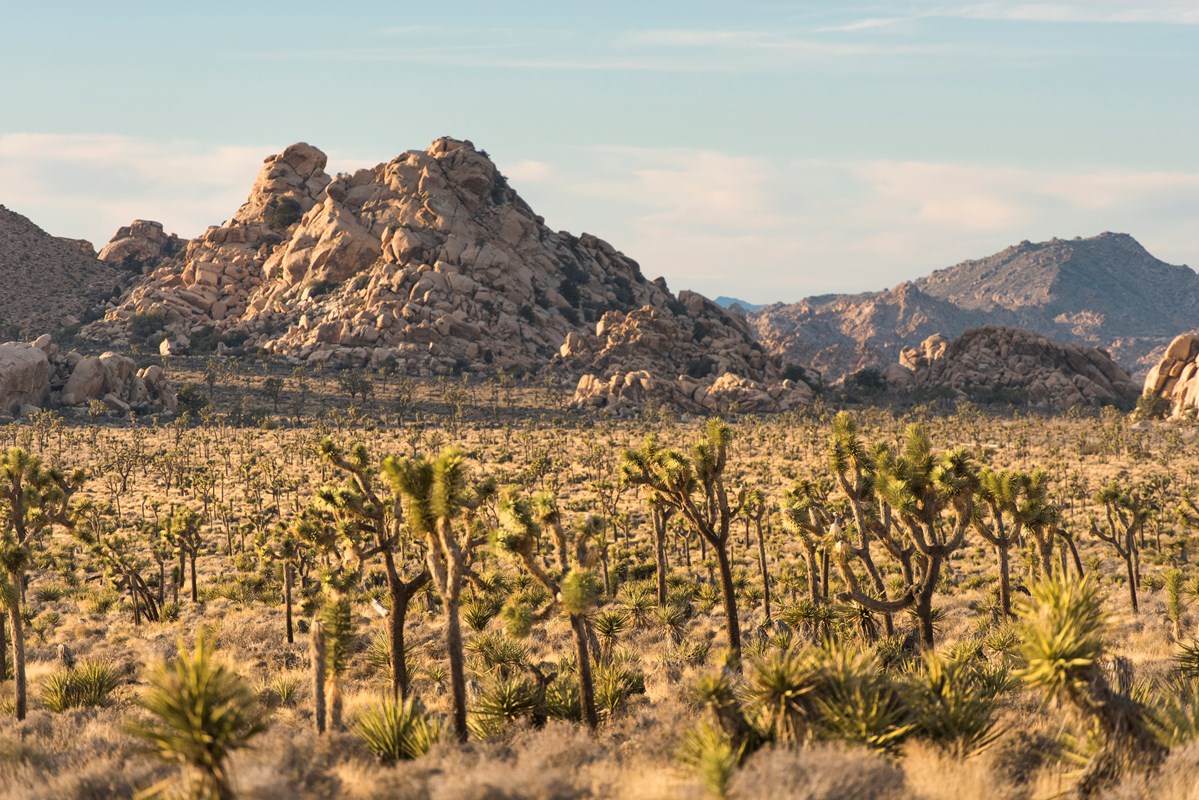
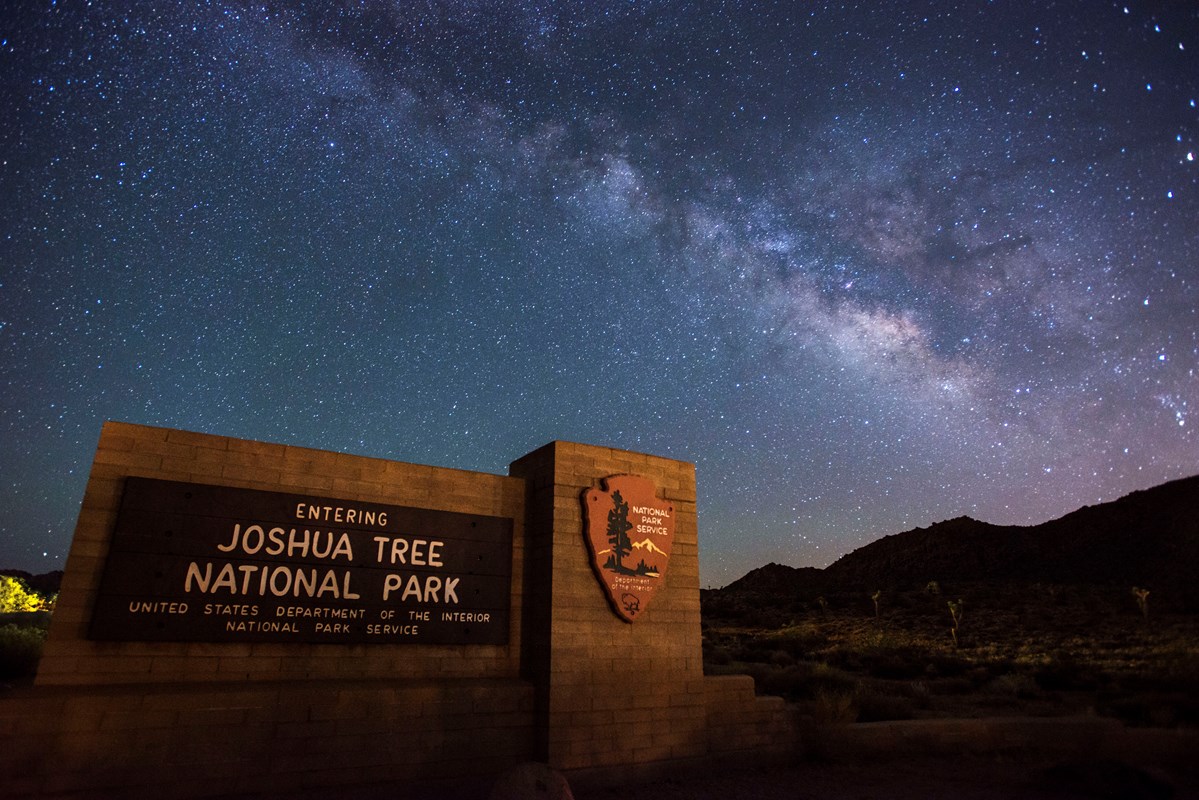
January is climber-prime: cool clear days, no monsoon humidity, and the Wonderland of Rocks at Hidden Valley draws weekend crowds at the classic climbing crags. Joshua Tree is a designated International Dark Sky Park (NPS stargazing) and the long winter nights deliver the best non-summer dark-sky photography of any major U.S. National Park within range of Los Angeles; the Pinto Basin Road between Cholla Cactus Garden and Cottonwood is the NPS-named darkest-sky stretch. Quadrantids meteor shower peaks January 3-4. If the desert received enough late-fall rain (≥0.5 inches in a single event), the first low-elevation wildflowers begin emerging at the Cottonwood and Pinto Basin elevations; NPS notes wildflowers usually start in January and February. Mojave wildlife — desert tortoises, jackrabbits, coyotes, the Joshua tree natural history itself — settles into the winter cool-season pattern.

Audience verdict.

January is a climber-and-stargazer audience. It rewards visitors who want cool clear days, long dark nights, and the cleanest low-crowd stretch inside the year's high-demand season. Families with January school breaks (or homeschooling flexibility) get an entry-level desert experience without the heat-safety penalty of summer. RV travelers have broad availability at the reservation campgrounds midweek; Hidden Valley is reliably available first-come. The two constraints are the New Year and MLK holiday weekends (denser than the surrounding stretches) and overnight cold at the high-country campgrounds — pack as if for a Sierra trip in October, not as if for a Mojave summer.

Methodology

Monthly recreation visits come from the official NPS Visitor Use Statistics Data Package, 2025 on NPS IRMA Stats; the statistic shown is Recreation Visits, the 5-year mean across 1979-2025. Climate normals come from NOAA NCEI's 1991-2020 U.S. Climate Normals at Twentynine Palms, CA (station USC00049099, 1,975 ft elevation). The access score weights named park roads by route importance for typical wheeled-vehicle openings that month; Joshua Tree has no major seasonal road closure inside the park, so the score reflects campground reopenings and summer heat-safety advisories rather than pavement closures. Year-variable specifics — exact Belle / White Tank / Ryan summer closure dates, Night Sky Festival dates — drift year to year and are hedged in the editorial above; confirm current dates on the official NPS Joshua Tree page before booking. Independent site, not affiliated with the National Park Service.

Independence

Independent site. Not affiliated with or endorsed by the National Park Service. Data comes from the official NPS Visitor Use Statistics Data Package, 2025; editorial analysis is ours. The NPS Arrowhead and other NPS marks are not used.

Last updated · 2026-05-28