Per-month · January

Grand Teton in January.

January is a solitude-and-winter-recreation audience month.

By Nicholas Major · Last updated

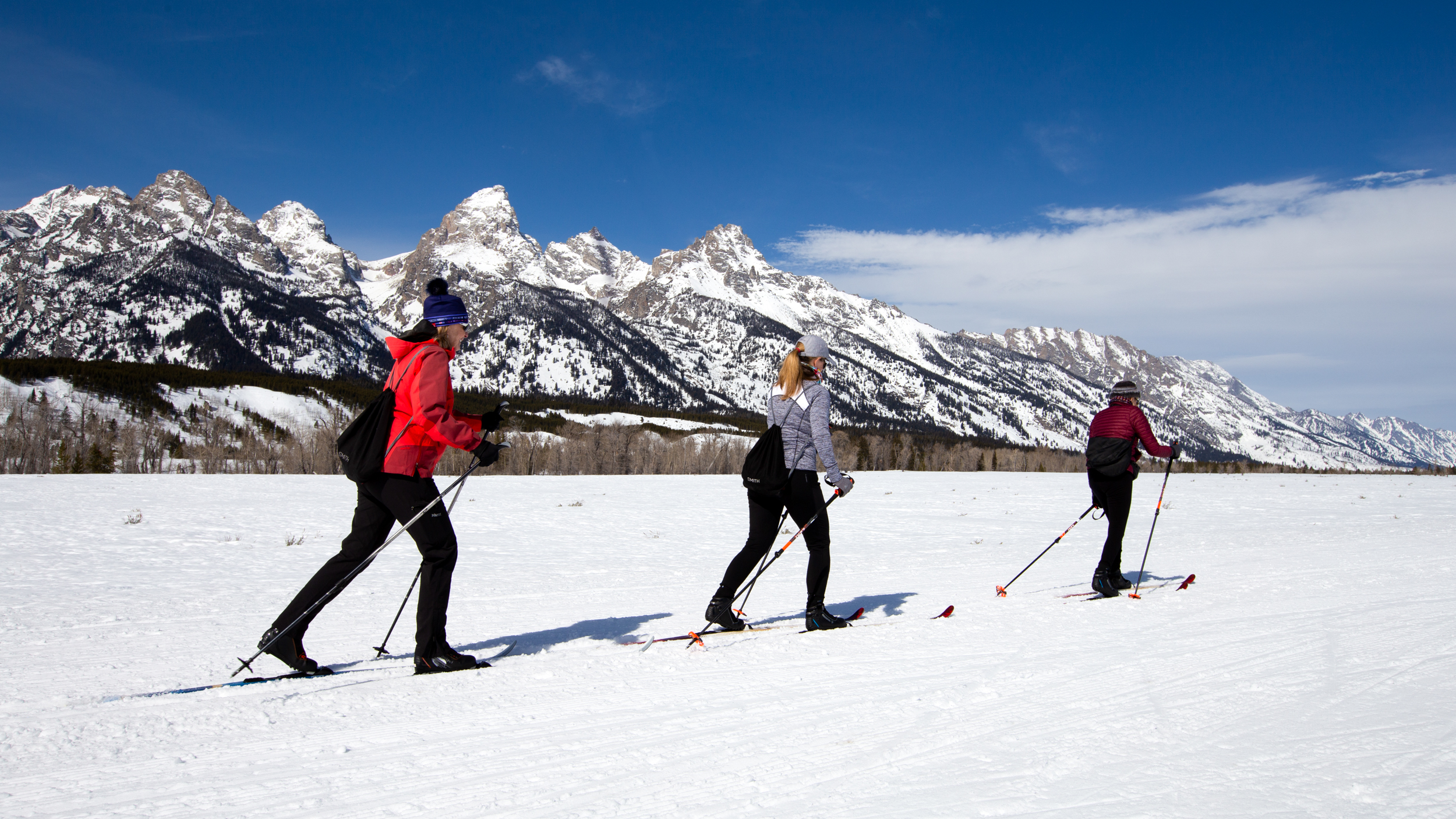
January at Grand Teton is firmly an off-season month, with a five-year mean near 57,000 recreation visits — about 8% of the July high. The inner Teton Park Road sits closed to wheeled vehicles for the full winter window per NPS, and Moose-Wilson Road is also off-limits to cars until mid-spring. The only plowed routes carrying general visitor traffic run the eastern through-highway from Jackson north past Moose, Moran Junction, and Colter Bay to Flagg Ranch. Valley-floor climate normals at Moran 5WNW (~6,805 ft) put the daytime high near 24°F with overnight lows around 1°F, and the cooperative station logs a January snowfall normal of 39.5 inches. Across the range itself, conditions run materially colder and snowier than the valley reading. Cross-country skiing and snowshoeing on the snow-covered scenic drive, plus dawn wildlife photography from the highway pullouts, are January's signature draws.

Crowd snapshot.

January is among the quietest months on Grand Teton's calendar — a five-year mean near 57,000 recreation visits, roughly 8% of the July high. The visitor mix is mostly winter-recreation day-trippers from Jackson, lodging guests in the gateway town, and a small core of skier-photographers anchored at Colter Bay's winter day-use area. The Craig Thomas Discovery and Visitor Center in Moose runs winter cadence; most in-park lodges are closed for the season. Weekday traffic on the plowed corridor is genuinely light, with the New Year holiday weekend the only meaningful spike.

FieldValue
January recreation visits (5-yr mean)57,211
Share of July's peak8%
Crowd bandlowest
Park's busiest month (5-yr mean)July
Park's quietest month (5-yr mean)December

Weather snapshot.

The Moran 5WNW NOAA station records a January high near 24.0°F and a low near 1.2°F at the valley-floor elevation of about 6,805 ft. Snowfall at the cooperative station averages 39.5 inches for the month — the second-highest reading of the year, behind December. The high country of the range absorbs materially more snow, and overnight cold-pool inversions in Jackson Hole push valley readings well below the station baseline on clear nights. Wind off the range pulls wind-chill notably below the air temperature on exposed plowed pullouts. Snow and frost are possible any month at this elevation per NPS.

FieldValue
Average high (°F)24.0
Average low (°F)1.2
Precipitation (inches)2.90
Snowfall (inches)39.5
Weather bandharsh-cold
StationMoran 5WNW HCN, WY at 6,805 ft

Access snapshot.

Inner Teton Park Road is closed to cars November 1 through April 30; Moose-Wilson Road is closed November 1 until mid-May based on conditions — verify both on the NPS Grand Teton roads page. The US-89 / US-191 / US-26 through-corridor along the east side of the park is plowed year-round. The Teton Park Road is groomed for non-motorized winter use mid-December through mid-March per the same NPS page; cross-country skiing and snowshoeing are the signature winter experiences alongside ranger-led snowshoe hikes January through March (kids 8+, snowshoes provided) per the NPS Grand Teton winter page. Black and grizzly bears still roam the park in most winter months — carry bear spray on any backcountry travel per the NPS Grand Teton conditions page.

FieldValue
January access score (0-100)55
Year-round routeUS-89 / US-191 / US-26 through-corridor along the east side of the park (inner Teton Park Road closed November 1 through April 30; Moose-Wilson Road closed November 1 until mid-May)
Verify current road and conditions statusOfficial NPS Grand Teton roads page

Seasonal events.

January is winter-recreation prime at the valley floor. Cross-country skiing and snowshoeing on the snow-covered Teton Park Road, the Antelope Flats Road, and the Taggart Lake corridor draw the steady mid-winter crowd. Bison and elk concentrate on the wind-scoured sage benches along the through-corridor, and dawn photography from Schwabacher Landing, Oxbow Bend, and the Snake River Overlook produces the year's cleanest frost-on-cottonwoods compositions. Trumpeter swans hold along the open river bends in the Snake and Buffalo Fork drainages. Wintering raptors — bald eagles, rough-legged hawks — work the willow flats. NPS warns that black and grizzly bears roam through most winter months, so the casual assumption that bear country is asleep does not apply here.

Audience verdict.

January is a solitude-and-winter-recreation audience month. It rewards visitors anchored in Jackson who want quiet trails, cross-country skiing or snowshoeing on the snow-covered Teton Park Road, and dawn wildlife-and-frost photography from the Snake River pullouts. It is not a family-with-young-kids month for high-country hiking — deep snow, sub-zero overnight lows, and short daylight cut into a kids itinerary. The inner park roads and Moose-Wilson Road are off the table entirely. RV travelers need to base outside the park; in-park lodges are closed for the season and most in-park campgrounds are closed. Anyone visiting in winter should treat bear-spray and group-travel guidance as still applying.

Methodology

Monthly recreation visits come from the official NPS Visitor Use Statistics Data Package, 2025 on NPS IRMA Stats; the statistic shown is Recreation Visits, the 5-year mean across 1979-2025. Climate normals come from NOAA NCEI's 1991-2020 U.S. Climate Normals at Moran 5WNW HCN, WY (station USC00486440, 6,805 ft elevation). The access score weights named park roads by route importance for typical wheeled-vehicle openings that month. Year-variable specifics — exact inner Teton Park Road open/close dates, Moose-Wilson Road open/close dates, the Jenny Lake Boating shuttle season, in-park lodge operating windows — drift year to year and are hedged in the editorial above; confirm current dates on the official NPS Grand Teton page before booking. Independent site, not affiliated with the National Park Service.

Independence

Independent site. Not affiliated with or endorsed by the National Park Service. Data comes from the official NPS Visitor Use Statistics Data Package, 2025; editorial analysis is ours. The NPS Arrowhead and other NPS marks are not used.

Last updated · 2026-05-20