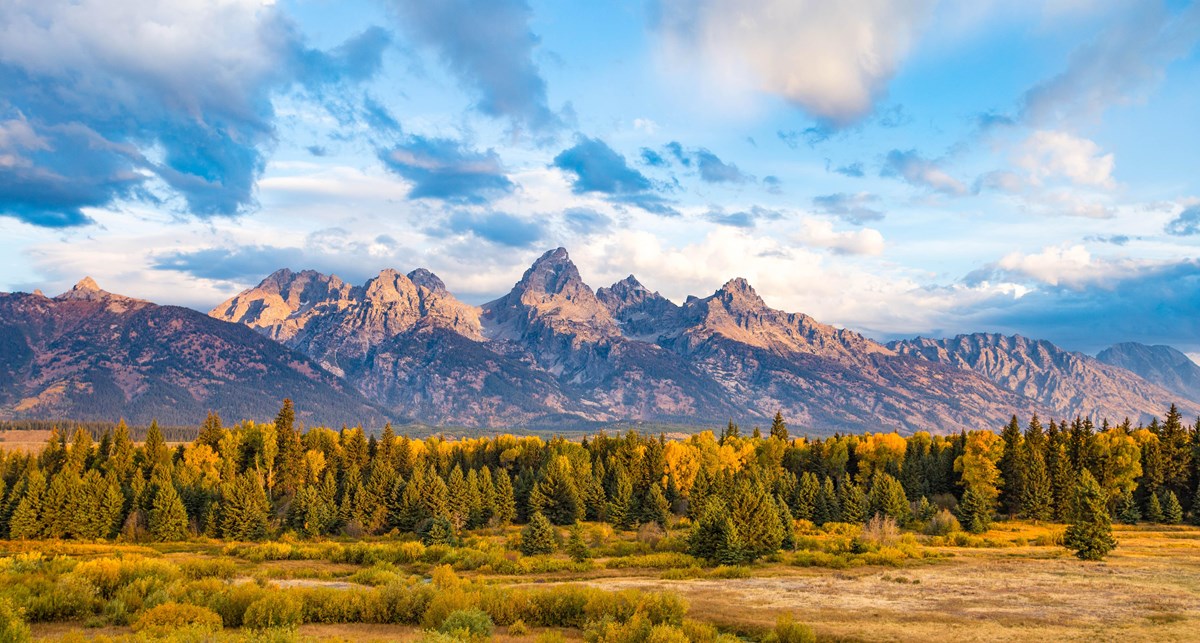
Grand Teton for mountains and lakes
Build the visit around the Teton Range and lake areas such as Jenny Lake. Choose the walks and viewpoints you want before adding more stops.
Grand Teton vs Yellowstone: choose Grand Teton for mountain views, lakes and hiking beneath the Teton Range. Choose Yellowstone for geysers, hot springs and geothermal sightseeing. They suit a combined trip, but give each park its own time. Choose your main sights before deciding how to split the days.
Check official entry guidance, roads, trails and weather before setting your route.
Check official entry guidance, roads, trails and weather before setting your route.
Choose your entrances and actual stops before mapping transfers or booking a base.
Mountain-and-lake days and geyser-basin days make different use of your time.
Build the visit around the Teton Range and lake areas such as Jenny Lake. Choose the walks and viewpoints you want before adding more stops.
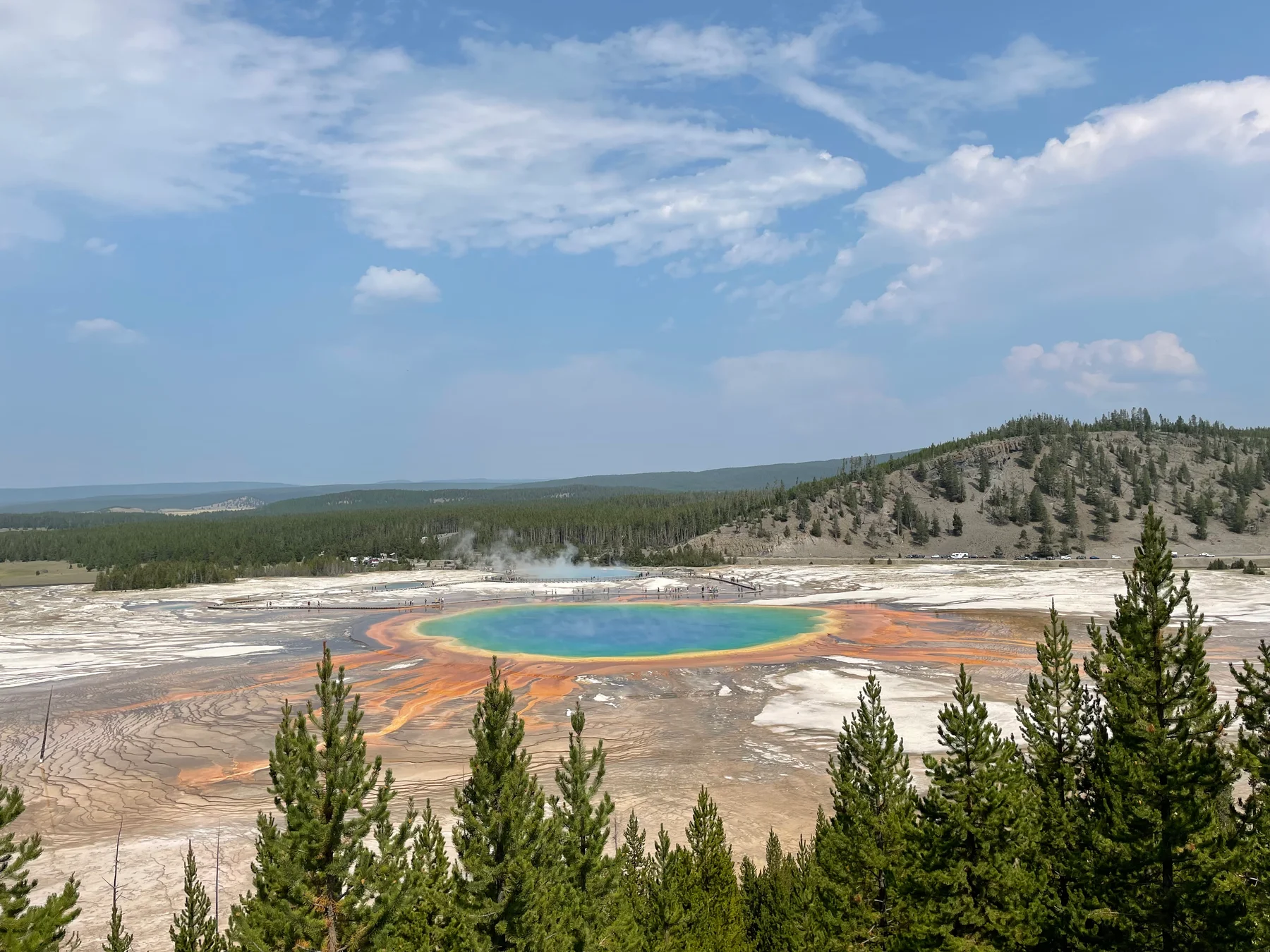
Choose the geyser basins and other areas you most want to explore. A trip to Old Faithful and hot springs has a different focus from a day beneath the Tetons.
Both parks peak in July in the 2021–2025 averages. Each chart compares a park with its own busiest month. These are national-park totals, not lake, geyser-basin or wildlife-viewing counts.
| Month | Grand Teton | Yellowstone |
|---|---|---|
| January | 57,2118% of peakLowest | 42,1535% of peakLowest |
| February | 55,9338% of peakLowest | 44,6685% of peakLowest |
| March | 64,7559% of peakLowest | 33,4794% of peakLowest |
| April | 75,33310% of peakLow | 73,4708% of peakLowest |
| May | 305,74142% of peakModerate | 508,11155% of peakModerate |
| June | 632,51886% of peakPeak | 830,98790% of peakPeak |
| July | 732,380100% of peakPeak | 922,896100% of peakPeak |
| August | 672,43992% of peakPeak | 820,12889% of peakPeak |
| September | 564,32077% of peakHigh | 796,02786% of peakPeak |
| October | 247,50534% of peakModerate | 302,46833% of peakModerate |
| November | 50,0177% of peakLowest | 23,8073% of peakLowest |
| December | 49,3347% of peakLowest | 33,6484% of peakLowest |
June averages 632,518 visits at Grand Teton, 86% of its peak, and 830,987 at Yellowstone, 90% of its peak. These totals describe seasonal visitation, not the crowd at a particular trail or overlook.
Park-wide recreation visits. A lower total does not establish lower crowd density.
| Measure | Grand Teton | Yellowstone |
|---|---|---|
| Recreation visits, 2025 | 3,800,648 | 4,762,988 |
| Average annual visits, 2021–2025 | 3,507,486 | 4,431,841 |
| Busiest month | July | July |
| Quietest month | December | November |
| Peak-to-quiet ratio | 14.8 to 1 | 38.8 to 1 |
| Months at 80%+ of peak | 3 | 4 |
Choose your stops first. A neighboring-park trip still needs time for roads, walks and transfers.
If you have one park day, choose the scenery you most want and spend time there. Combining a Teton walk with distant Yellowstone stops leaves less time at each.
Set aside separate park time and check the route between your chosen areas. The Yellowstone South Entrance route is seasonal, so confirm it for your dates.
Give more time to the activities you want. Longer mountain hikes can fill Grand Teton days; Yellowstone’s separate geyser basins and sightseeing areas need their own time. Choose those stops before assigning days by park size.
Yes. Plan the park days and the transfer between your chosen areas separately. Check Yellowstone’s seasonal entrance and road guidance before relying on the South Entrance connection.
Choose Grand Teton for mountain and lake scenery, or Yellowstone for a focused thermal-area visit. Keep the day to a manageable area rather than trying to collect every famous sight from both parks.
The 2021–2025 monthly averages peak in July at Grand Teton and July at Yellowstone, with 732,380 and 922,896 average recreation visits. These are park-wide seasonal patterns. They do not measure the crowd at a particular stop.
An independent guide using official data. Not affiliated with or endorsed by the National Park Service.